Instructional system · PK-12

Model of Instruction
for Deeper Learning®

The research-validated classroom instructional system that helps teachers put your adopted curriculum into practice, so all students are engaged in rigorous thinking, every day, in every PK-12 classroom.

Schools and districts use it to get higher achievement from the curriculum they already own. Teachers receive professional development, a classroom toolkit, coaching, and a clear path. Leaders receive tools to support implementation and improve results.

For all grades, all subject areas, and all students.
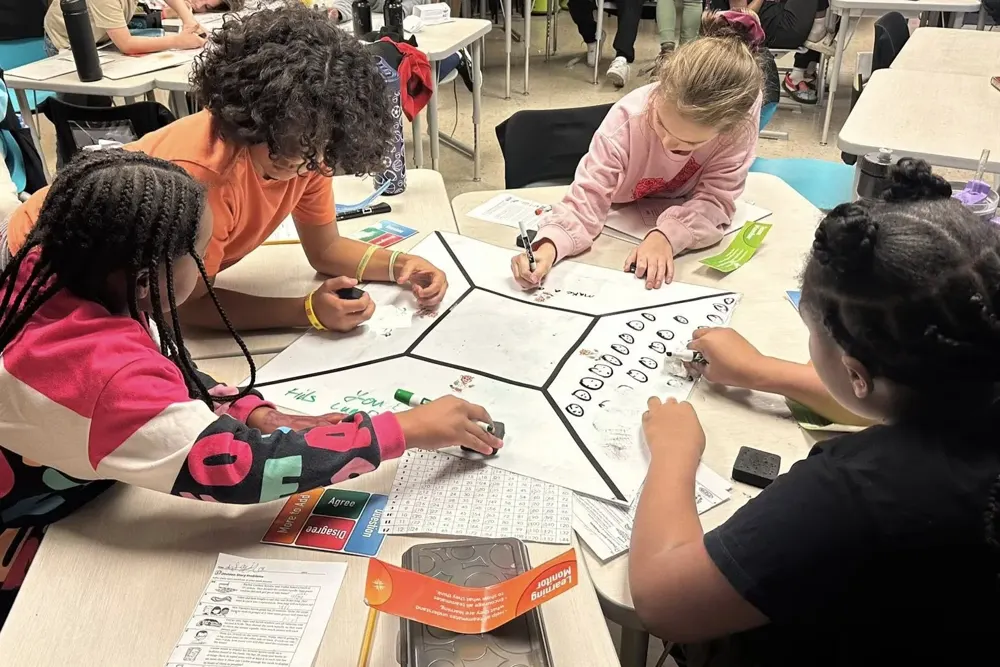
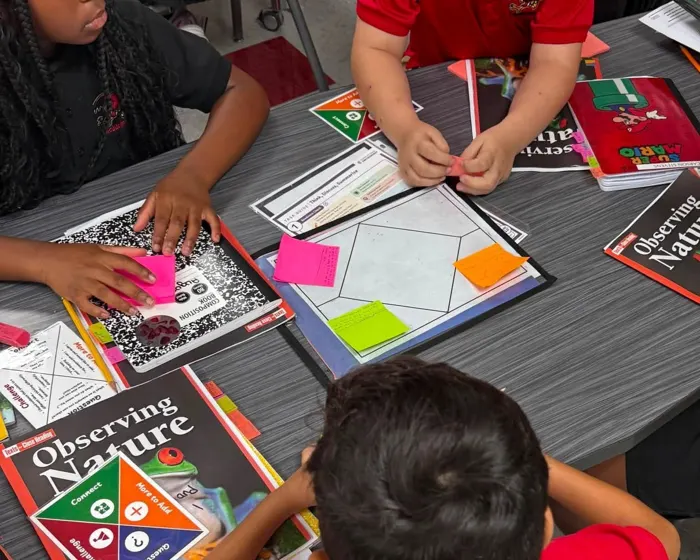
Elementary students working together on a team task mat
What it is

Helping teachers put your high-quality instructional materials into practice

The Model of Instruction for Deeper Learning® gives teachers and students the structures to enact the high-quality instructional materials (HQIM) you have already adopted. Teachers use a lesson cycle to plan rigorous tasks. Students work in teams with defined roles, protocols for academic discourse, and Task Guides. Your school or district uses coaching and verification to confirm that the materials are enacted and translating into higher student achievement.

Problems it addresses

What the Model of Instruction for Deeper Learning® addresses in schools and classrooms

Low student ownership of learning

Role Cards, Discourse Cards, and Task Guides give every student responsibility for the thinking. Learn more →

Low engagement and challenging behavior

Defined team roles and discourse protocols give every student clear responsibilities in the lesson. Learn more →

Persistent achievement gaps

Every student takes a role, contributes in team discussions, and tackles the same rigorous task. Learn more →

High teacher burnout

Students carry more of the thinking while teachers coach teams. Learn more →

Low rigor in daily instruction

Task Guides and mats make the level of student thinking visible to teachers and leaders. Learn more →

How it works

Four moves that change who does the thinking

1. Start with your lesson

Pair any lesson from your curriculum with a Task Guide that structures the process for deeper student thinking.

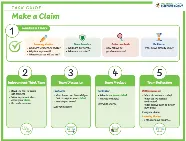
Task Guide for team learning

2. Students lead in teams

Student Role Cards and Discourse Cards give every student a responsibility and a voice.

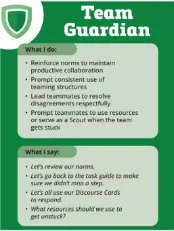
Student Role Card

3. The teacher coaches

Teachers move from directing the lesson to coaching teams, supported by coaching and Coaching Walks.

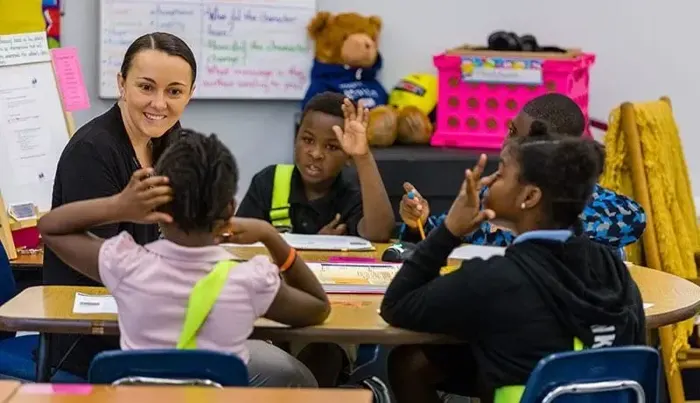
Teacher coaching a student team at a table

4. Student thinking is visible

Mats capture individual and team thinking for teachers and leaders to see.

Task Guide mats

Watch the product tour

See a classroom shift from teacher-led to student-led, the toolkit up close, and Empowerment Central’s AI-assisted lesson planning.

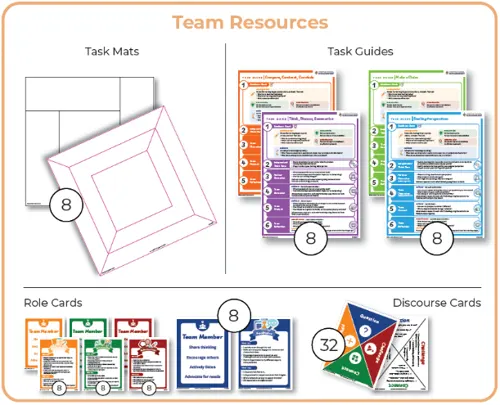
Foundations Toolkit: task mats, Task Guides, Role Cards, and Discourse Cards
Everything included

A complete system for implementation

Classroom toolkit

Classroom toolkit with Role Cards, Task Guides, and mats on a student table
  • Role Cards for four student roles
  • Discourse Cards for academic conversation
  • Task Guides and Mats for four types of thinking
  • Teacher Guidebook with step-by-step support
  • Full-color, laminated, and made for each grade band

Professional development and digital tools

Empowerment Central library and course screens
  • Online courses and implementation roadmap
  • Library 4DL and Community 4DL, with grade-specific resources
  • AI-assisted planning of learning targets, success criteria, and tasks
  • A Coaching Walk tool and reporting for coaches and leaders
  • Empowerment Central subscription for teachers, coaches, and leaders

Onsite professional development is an add-on for school packages and included in district pilots.
Coaching that gets results

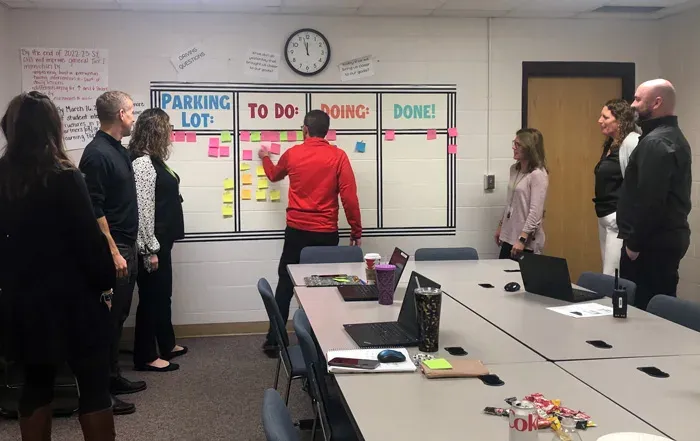
School leaders using an action board to plan coaching next steps
  • Faculty coaching to start and sustain implementation
  • School leadership coaching to monitor practice and use data
  • Coaching Walks that help school staff support teachers

Recognition and verification

Deeper Learning Learn Foundations badgeDeeper Learning Verification Foundations badge

Teachers earn the Learn Badge by completing the learning in the online course, and the Verification Badge when a Verification Walk confirms the integrity of the model in practice. The Verification Badge is associated with higher academic achievement.

Verification is an add-on for school packages and included in district pilots.

For schools

School packages

School packages let a school begin with a group of teachers. You can purchase online or request a quote for a custom package. Every package includes the Empowerment Central subscription, the Coaching Walk tool, and the grade-band toolkits you select at checkout.

School Package One

Getting started with teachers

$2,500
  • 5 Classroom Toolkits
  • 5 digital Teacher Suites
  • 2 hours of virtual faculty coaching
Add-ons available. Verification, onsite support, and extra coaching hours can be added.Buy in the store
School Package Two

Teachers, a coach, and a school leader

$6,750
  • 10 Classroom Toolkits
  • 10 digital Teacher Suites
  • 1 digital Instructional Coach Suite and 1 digital School Leader Suite
  • 4 hours of virtual faculty coaching
  • 2 hours of virtual school leadership coaching
Add-ons available. Verification, onsite support, and extra coaching hours can be added.Buy in the store
Custom school package

Tailored to your school

Request a quote
  • Built around your number of teachers
  • Can include onsite professional development and coaching
  • Designed with your school leaders

Enhance any package

Verification

Teachers earn the Verification Badge when a Verification Walk confirms the model in practice.

Onsite professional development and coaching

Bring Instructional Empowerment faculty to your school.

Additional coaching hours

Add more hours of coaching for teachers or school leaders.

Something else in mind?

Tell us what your school needs and we will plan it with you.

Talk with us about add-ons →
For districts

District pilots

A district pilot is a customized implementation of the Model of Instruction for Deeper Learning® that can span multiple schools. Instructional Empowerment designs it with your district leaders and delivers professional development and coaching onsite.

Start with volunteers and expand with evidence

We recommend beginning the work with about 30 volunteer teachers, who may be across multiple schools. Starting with willing teachers lets the practice expand organically and provides demonstration classrooms for others to see what implementation looks like.

Verification of implementation

Completing training does not prove instruction has changed. Teachers earn the Verification Badge only when an objective Verification Walk documents the model’s desired effects with integrity, including rigorous thinking and durable skills, in both teacher and student evidence. The Verification Badge is associated with higher academic achievement. Included in every district pilot.

Leadership capacity across schools

  • Cohort Coaching: instructional coaches from several schools learn together through joint coaching sessions
  • Partner Coaching: principals learn together at a host school and practice monitoring implementation
  • Calibration Rounds: an Instructional Empowerment coach walks classrooms with leaders to calibrate Coaching Walks

District-specific research study

Your district can include a study of student achievement for teachers who earn the Verification Badge. Conducted in your own district, it shows results in your local context and uses the matched-comparison methods of our Colorado Springs study →.

Request a quote

Talk with us about a custom school package or a district pilot

Tell us about your school or district, and we will tailor a plan to your needs and goals.

Grade bands

Built for every grade band, subject area, and student

The Model of Instruction for Deeper Learning® works in all grades, all subject areas, and with all students. Choose a toolkit for each teacher’s grade band, and combine bands in one package or pilot. Empowerment Central includes grade-specific resources for every grade.

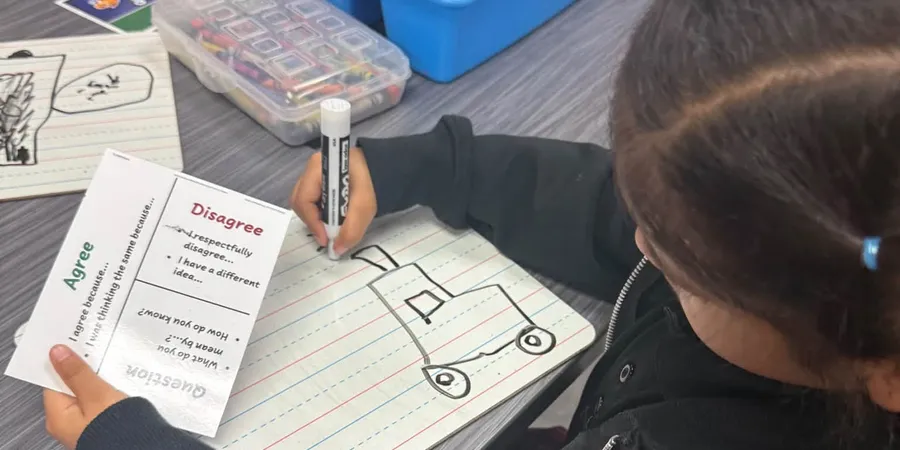
Early elementary student drawing on a whiteboard while holding a Discourse Card

Early Elementary, PK-2

Role Cards, Discourse Cards, and Task Guides designed for our youngest learners, with a Teacher Guidebook that helps teachers put effective teamwork into practice in the early grades.

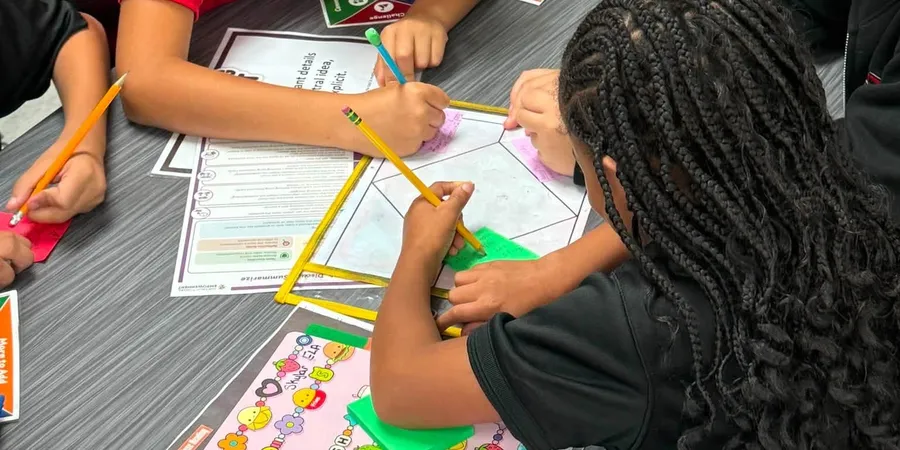
Elementary students working together on a team mat with pencils

Elementary, 3-5

Role Cards, Discourse Cards, and Task Guides for students ready for greater independence in teams, with a Teacher Guidebook to support the shift.

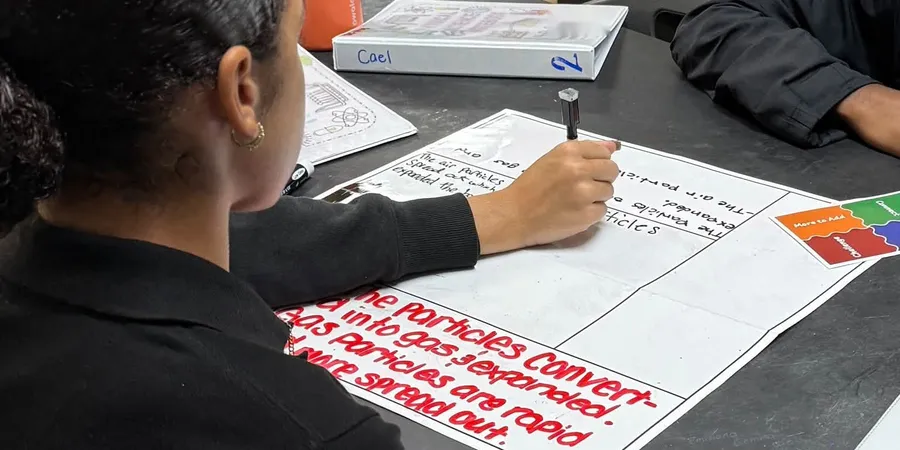
Secondary student writing on a task sheet at a classroom table

Secondary, 6-12

Role Cards, Discourse Cards, and Task Guides for middle and high school students, with a Teacher Guidebook that supports teachers in every content area.

Research validation

Research validation for the Model of Instruction for Deeper Learning®

ESSA Tier 2

Colorado Springs, CO

Students of teachers verified in the model scored 22 points higher in ELA and 18 points higher in math on STAR than matched peers using the same curriculum, about 55% and 35% of a typical year’s growth.

Quasi-experimental pilot study.

Read the research brief →
What Works Clearinghouse

Des Moines, IA

In 22 schools and more than 10,000 students, students gained the equivalent of extra days of learning in reading and math compared with matched peers, and achievement gaps narrowed.

Quasi-experimental study.

Read the research report →
Research brief

76 schools, 10 districts, 7 states

79% of implementing schools reduced chronic absenteeism, with larger reductions in each year of implementation.

Descriptive and correlational analysis.

Read the research brief →
Case study

Willard Elementary, IL

In two years, ELA proficiency rose from 10.9% to 35% and chronic absenteeism fell 6.6 points.

Descriptive case study.

Read the case study →
Curriculum used with rigor
“It’s more than just making sure everyone is using the same resource—it’s also ensuring that resource is getting used in a high-quality, rigorous way with all students and all populations, which I think is just a fundamental difference in how curriculum has functioned in the past.”
Chief of Curriculum
Dr. Krystal Rasmussen, Colorado Springs School District 11, CO
Fewer behavior issues
“We don’t really have behavioral issues here anymore. I tell people all of the time that our students’ brains are tired from learning, so they don’t misbehave.”
Principal
Dustin Covarrubias, Willard Elementary School, South Elgin, IL
Students share, debate, analyze
“For students to get to that next level in their learning, they have to come up with their own thinking, share it, debate it, and analyze it. The Model of Instruction for Deeper Learning has been really instrumental in facilitating that.”
High School Teacher
Morgan Zinni, Woonsocket High School, Woonsocket, RI
Questions

Frequently asked questions about the Model of Instruction for Deeper Learning®

What is the Model of Instruction for Deeper Learning®?
The Model of Instruction for Deeper Learning® is the research-validated instructional system that gives teachers and students the structures to enact the high-quality instructional materials (HQIM) a school or district has already adopted. Teachers use a lesson cycle to plan rigorous tasks, students work in teams with defined roles, discourse protocols, and Task Guides, and coaching and verification confirm the HQIM are translating to higher student achievement.
Why is deeper learning important?
Deeper learning means students master core content while building the ability to think critically, solve problems, collaborate, and communicate, so they can apply what they know in new situations. Students need these skills for college, careers, and civic life, and they build them by doing the thinking themselves. The Model of Instruction for Deeper Learning® gives teachers the structures to make that happen in every classroom. Explore the deeper learning framework.
Do we have to replace our curriculum to use the Model of Instruction for Deeper Learning®?
No. The Model of Instruction for Deeper Learning® was designed to put your existing HQIM into a structure every student can access.
How is the Model of Instruction for Deeper Learning® different from group work or a turn-and-talk?
The Model of Instruction for Deeper Learning® differs in the rigor of learning and the level of student autonomy, both of which support rapid academic growth. In typical group work, students can participate without engaging deeply with the content. In this model, assigned roles, discourse protocols, and Task Guides require every student to share evidence, use disciplinary language, and challenge and refine each other’s reasoning, with less reliance on the teacher for constant support.
Does the Model of Instruction for Deeper Learning® mean teachers stop using explicit instruction?
No. The Model of Instruction for Deeper Learning® complements explicit instruction and does not replace it. Teachers continue to introduce content and model thinking through explicit instruction, then monitor understanding and give responsive support as student teams work.
Does the Model of Instruction for Deeper Learning® work for every grade, subject area, and student, including English learners and students with disabilities?
Yes. The Model of Instruction for Deeper Learning® works in all grades, all subject areas, and with all students, including English learners and students with disabilities. The toolkit comes in three grade bands: Early Elementary (PK-2), Elementary (3-5), and Secondary (6-12). Schools can combine bands in one package or pilot.
What results can schools expect from the Model of Instruction for Deeper Learning®?
Studies associate the Model of Instruction for Deeper Learning® with gains in reading and math, narrower achievement gaps for English learners, students with disabilities, and Black students, fewer discipline referrals, lower chronic absenteeism, and lower teacher burnout. A Colorado Springs pilot study meeting ESSA Tier 2 standards found that students of verified teachers outscored matched peers on STAR ELA and math, and a Des Moines study meeting What Works Clearinghouse standards with reservations found higher reading and math growth and narrowed achievement gaps. Results track implementation depth: in a study of 318 Cedar Rapids classrooms, students whose teachers had made at least 70% progress toward verification gained more in ELA than students whose teachers had made no progress. Browse all research on the Model of Instruction for Deeper Learning®.

Will the Model of Instruction for Deeper Learning® help new and alternatively certified teachers?
Yes. This is where districts often see the fastest return. School and district leaders report that their least experienced teachers use the model’s team structures to turn the district’s HQIM into high-quality instruction, and that the professional development and tools accelerate pedagogical skill development while they build content expertise.
Is the Model of Instruction for Deeper Learning® the same as Academic Teaming?
Yes. Academic Teaming is the original name and the approach described in our award-winning book The Power of Student Teams. The Model of Instruction for Deeper Learning® builds on it with a full toolkit, Empowerment Central, coaching, and recognition.
What is new in the Model of Instruction for Deeper Learning® for existing customers?
The latest iteration builds on what is already working in your schools and is not a restart. It adds grade-band toolkits and Teacher Guidebooks, a heavier focus on planning and explicit instruction, and a refined progression of durable student skills, at no increase in cost. Customized professional development bridges from your current practice, and existing customers can contact us to plan the transition.

Put your curriculum into practice in every classroom

Watch the product tour, choose a school package, or talk with us about a district pilot of the Model of Instruction for Deeper Learning®.