Students carry more of the learning
Student-led teams with roles and protocols take on the discussion, problem-solving, and peer support that teachers used to do alone.
The Model of Instruction for Deeper Learning is a research-validated instructional model, supported by ESSA Tier 2 evidence, that reduces teacher stress and improves classroom culture by shifting classrooms to student-led team learning, so teachers coach the learning instead of carrying every minute of it.
Start with five volunteer teachers. Give them a job that feels possible again.
Explore the Model of Instruction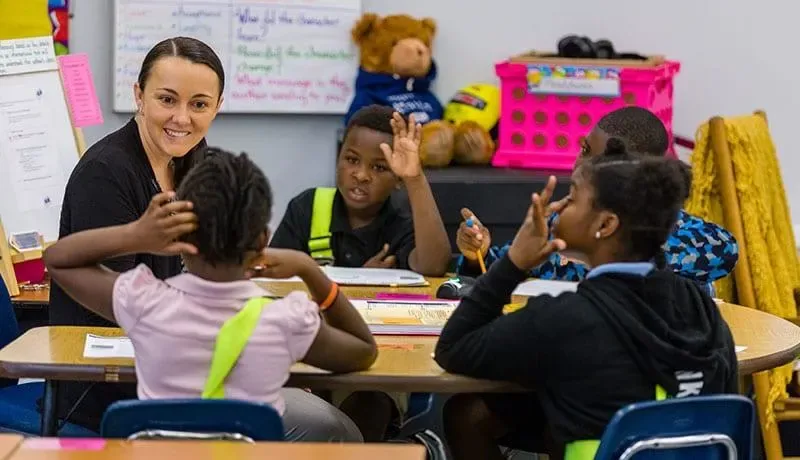
In a teacher-directed classroom, the teacher is the engine of every minute: explaining, re-explaining, redirecting behavior, and pulling disengaged students back in. Students are harder to keep engaged than ever, and each new initiative adds to the load.
Teachers aren’t tired because they care too little. They’re tired because the traditional model asks them to carry everything.
Appreciation weeks, wellness days, and protecting planning time help at the margins. But teachers spend most of their day in the classroom, and if the classroom is unchanged, so is the exhaustion.
Lasting relief comes from changing how the classroom works.

Student-led teams with roles and protocols take on the discussion, problem-solving, and peer support that teachers used to do alone.
When students are engaged in rigorous team tasks and regulating each other, teachers spend less time redirecting. Students learn self and peer regulation and how to manage conflict.
The pilot is voluntary. Research on 422 educators found that autonomy shapes whether teachers adopt new practices, which is why the model starts with the volunteers of the willing.
Pilot teachers learn together and have an Instructional Empowerment coach, a former educator, supporting them.
Clear norms for respectful discourse, collaborative problem-solving, and shared responsibility help create a classroom culture where teachers and students can succeed. Over time, student teams build trust, strengthen their sense of belonging, and become a connected community of learners and scholars.
Across 570 teachers in 76 schools, stronger implementation of the Model of Instruction for Deeper Learning was linked to significantly lower teacher burnout. At one Florida elementary school, teacher turnover fell from 56% to 17%.
A study of 570 teachers across 76 schools in 10 districts found significantly lower burnout among teachers at schools with stronger implementation of the Model of Instruction for Deeper Learning (r = −0.38, p < .001).
Applied Research Center brief (2025)As teachers at Moseley Elementary in Palatka, Florida implemented the model, the school built a culture of professional growth and reduced teacher turnover from 56% to 17%.
Moseley Elementary case study (2019)A peer-reviewed study of 422 educators across 41 schools in 7 states found that leadership style affects teacher adoption of instructional innovation through teachers’ sense of autonomy and innovativeness, evidence for the voluntary, principal-supported pilot approach.
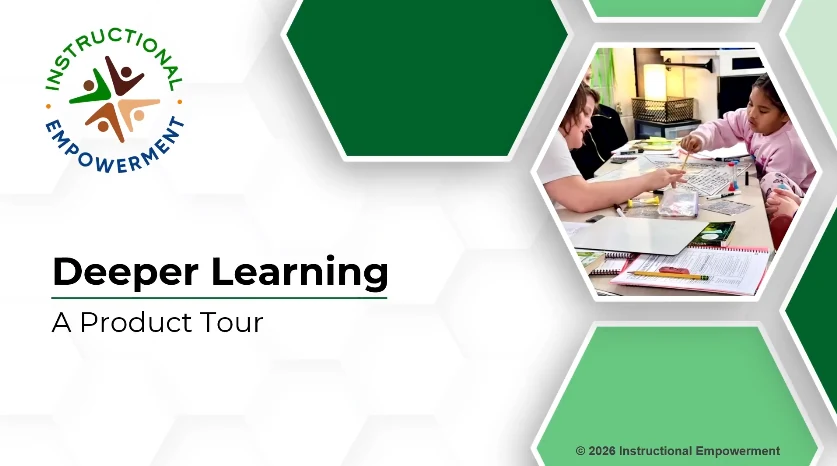
Discover Education (2026)See a classroom shift from teacher-led to student-led, the toolkit up close, and Empowerment Central’s AI-assisted lesson planning.

“Everything changed when we got the whole school behind student-led team learning.”
“The coalition grows naturally from within as teachers see and hear about the successes of their peers.”
“It has made us better, more effective teachers and leaders.”
You invite teachers to volunteer; you don’t assign them. A team of 3 to 5 teachers learns the Model of Instruction for Deeper Learning together through interactive modules that take under 1 hour a week and apply in class the next day. An Instructional Empowerment coach, always a former educator, supports the team through live virtual coaching sessions.
Students learn team roles, norms, and protocols. Early wins are often visible in the first week.
Teachers design rigorous, interdependent team tasks from the curriculum they already use, and shift from directing all aspects of learning to coaching students toward greater ownership of learning.
You review student evidence with your team and decide whether to expand. Classrooms begin evolving within weeks.
Teachers report this is the support they and their students need. Teachers volunteer, spend under 1 hour a week on learning modules, apply what they learn the next day, and have a coach. As students take on more of the learning, the daily load shifts from the teacher to the students.
Burnout builds when teachers carry every minute of instruction and behavior management. Student-led team learning shifts that work to structured student teams. A 570-teacher study found significantly lower burnout where implementation was stronger.
Students follow team norms for respectful debate, resolving conflicts, and supporting each other. Each teammate becomes a trusted peer, which builds belonging and shared responsibility for learning.
Teachers spend under 1 hour a week on interactive learning modules and apply what they learn the next day. Live virtual coaching sessions are 1 hour each: 2 in Pilot One, 4 in Pilot Two.
No. The Model of Instruction for Deeper Learning works with your adopted curriculum and high-quality instructional materials. Teachers learn to turn existing lessons into rigorous, interdependent team tasks.
The model is used in elementary, middle, and high schools across all content areas. Classroom Toolkits are grade-band specific.
At the end of the pilot, you review results with your team and your Instructional Empowerment coach. Schools can expand by adding a second cohort of volunteers, upgrading to include coaches and leaders, or bringing onsite professional development to the whole staff.

Our mission is to end generational poverty and eliminate achievement gaps through redesigned rigorous Tier 1 instruction that ensures deeper learning for ALL students.
Contact Us© 2026 Instructional Empowerment. All Rights Reserved. Privacy Policy | DMCA Notice | Contact