District Partnerships, School Improvement, Teacher Professional Development

Transform Classrooms from Teacher-Directed to Student-Led

Instructional Empowerment is leading a movement in education by redesigning how students learn and using data-backed research to increase student achievement and engagement. 

Our classroom-tested model gives students the skills they need to thrive in a complex world while driving increased enrollment back to public schools.

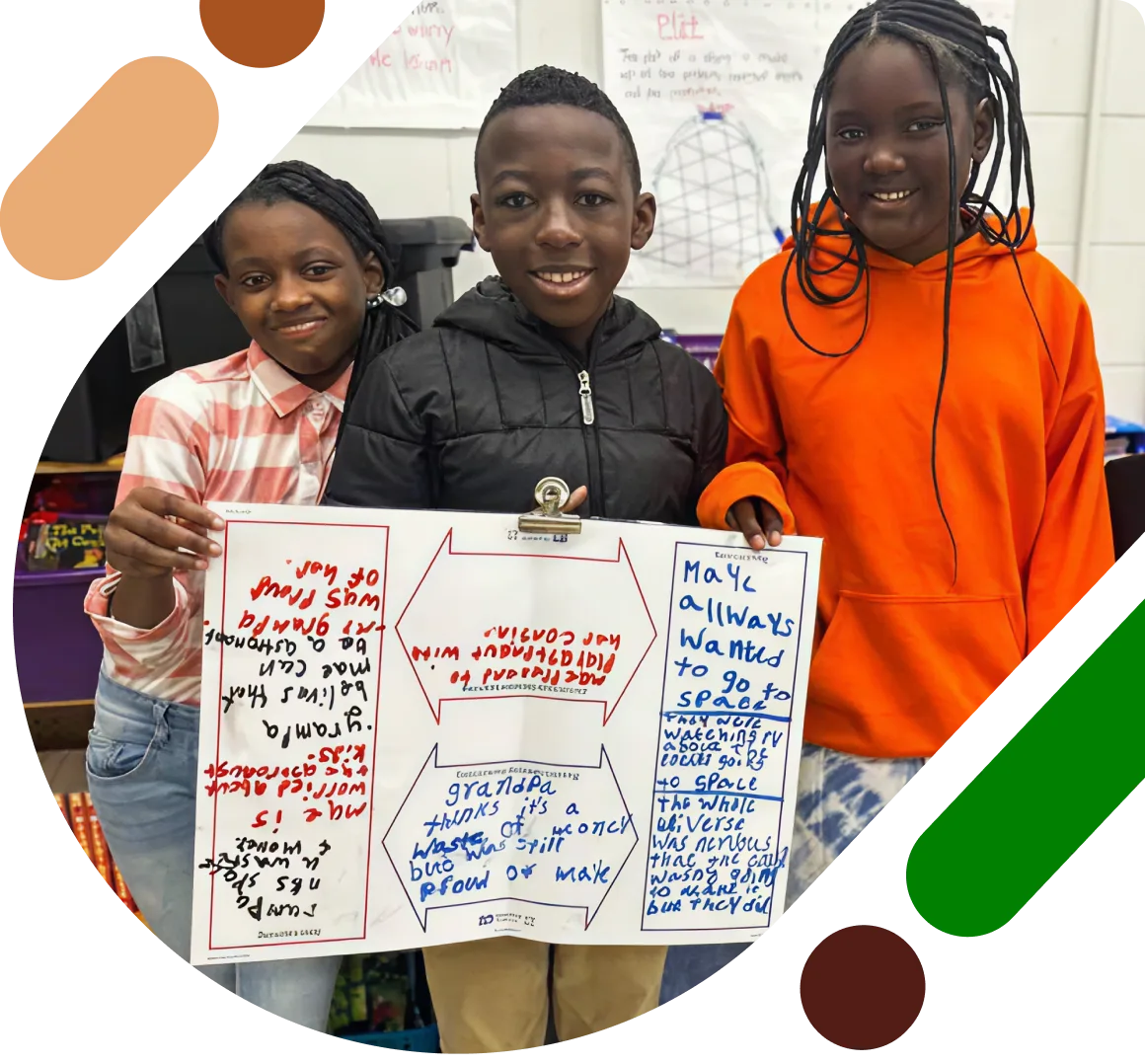
Three elementary students hold up a mat resource from the Model of Instruction for Deeper Learning.

Students from Shaw Elementary School proudly share a tool they used to self-direct their own learning.

Real Classrooms. Real Change. Real Growth.

+30.3

Points in Reading

Muessel Elementary raised 3rd grade reading proficiency from 16.7% to 47%.

252

Fewer Behavior Referrals

Willard K-6 School reduced office-managed referrals from 288 to 36.

97%

Teacher Retention

Lakewood Elementary increased teacher retention from 30% to 97%.

Twice the Reduction in Chronic Absenteeism

Across elementary, middle, and high school partners, absenteeism fell by a median rate of 5.6%, over double the national average reduction (2%).

Exited State Accountability in One Year

McLaughlin Middle closed achievement gaps and outperformed its district’s learning rates after one year of partnership.

“It's a beautiful, cohesive approach that I've not seen in any of the previous work I've done in my career."

Justin Endicott is the principal of Huff Consolidated Elementary and Middle School in Hanover, West Virginia. He and his teachers partnered with Instructional Empowerment to implement the Model of Instruction for Deeper Learning, which included professional development and coaching support. Justin shared, “I have seen achievement results from just one year. But more importantly than that, it shifted the whole culture of my building.”

Middle school students engage in a team and write on a mat resource from the Model of Instruction for Deeper Learning as part of a school partnership.
Students at Goddard Junior High School work together to build skills in communication, resourcefulness, and leadership.

Our Mission Drives Our Results

Instructional Empowerment’s mission is to end generational poverty and eliminate achievement gaps through redesigned rigorous Tier 1 instruction that ensures deeper learning for ALL students.

We see our mission validated as students in our partner schools nationwide—including students with disabilities, English learners, and students from low socioeconomic backgrounds—develop the crucial high-agency skills needed for success in a rapidly evolving workplace.

Objective, Independent Research Center with Rigorous Testing

Instructional Empowerment founded an independent Applied Research Center to ensure every project meets the highest federal research standards and works effectively in all schools and classrooms we serve.

A What Works Clearinghouse Certified Reviewer leads the Applied Research Center, ensuring everything Instructional Empowerment does is both research-based and evidence-based. We start with a robust theoretical research basis, then we rigorously test our methods to prove they achieve replicable results in various situations, across various populations of students.

Every activity, strategy, and intervention we use has attained or is in the process of attaining criteria for evidence-based practices under the federal Every Student Succeeds Act (ESSA).
A diagram showing brain activity when students are reading, listening, recalling during traditional instruction or explaining and coaching their peers while engaging in deeper learning.
In these PET scans of the brain, there is higher activity evident when explaining and coaching, which is the focus of student-led teaming. See The Power of Student Teams (2019) for additional neuroscience research.

The Building Blocks of Student Success

Researchers at Instructional Empowerment’s Applied Research Center have spent decades analyzing data from thousands of classrooms. Our findings show that shifting classrooms from teacher-directed instruction to a team-based learning model is the key to reaching ALL students. Achievement gaps close and students are prepared with the skills for a lifetime of success when classrooms foster:

Deeper Learning

What it means: Students lead their own learning through teacher-coached rigorous, collaborative tasks that build both academic understanding and essential life skills like critical thinking, communication, and teamwork.

Why it matters: Deeper learning helps all students grow into confident, capable leaders who can transfer their knowledge to new situations, work effectively with others, and navigate a complex, changing world.

Rigor

What it means: Students are consistently challenged to think deeply, apply knowledge in new ways, and engage in complex tasks that stretch their cognitive abilities.

Why it matters: Rigor is not about doing more work—it’s about doing meaningful work that pushes students to analyze, evaluate, create, and persist through challenges.

Agency

What it means: Students take ownership of their learning by setting goals and reflecting on progress. They are active participants, not passive recipients. They make decisions, solve problems, and contribute meaningfully in the classroom.

Why it matters: When students have agency over their learning, they become more motivated, engaged, self-aware, and prepared for independence required in life and work beyond school.

Why Teachers and Students
Love the Shift to Deeper Learning

In classrooms across the country, the shift to deeper learning is changing the daily experience for teachers and students:

Shared responsibility: Teachers no longer carry all the weight. Students step up with ownership and motivation.
Increased joy for teachers: Behavior management decreases and educators experience more fulfilling moments.
Stronger belonging for students: Every student, including those with learning differences, connects with peers and finds confidence.
Higher academic engagement: Students explain, problem-solve, and collaborate as they directly interact with their peers more deeply every day.

Here’s What Teachers and Students Are Saying:

Joli Schroeder4th Grade Teacher, Cedar River Academy at Taylor Elementary School, IA

It's more fulfilling to watch [the students] interact with one another. I think I have more ‘aha moments,’ watching them as they interact with peers and seeing how much they can do and understand with one another. I think that's what changed for me: I get more moments out of my day that are enjoyable.

Marie Christine Villegas3rd Grade Teacher, Desert Valley Elementary School, AZ

My favorite part of teaching is when I see my students learn. I can see it’s not only me being invested in their learning, they are also invested and motivated. They track their own learning, and they are accountable with their learning. They know where they’re going, what’s the target, and how to get there.

3rd Grade StudentCedar Rapids Community School District, IA

The facilitator makes sure everybody gets heard and everyone has a chance to speak. With the facilitator job, it helps me with talking to people and helps to problem solve. One of my classmates was struggling with what to do. So I was able to explain what the problem is and how to solve it. We figured it out as a student-led team, as a team all together.

10th Grade StudentWoonsocket Education Department, RI

I had an IEP. I’m also dyslexic. If it’s a whole classroom, I can’t really talk that much, but I don’t mind it in a group. That’s how I feel comfortable. A lot of communication is really important, especially after high school. I’ve also been more open and communicating with other kids than last year, which helped me a lot, because I have more new friends than I had last year.

Why Schools and Districts Partner
with Instructional Empowerment

Schools and districts value Instructional Empowerment because the work goes deeper than a program. We build shoulder-to-shoulder partnerships that strengthen capacity and drive sustainable improvement.

True partnership: Leaders feel genuine care and investment in their schools, teachers, and families.
Personalized expert support: Our coaches—all former educators—tailor their support to each school’s unique context.
Capacity at every level: Students, teachers, and administrators alike build the skills to succeed.
Systems that last: Focusing on instructional leadership creates sustainable improvements in student outcomes.

Here’s What School and District Leaders Are Saying:

Sarajean McDanielExecutive Director of Leadership Development, Putnam County School District, FL

It’s more than partnering with a business—I feel like everyone truly cares and is invested in our school, in the leadership team, and in the teachers and parents.

Brandon WhiteFormer Assistant Superintendent of Academics, South Bend School Community Corporation, IN

The reason why I have confidence in Instructional Empowerment is because there is grounded research in coaching. The impact they can have on a novice teacher up to a very seasoned teacher can be tracked and researched. They are very intentional about who they bring. They have a background with schools that serve students with lives like ours. I think that is very important to the work that they do.

Javier AguileraFormer Principal of De Zavala Elementary School, Midland, TX

Students are confident in their voice as they collaborate more and more. Teachers are more confident in their practice and ability to change lives. Campus administrators and coaches are more confident in their ability to be effective in instructional improvement.

Jolene GalpinFormer Principal of Mildred Osborne Charter School, New Orleans, LA

We have seen a huge improvement in the quality of our Friday PLCs that are led by our content leaders. Strengthening the instructional leadership of these individuals is having a direct positive impact on student academic outcomes.

Services That Empower Educators and Their Students

We partner with hundreds of schools and districts to transform legacy education systems, elevate the capacity of leaders and teachers, and shift instruction so all students become successful learners. We serve a wide range of partners, from districts seeking turnaround for their lowest performing schools to high-achieving districts aiming to reach the next level. 

Elementary school teacher sits with four students at a table as they engage in a team using strategies from job-embedded teacher professional development through the Model of Instruction for Deeper Learning.

Individual teachers shift their classrooms to deeper learning through job-embedded professional development and practical resources.

Explore Teacher PD
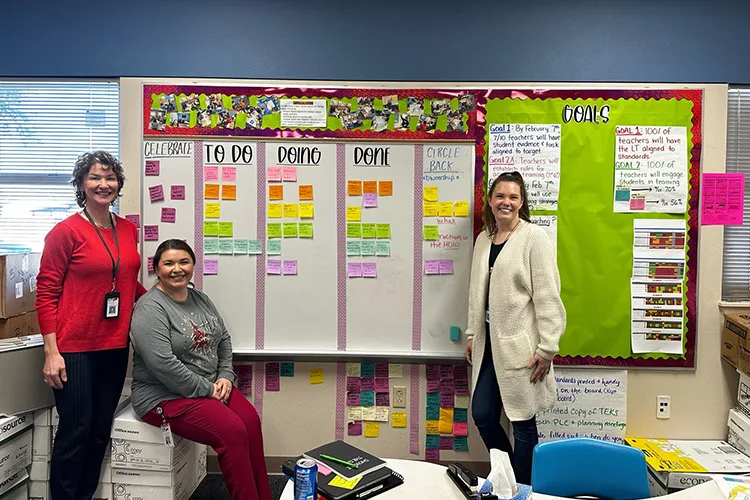
Three school leaders stand in front of their action board as part of leadership coaching during a school pilot partnership.

School leaders build a small team of teachers to pilot deeper learning and see measurable results within 16 weeks.

Explore School Pilots
School leaders sit at a table with an expert coach and practice using measurement tools as part of the professional development for rapid school improvement.

Schools seeking sustainable turnaround benefit from a full-service partnership that includes professional development, coaching, measurement tools, and more.

Explore School Improvement

Districts create systems to scale deeper learning across schools and continue improving year after year.

Explore District Pilots

Research and Articles

We share peer-reviewed research studies from our Applied Research Center and publish case studies and thought leadership articles by our staff of researchers, former educators, and award-winning authors. Our goal is to bring new insights about deeper learning to district leaders, school leaders, and teachers and make the research accessible and actionable. Explore our work and subscribe to receive the latest articles.  

Subscribe for More Research and Articles

Ready to Talk About Deeper Learning in Your School or District?

Connect with an experienced educational leader to explore how our partnerships work, best practices for effective implementation, and how we’re helping schools and districts build strong systems for deeper learning. 

Talk to a Deeper Learning Expert