Rigorous tasks built from your curriculum
Teachers learn to plan interdependent team tasks at the full intent and rigor of the standards, using the curricular resources you already own. Nothing to replace.
The Model of Instruction for Deeper Learning is a research-validated instructional model, supported by ESSA Tier 2 evidence, that raises rigor and achievement by shifting classrooms from teacher-directed lessons to student-led team learning with your existing curriculum.
Start with five volunteer teachers. See the difference in weeks.
Explore the Model of Instruction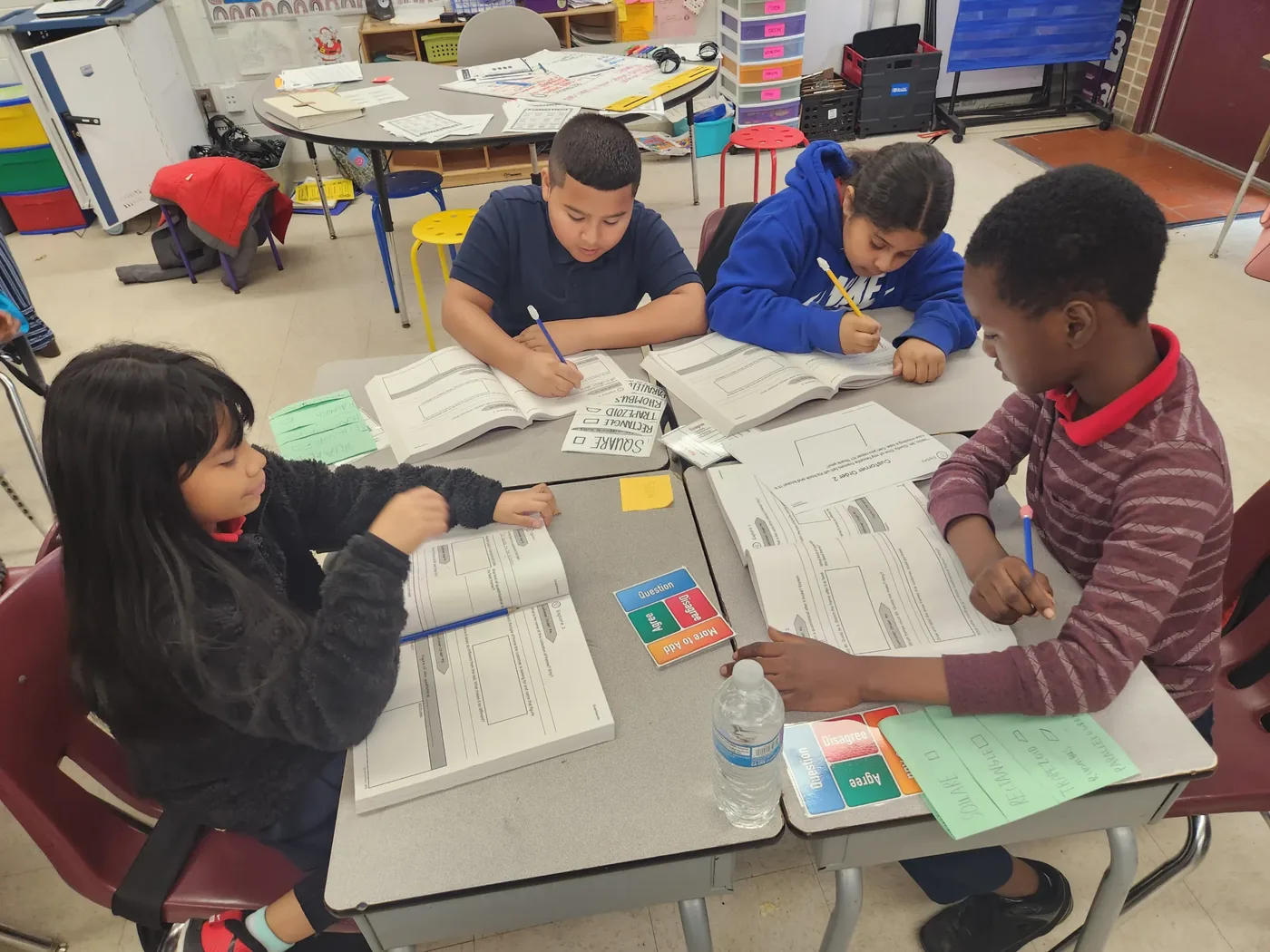
Help teachers turn your adopted curriculum into rigorous tasks, rich academic discourse, and deeper student thinking. Start with volunteer teachers and examine the changes in their classrooms.
When students collaborate on rigorous tasks and make their thinking visible, access to rigor expands to all students and achievement increases. Strong curricular materials need classroom structures that help students engage with challenging content, receive feedback, and demonstrate understanding. Teachers need a step-by-step system to make that work visible in their classrooms.
In Instructional Empowerment’s 2026 District 11 pilot study, students taught by competency-verified teachers scored an adjusted 22.44 STAR scale-score points higher in ELA and 18.24 points higher in mathematics than matched comparison students. The study compared the same district, grade levels, and curriculum. The quasi-experimental findings show an association with verified implementation.[2]
Most Tier 1 instruction is still teacher-directed. Students listen, then work alone, and depend on the teacher to rescue them when the task gets hard. With good intentions, teachers hold back the curriculum’s rigor, add scaffolds, and simplify tasks so students won’t struggle.
The result is a classroom where the teacher works hardest, and students rarely wrestle with grade-level thinking. Over time, more students fall behind and get referred to Tier 2 and Tier 3, turning the MTSS pyramid upside down.
For years, schools have invested in interventions, pull-outs, and tutoring programs to help students catch up. While these supports can be valuable, they typically occur outside of the core instruction instead of strengthening it. Students then return to the same classroom practices for the majority of their day.
Likewise, simply scripting lessons has not been enough. Lasting improvement requires strengthening Tier 1 instruction itself so that every student can access, engage in, and succeed with rigorous learning in the classroom.
Teachers learn to plan interdependent team tasks at the full intent and rigor of the standards, using the curricular resources you already own. Nothing to replace.
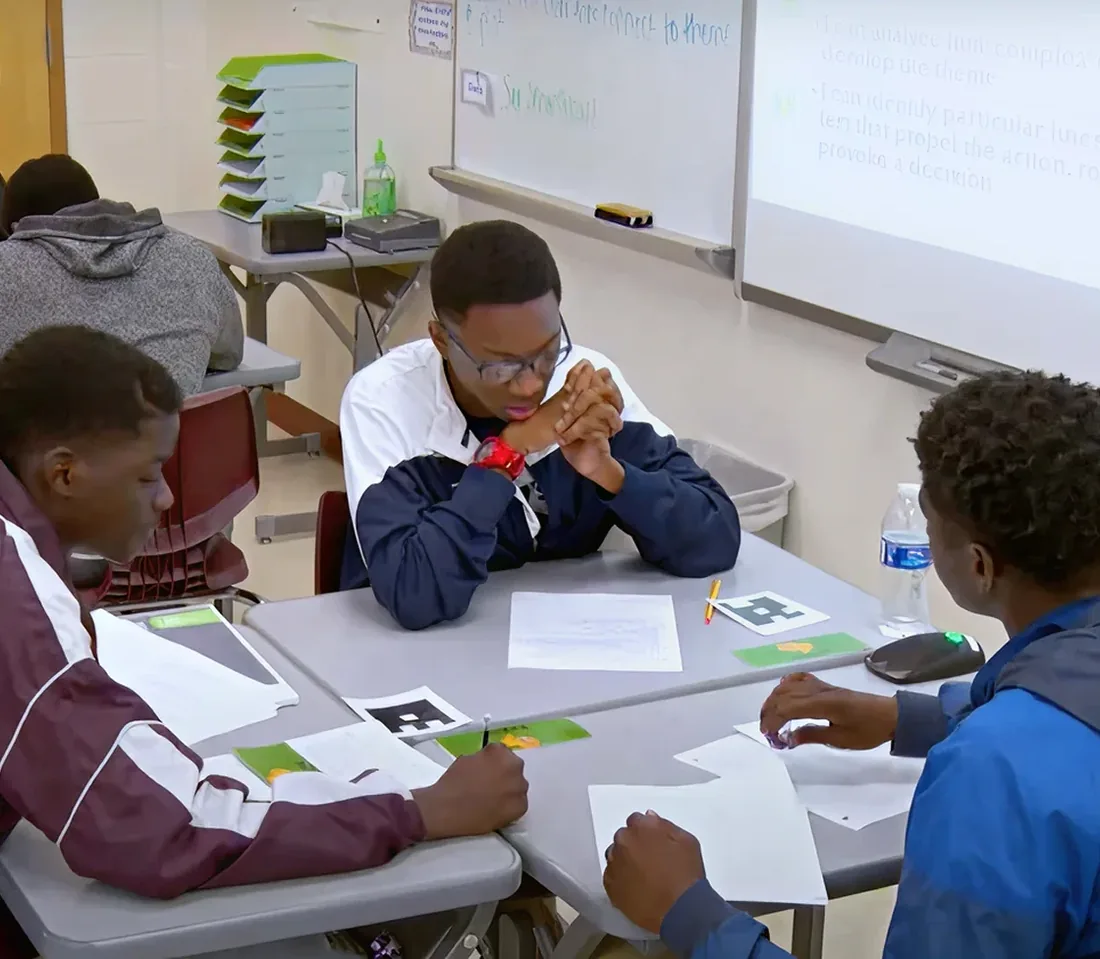
Students work in small teams with defined roles, norms, and protocols. When a task gets hard, teammates help each other think it through instead of relying on the teacher.
Protocols require equal voice, so every student engages in academic discourse using content vocabulary, including students who used to stay quiet.
As students lead, teachers move from directing every minute to monitoring and coaching the learning in every team.
In Colorado Springs School District 11, students of teachers with verified implementation scored an adjusted 22.44 STAR points higher in ELA and 18.24 points higher in math than matched comparison students, growth equivalent to an additional 55% in ELA and 35% in math, in a quasi-experimental study.
Applied Research Center brief (2026)A 10,431-student study across 22 Des Moines schools, meeting What Works Clearinghouse design standards with reservations, found 11 extra days of reading and 6 of math in year one, and 21 and 10 in year two. High schoolers gained 61 in reading and 42 in math.
Des Moines Public Schools study (2019)Over two years, Willard Elementary raised ELA proficiency from 10.9% to 35% and math proficiency from 15.6% to 24.7%, ranking #2 in ELA growth among 107 Illinois K–6 schools.
Willard Elementary case study (2025)In a study of 6,200 students across 318 classrooms, teachers with at least 70% progress toward verified implementation (the Implement badge) saw an average 4.38-point increase on the FAST ELA benchmark compared with teachers with no progress (p = .04), showing that deeper implementation is associated with higher achievement.
Applied Research Center brief (2025)Willard Elementary’s principal and a pilot teacher share how a small group of volunteers started the shift, what changed for students in the first weeks, and how the whole school followed.

[Webinar form goes here: paste the HubSpot embed code in this block]
We’ll email your link. No sales calls unless you ask.
[Placeholder: 2 short paragraphs and 3 to 5 quotable lines, added after the recording.]
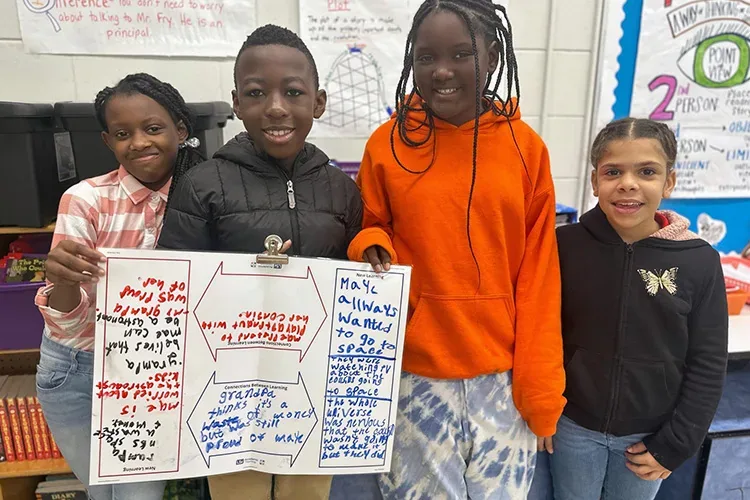
“When we implemented the Model of Instruction, what I’m seeing now is we are catching kids that we did not catch.”
“IE’s structure is better than a program because this is about true teaching. This is truly about how we look at teaching our students, how we get them to become independent learners.”
“After the Model of Instruction for Deeper Learning was implemented, those learning gaps started to decrease significantly. With teaming in place, it has helped my students.”
“For students to get to that next level in their learning, they have to come up with their own thinking, share it, debate it, and analyze it. The Model of Instruction for Deeper Learning has been really instrumental in facilitating that.”
“The teacher’s role has changed because they’re trying to let us do most of the work, to take control of our learning.”
You invite teachers to volunteer; you don’t assign them. A team of 3 to 5 teachers learn the Model of Instruction for Deeper Learning together through interactive modules that take under 1 hour a week and apply in class the next day. An Instructional Empowerment coach, always a former educator, supports the team through live virtual coaching sessions.
Students learn team roles, norms, and protocols. Early wins are often visible in the first week.
Teachers design rigorous, interdependent team tasks from the curriculum they already use, and shift from directing all aspects of learning to coaching students toward greater ownership of learning.
You review student evidence with your team and decide whether to expand. Classrooms typically experience a full transformation within weeks.
Because the pilot starts with teachers who want to try it, you expand something your staff already supports, not something you have to sell.
Academic rigor means students regularly analyze, evaluate, create, and persist through complex, grade-level tasks. It isn’t more work; it’s more meaningful thinking. The Model of Instruction for Deeper Learning makes that level of thinking possible for every student through student-led teams.
Yes. It is supported by ESSA Tier 2 (Moderate) evidence, including a 10,431-student Des Moines study that meets What Works Clearinghouse design standards with reservations. A separate peer-reviewed study of 48 schools in SAGE Open (2024) provides additional, correlational evidence.
Classroom changes such as engagement and discourse are often visible in the first week, and classrooms typically transform within weeks. Achievement gains track implementation depth: in a 318-classroom study, teachers at 70% implementation or higher saw significantly greater gains.
Teachers spend under 1 hour a week on interactive learning modules and apply what they learn the next day. Live virtual coaching sessions are 1 hour each: 2 in Pilot One, 4 in Pilot Two.
No. The Model of Instruction for Deeper Learning works with your adopted curriculum and high-quality instructional materials. Teachers learn to turn existing lessons into rigorous, interdependent team tasks.
The model is used in elementary, middle, and high schools across all content areas. Classroom Toolkits are grade-band specific.
At the end of the pilot, you review results with your team and your Instructional Empowerment coach. Schools can expand by adding a second cohort of volunteers, upgrading to include coaches and leaders, or bringing onsite professional development to the whole staff.

Our mission is to end generational poverty and eliminate achievement gaps through redesigned rigorous Tier 1 instruction that ensures deeper learning for ALL students.
Contact Us© 2026 Instructional Empowerment. All Rights Reserved. Privacy Policy | DMCA Notice | Contact