A synthesis of peer-reviewed studies, ESSA Tier 2 evidence, and district outcomes
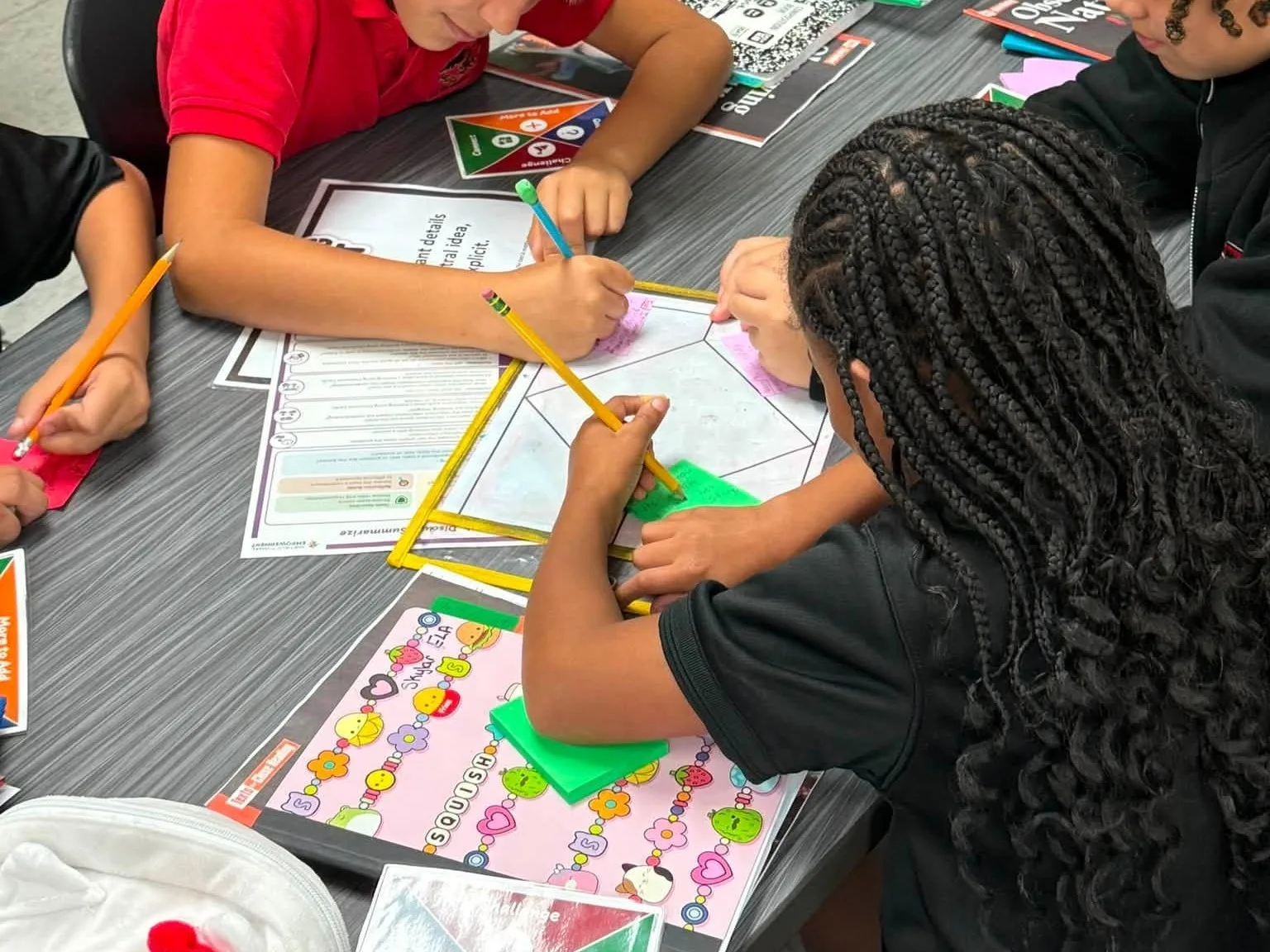
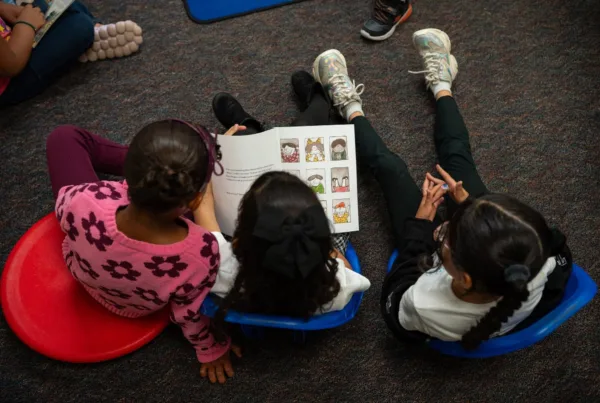
Students at a partner school engaged in rigorous learning through the Model of Instruction for Deeper Learning. Source: LLT Academy via Facebook.
September 2026
How Does the Model of Instruction for Deeper Learning Work?
The Model of Instruction for Deeper Learning® is a research-based instructional model that shifts classrooms from teacher-directed lessons to student-led teams engaged in academic discourse. Each team works within defined structures—assigned roles, discussion protocols, critical thinking guides, and interdependent tasks that teachers build from their district’s existing high-quality instructional materials—so students can take on more responsibility over time.
The model works with any curriculum, at any grade level, in any subject. Teachers implement it through professional learning, coaching, and classroom resource kits, and can be verified through a certified process that measures student evidence, not just teacher actions. The model’s effect on student achievement meets ESSA Tier 2 (Moderate Evidence) standards.
Evidence of Positive Outcomes
This synthesis draws on peer-reviewed research, Applied Research Center briefs, and case studies with district-reported data from partnerships in 12 states between 2016 and 2026.
Higher Academic Achievement
Districts implementing the model have seen double-digit proficiency gains and statistically significant achievement gains validated by matched-comparison research designs.
Colorado Springs School District 11 (CO): Double-Digit ELA and Math Gains
Colorado Springs School District 11 serves 23,458 students across 61 schools. In a quasi-experimental study spanning grades 2–11, researchers compared students of teachers with verified Model of Instruction for Deeper Learning implementation against matched comparison students in the same district, grade levels, and curriculum (357 students in ELA, 449 in math). This study establishes ESSA Tier 2 (Moderate Evidence)—the highest ESSA evidence level the Model of Instruction for Deeper Learning supports.
Results included:
- Students of teachers implementing the Model of Instruction for Deeper Learning scored 22.44 points higher in ELA on the STAR assessment than matched comparison students (p = .045).
- Students scored 18.24 points higher in math on the STAR assessment than matched comparison students (p = .011).
- Students demonstrated growth equivalent to an additional 55% in ELA and 35% in math beyond the typical fall-to-spring growth seen in District 11 students at the same grade levels.
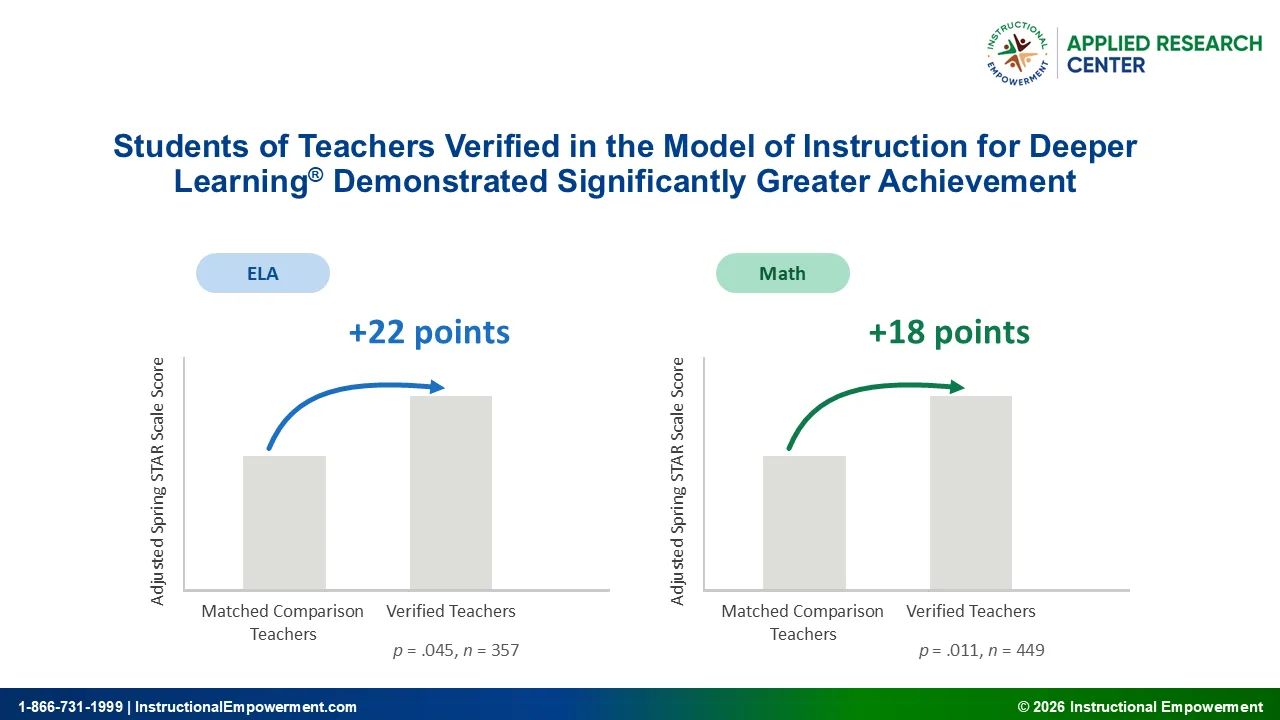
Adjusted spring achievement of students taught by verified vs. matched comparison teachers.
Read the full case study: Double-Digit ELA & Math Gains Associated with Instructional Model (2026)
Cedar Rapids Community School District (IA): Districtwide Academic Growth in One Year
Cedar Rapids Community School District, Iowa’s second-largest district, implemented the Model of Instruction for Deeper Learning across 31 schools serving more than 14,500 students, with support ranging from comprehensive turnaround efforts to lighter implementation support. After one year:
State Assessment Results
- Districtwide math proficiency increased by 5.3 percentage points on the state assessment
- Districtwide ELA proficiency increased by 2.5 percentage points on the state assessment
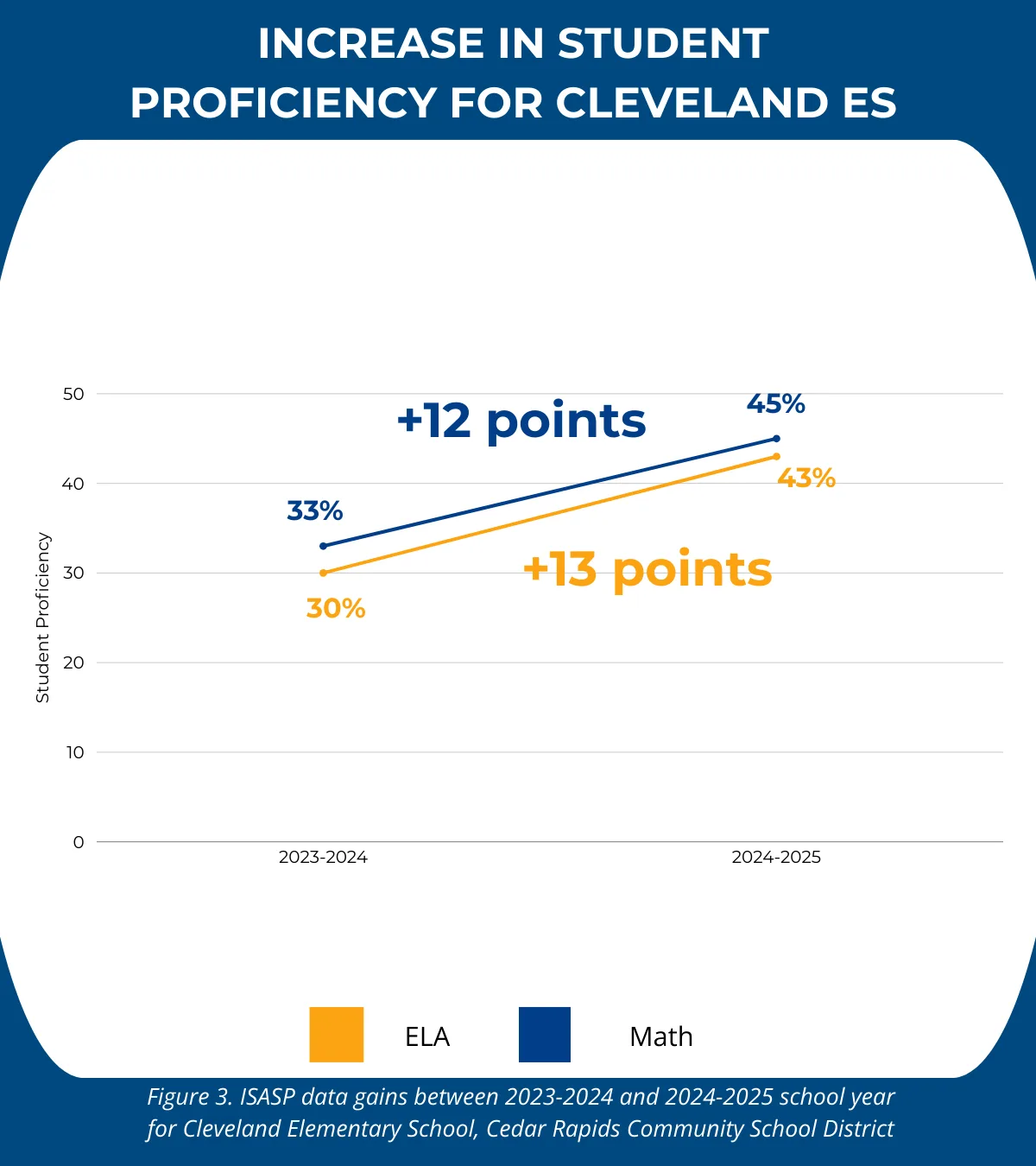
The two schools that showed the highest gains on the state assessment, according to Instructional Empowerment’s analysis, were:
- City View High School increased 19.5 percentage points in math and 17.3 percentage points in ELA
- Cleveland Elementary School increased 12.4 percentage points in math and 13.2 percentage points in ELA
Read the full case study: Cedar Rapids Community School District (2026)
Implementation Depth Drives Results: 6,200 Students Across 318 Classrooms (IA)
A 2026 Applied Research Center study examined whether teachers’ verified implementation of the Model of Instruction for Deeper Learning was associated with gains in student achievement by studying data from Cedar Rapids Community School District, Iowa.
Across 6,200 students in 318 classrooms, teachers who reached at least 70% implementation of the Model of Instruction for Deeper Learning saw an average 4.38-point increase in student performance on the FAST ELA benchmark assessment (p = .04).
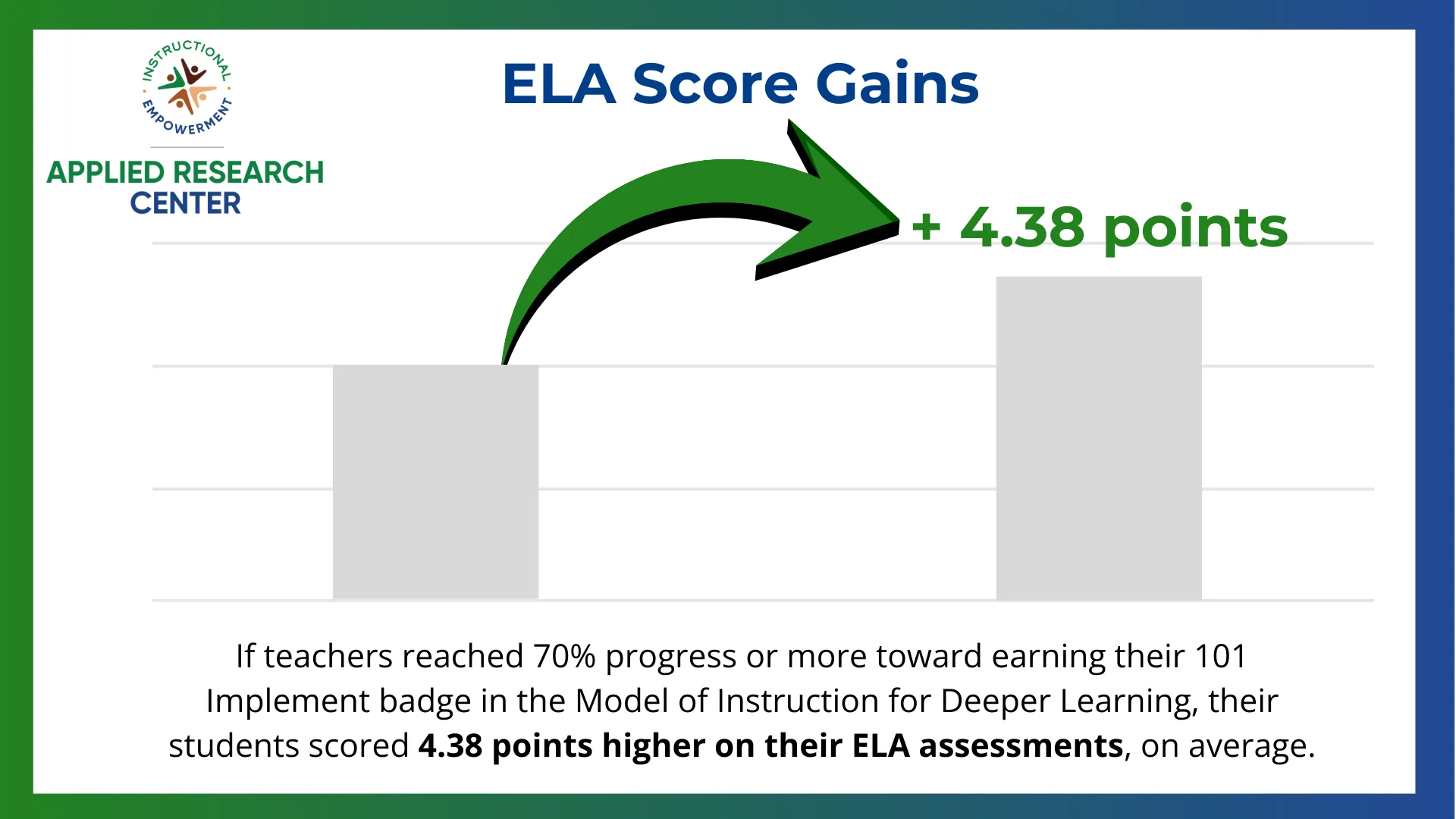
Students of teachers who reached at least 70% implementation scored 4.38 points higher on the FAST ELA benchmark assessment, on average.
Read the full research brief: Validated Impact: Linking Deeper Learning Professional Development to Student Achievement (2026)
Willard K–6 School (IL): Top-Tier Growth in ELA and Math
Willard K–6 School, part of School District U-46, the second-largest school district in Illinois, faced persistent challenges with student achievement.
After two years of partnership:
- ELA scores increased by 24.1 percentage points
- Math scores increased by 9.1 percentage points
- Posted the second-highest ELA gains among 107 K–6 elementary schools participating in the 2024 Illinois state assessment
- Ranked ninth in math growth statewide
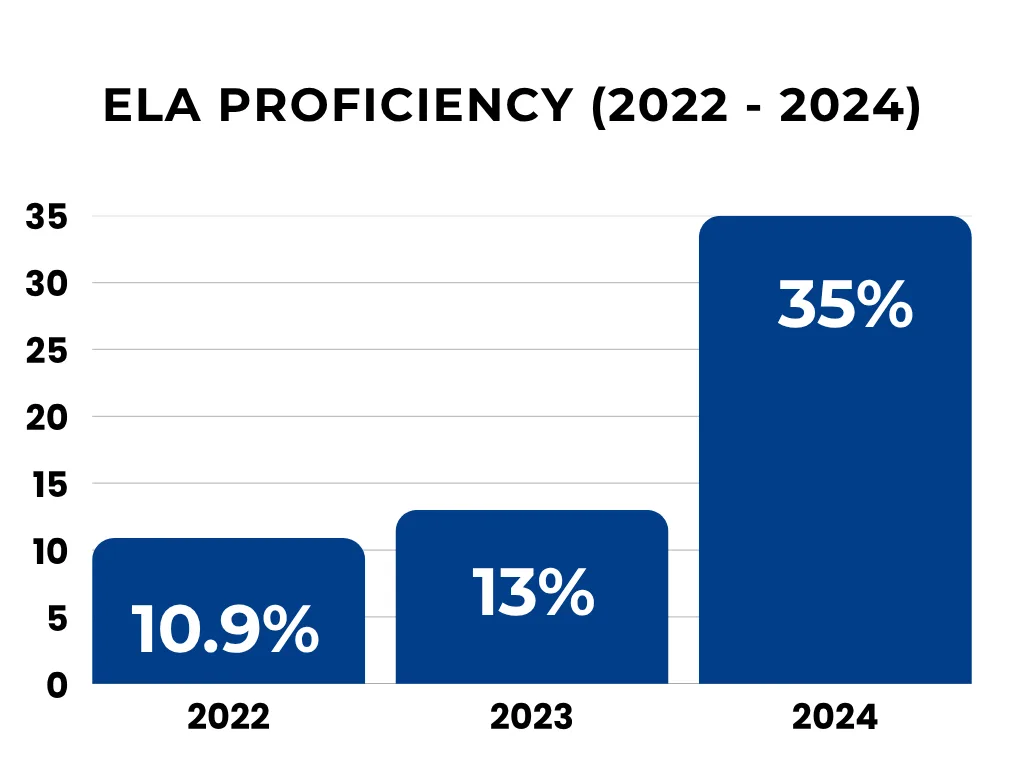
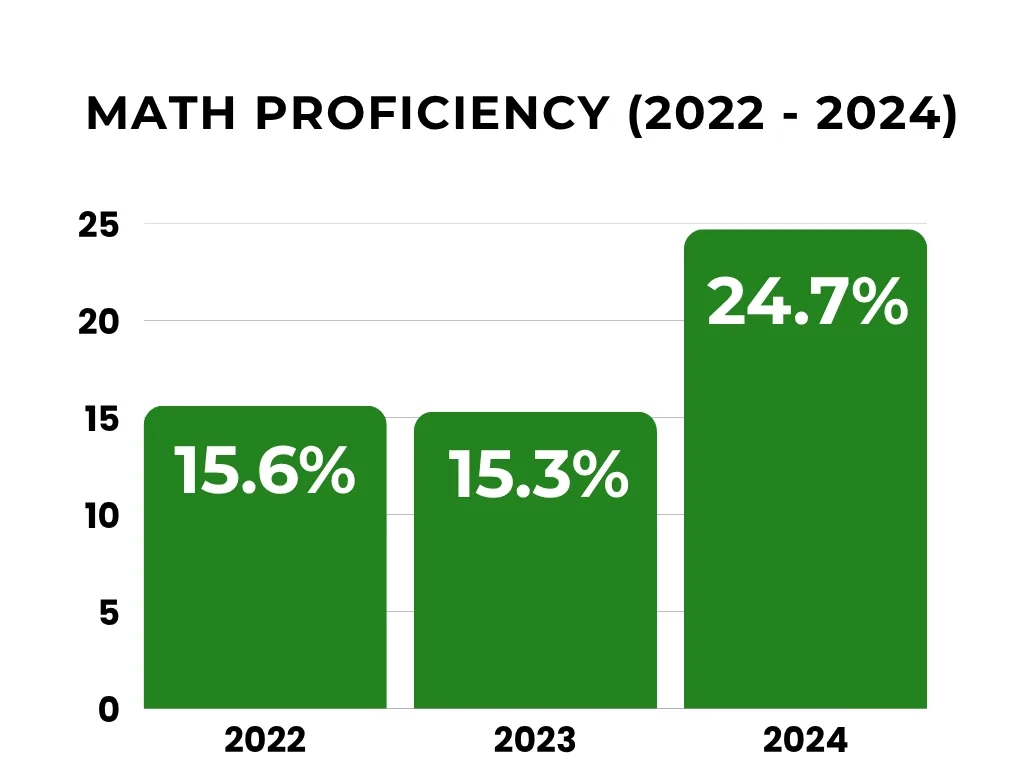
ELA and math proficiency at Willard K–6 School on the state assessment, 2022–2024.
*Note: This analysis includes only schools serving grades K–6 and excludes other elementary configurations such as K–5.
Read the full case study: How Willard Elementary Climbed to #2 in ELA Growth and #9 in Math Among Illinois K–6 Schools (2025)
Woonsocket Education Department (RI): Higher Proficiency Rates in ELA and Math
Despite efforts to foster student engagement, Woonsocket Education Department struggled to move beyond traditional “turn and talk” instruction. As the district introduced the Model of Instruction for Deeper Learning and some teachers began to adopt it, the district evaluated the model’s effectiveness in raising student proficiency by comparing Rhode Island state assessment data between implementing classrooms and non-implementing classrooms. They analyzed six classrooms across three grade levels and found:
- Higher ELA proficiency across all grade levels studied, with gains ranging from 2.8 to 16.7 percentage points.
- Higher math proficiency across all grade levels studied, with gains ranging from 10 to 27 percentage points.
Read the full case study: Woonsocket Education Department Boosts Student Engagement and Achievement Through Model of Instruction for Deeper Learning (2024)
McLaughlin Middle School (FL): District Leading Performance
McLaughlin Middle School in Polk County, Florida, entered its partnership after years of persistently low performance. As part of a comprehensive turnaround effort, the school built its improvement strategy around instructional practices supported by the Model of Instruction for Deeper Learning.
After implementation:
- Math achievement increased by 10 percentage points
- ELA achievement increased by 9 percentage points
- Earned its best academic results in seven years
- Outperformed the rest of the district despite the challenges of the COVID-19 pandemic
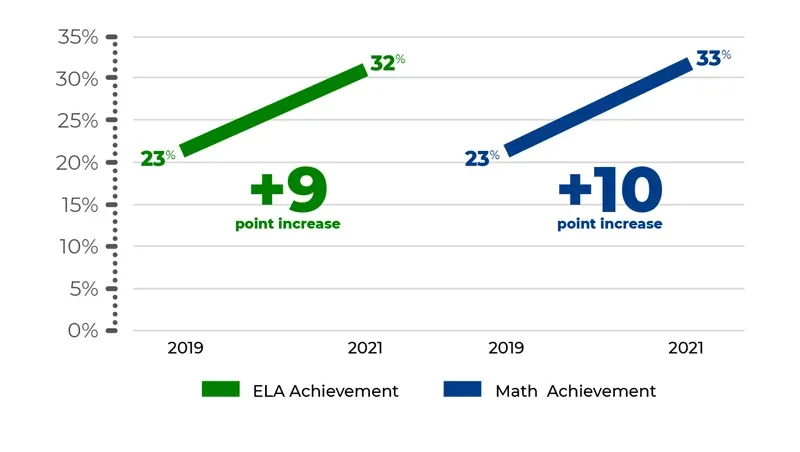
Read the full research report: Middle School Students Outperformed District Learning Rates (2021)
Lakewood Elementary School (FL): Dramatic Gains Through School Turnaround
Ranked as Florida’s lowest-performing traditional public school in 2018, Lakewood Elementary built its turnaround effort around instructional practices supported by the Model of Instruction for Deeper Learning.
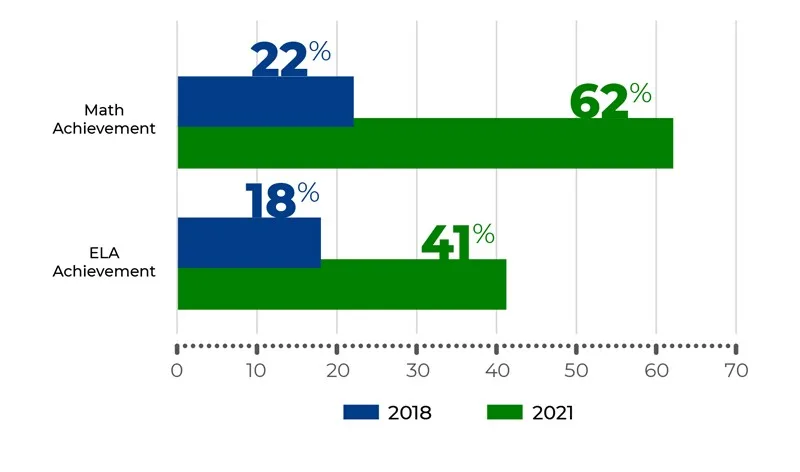
After three years:
- Math achievement increased by 40 percentage points, nearly tripling from pre-implementation levels
- ELA achievement increased by 23 percentage points, more than doubling from pre-implementation levels
Read the full case study: Lakewood Elementary: How This Florida School Raised Their State Rating from the Lowest to One of the Highest in the State (2021)
Des Moines Public Schools (IA): Research-Validated Achievement Gains
Des Moines Public Schools implemented academic teaming (now known as the Model of Instruction for Deeper Learning) as part of a broader partnership to establish demonstration schools.
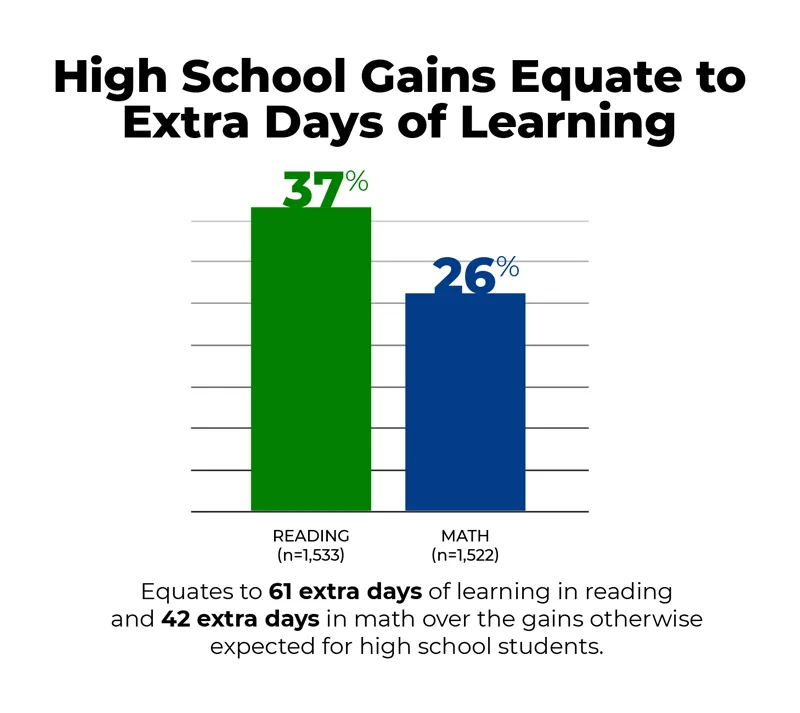
Results included:
- Achievement gains validated through a study of 10,431 students across 22 demonstration schools that met What Works Clearinghouse Design Standards with Reservations
- All demonstration school students gained the equivalent of an additional 11 days of learning in reading and six days in math
- High school students gained 61 extra days in reading and 42 in math
Starr Elementary & Stolley Park Elementary (NE): Academic Growth Through School Consolidation
Starr Elementary and Stolley Park Elementary implemented academic teaming, now known as the Model of Instruction for Deeper Learning, while consolidating two schools with two very different student populations—at Stolley Park 11% of students qualified for free or reduced-price lunch and at Starr 93% qualified.
The schools successfully united under a shared instructional vision and experienced academic growth. Students achieved learning gains across all tested subjects, including:
- Reading: average assessment gain of 9.51
- Math: average assessment gain of 12.29
- Science: average assessment gain of 3.20
Read the full historical case study: Stronger Together: A Review of How Two Schools Improved Instruction After Consolidating (2024)
William D. Moseley Elementary School (FL): Schoolwide Learning Gains
Ranked by the state as the fifth lowest-performing traditional public school in Florida, William D. Moseley Elementary School engaged in a partnership with our team for a comprehensive turnaround, including instructional practices supported by the Model of Instruction for Deeper Learning.
After implementation:
- ELA proficiency increased by 20 percentage points
- Math proficiency increased by 13 percentage points
- Share of students making learning gains rose from 32% to 65%, a 33-percentage-point increase
- Among students in the lowest-performing quartile, the share making learning gains rose from 34% to 73%, a 39-percentage-point increase
- Became a demonstration site, opening its classrooms to all 11 schools in Putnam County School District to observe and learn from its instructional improvement work
Read the full case study: William D. Moseley Elementary School: Becoming a School Where All Students Thrive (2019)
Closed Achievement Gaps
Cedar Rapids Community School District (IA): Closing Achievement Gaps in One Year
Cedar Rapids Community School District implemented the Model of Instruction for Deeper Learning districtwide across 31 schools and 14,500+ students, closing achievement gaps between multiple different student groups:
- Students from low socioeconomic backgrounds closed achievement gaps by up to 39% in math and 53% in ELA
- English learners closed achievement gaps by up to 27% in math and 6% in ELA
- Black students closed achievement gaps by up to 38% in math and 22% in ELA
- Black student math proficiency increased by 5.9 percentage points
- Black student ELA proficiency increased by 2.5 percentage points
Kenwood Leadership Academy, Cedar Rapids (IA): Gaps Closed Across Student Groups
Achievement gap closure was particularly robust at Kenwood Leadership Academy in Cedar Rapids Community School District. After one year of implementation, the school saw substantial proficiency gains among Black students, English learners, and students with disabilities.
Black/African American Students:
- ELA proficiency: 36% to 57% (+21 percentage points)
- Math proficiency: 36% to 48% (+12 percentage points)
- Science proficiency: 13% to 40% (+27 percentage points)
Students with IEPs:
- ELA proficiency: 10% to 31% (+21 percentage points)
- Math proficiency: 21% to 41% (+20 percentage points)
- Science proficiency: 0% to 36% (+36 percentage points)
English Learners:
- ELA proficiency: 24% to 38% (+14 percentage points)
- Math proficiency: 18% to 50% (+32 percentage points)
- Science proficiency: 0% to 20% (+20 percentage points)
Read the full case study: Cedar Rapids Community School District (2026)
Students with Disabilities: Gaps Reduced in ELA, Math, and Graduation Rates
A 2025 Applied Research Center analysis across four districts (data spanning 2023–2025) found that schools implementing the Model of Instruction for Deeper Learning closed achievement gaps for students with disabilities by up to 58% in ELA and 90% in math at the elementary level, and by up to 58% in ELA and 92% in math in the middle grades.
At North High School in Des Moines, the graduation rate for students receiving special education services rose 16.42 percentage points after one year, nearly closing the gap with students in general education (Toth & Sousa, 2019, p. 96).
Read the full analysis: Why Students with Disabilities Are Still Left Out—And How to Change That with Deeper Learning (2025)
English Learners: Gaps Reduced in ELA and Math
The same Applied Research Center analysis across four districts (2023–2025) found that schools implementing the Model of Instruction for Deeper Learning closed achievement gaps for English learners by 6% to 47% in ELA and 4% to 74% in math.
Read the full analysis: English Learners Are Capable of More—If We Make the Shift to Deeper Learning (2025)
McLaughlin Middle (FL): Achievement Gaps Narrowed for Black and Hispanic Students
At McLaughlin Middle School in Polk County, Florida, achievement gaps narrowed for many students as a part of a comprehensive school turnaround effort built on instructional practices from the Model of Instruction for Deeper Learning.
Achievement gaps closed in reading by:
- 35% for Black 7th graders
- 93% for Hispanic 7th graders
- Gap eliminated for Hispanic 8th graders
Achievement gaps closed in math by:
- 84% for Black 7th graders
- 90% for Black 8th graders
- 69% for Hispanic 7th graders
Read the full research report: How McLaughlin Middle School Exited Comprehensive Support Status, Received Its Best Results in 7 Years, and Outperformed Its District Learning Rates (2021)
Lakewood Elementary (FL): Achievement Gaps Narrowed for Students from Low Socioeconomic Backgrounds, Students with Disabilities, and Black Students
Through a broader school turnaround effort built on instructional practices from the Model of Instruction for Deeper Learning, Lakewood Elementary School in Pinellas County, Florida, narrowed achievement gaps across multiple grade levels for students from low socioeconomic backgrounds, students with disabilities, and Black students.
Achievement gaps closed in reading by:
- Gap eliminated for Black 1st graders
- Gap eliminated for Black 2nd graders
- 86% for 2nd graders from low socioeconomic backgrounds
- 60% for 5th graders from low socioeconomic backgrounds
- 11% for 1st graders with disabilities
- 31% for 2nd graders with disabilities
- 26% for 3rd graders with disabilities
- 75% for 4th graders with disabilities
- 33% for 5th graders with disabilities
Achievement gaps closed in math by:
- Gap eliminated for Black 1st graders
- 20% for Black 4th graders
- 74% for Black 5th graders
- Gap eliminated for 1st graders from low socioeconomic backgrounds
- 33% for 2nd graders from low socioeconomic backgrounds
- Gap eliminated for 1st graders with disabilities
- 47% for 2nd graders with disabilities
- Gap eliminated for 4th graders with disabilities
- 62% for 5th graders with disabilities
Read the full case study: Lakewood Elementary: How This Florida School Substantially Outperformed Its District’s Learning Rates Through the Pandemic (2021)
Des Moines Public Schools (IA): Achievement Gaps Narrowed for Black Students, Students with Disabilities, and English Learners
Des Moines Public Schools implemented academic teaming (now known as the Model of Instruction for Deeper Learning) as part of a broader partnership.
The district saw significant reductions in achievement gaps in a study that met What Works Clearinghouse standards.
- Black students saw a 7% gap reduction in reading and 6% in math.
- Students with disabilities had a 6% reduction in reading and 5% in math.
- English learners closed the gap by 6% in reading and 4% in math.
“What we’ve seen in our most recent trends of academic data is that in our year-two demonstration schools, performance gaps are actually closing. We met and exceeded our goals for Black males.”
– Associate Superintendent, Des Moines Public Schools
Improved Student Behavior & Engagement
Cedar Rapids Community School District (IA): Fewer Behavior Referrals Through Student Engagement
Cedar Rapids Community School District reported improvements in engagement and behavior after implementing the Model of Instruction for Deeper Learning for one year.
Multiple schools reported 10% or greater decreases in major referrals compared to the year before implementation:
- Van Buren Elementary School reduced major referrals by 29% overall, with 2nd-grade referrals decreasing by 72%
- Cleveland Elementary School reduced major referrals by 27% overall, with 3rd-grade referrals decreasing by 50%
- Franklin Middle School reduced major referrals by 24% overall, with 6th-grade referrals decreasing by 38%
- McKinley STEAM Academy reduced major referrals by 6% overall, with 6th-grade referrals decreasing by 29%
School leaders and teachers attributed these improvements to higher student engagement, structured team learning, and increased peer accountability. Teachers reported that students encouraged one another to participate, stay on task, and contribute equally, resulting in improved classroom behavior and collaboration.
“The Model of Instruction has improved student behavior in my classroom by boosting engagement and increasing student participation. I have noticed students hold each other accountable by asking questions, encouraging each other to contribute equally, and supporting peers to stay on task. They don’t want to let each other down.”
–Lindsey Cliburn
Third-Grade Teacher, Cedar Rapids Community School District, Iowa
Read the full case study: Cedar Rapids Community School District (2026)
Willard K–6 School (IL): 252 Fewer Office-Managed Discipline Referrals
Willard Elementary School had faced persistent behavior challenges before implementing the Model of Instruction for Deeper Learning. As student engagement increased, discipline incidents fell dramatically.
- 87.5% reduction in office-managed behavior referrals (288 to 36)
- Increased student ownership of learning and behavior
Read the full case study: How Willard Elementary Climbed to #2 in ELA Growth and #9 in Math Among Illinois K–6 Schools (2025)
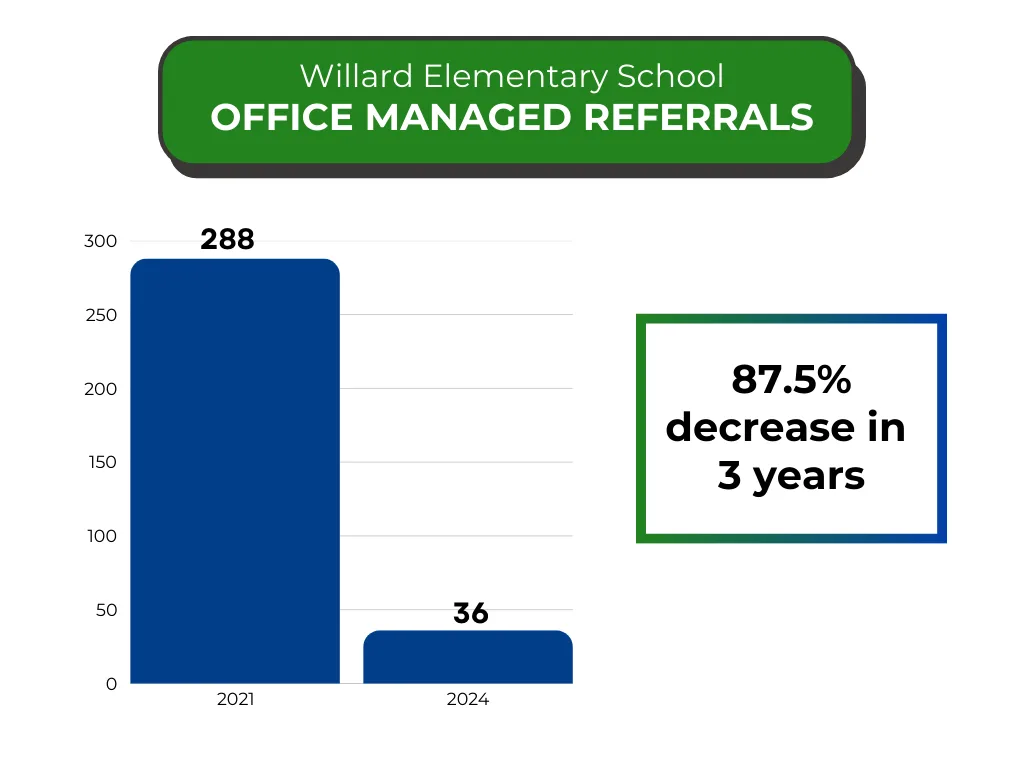
Office-managed discipline referrals at Willard Elementary School, 2021–2024.
Arthur Elementary (OK): Engagement and School Culture Improved
After implementing the Model of Instruction for Deeper Learning, Arthur Elementary educators and leaders reported noticeable shifts in student engagement, behavior, and school culture. In qualitative interviews, they shared the following shifts:
- More engaged students: Previously disengaged students became active participants in learning.
- Fewer behavior issues: Leaders reported a decline in discipline challenges as student ownership increased.
- Stronger collaboration: Students learned to work in teams, solve problems together, and navigate disagreements productively.
- Greater student voice: More students participated in discussions and demonstrated confidence in sharing ideas.
- More positive school culture: Students viewed school as a safe place to learn, while teachers and students were more enthusiastic about coming to school.
Together, these changes reflect a shift from passive, technology-focused instruction to active, student-led learning, accompanied by reported improvements in engagement, behavior, and the overall learning environment.
Read the full customer success story: Empowering Schoolwide Student-Led Learning at Arthur Elementary (2024)
Lakewood Elementary (FL): 653 Fewer Discipline Referrals
As part of a comprehensive school improvement partnership, Lakewood Elementary in Pinellas County, Florida, worked to address significant behavior challenges through instructional practice supported by the Model of Instruction for Deeper Learning.
- Lakewood educators focused on developing students’ ownership of their behavior and academics
- Students tracked their own progress and encouraged one another
- Behavior referrals fell from 734 to 81 over three years, an 89% reduction
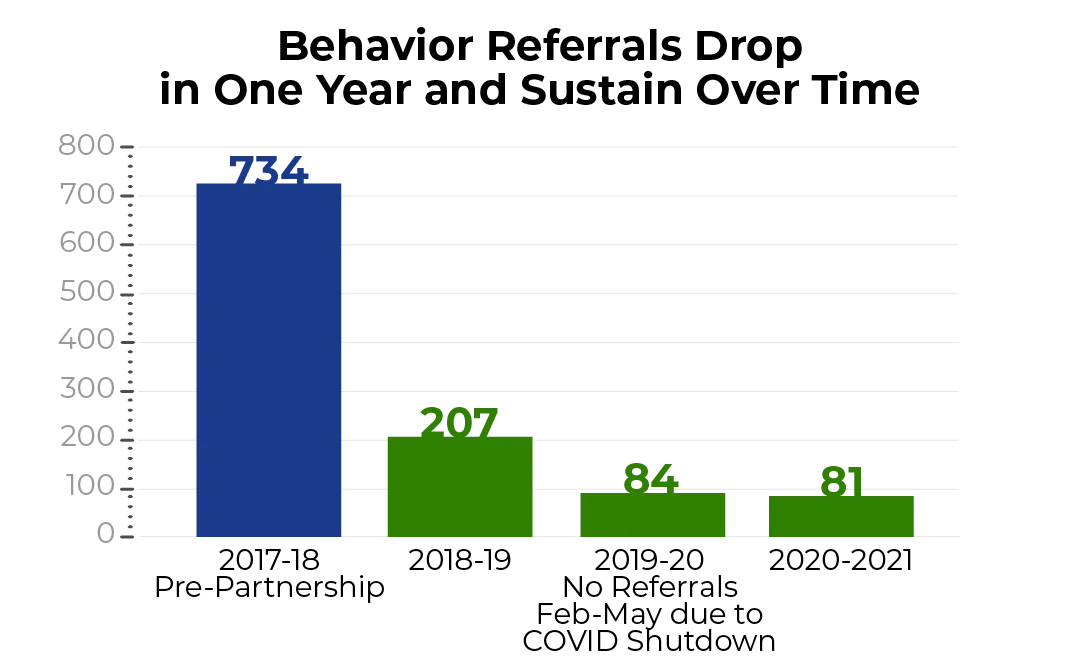
Behavior referrals at Lakewood Elementary School, 2017–18 through 2020–21.
Read the full case study: Lakewood Elementary: How This Florida School Raised Their State Rating from the Lowest to One of the Highest in the State (2021)
Moseley Elementary (FL): Turning Behavior Challenges into Student Growth
Challenging behavior had been one of the most pressing issues at William D. Moseley Elementary School. The school began a turnaround partnership with Instructional Empowerment in 2017, including implementation of instructional practices supported by the Model of Instruction for Deeper Learning, with the following results:
- Discipline referrals reduced from 575 to 234, a reduction of 341 after one year of implementation
- Students developed stronger self-control and confidence
- Teachers reported improved student engagement in learning
- Students who previously exhibited challenging behaviors became more involved in classroom activities
- Stronger peer relationships and collaboration emerged across classrooms
- Improved academic skills helped reduce frustration that often contributed to behavior issues
Read the full case study: William D. Moseley Elementary School: Becoming a School Where All Students Thrive (2019)
Walnut Middle (NE): Transforming Student Behavior Through Engagement
Walnut Middle School, which served 771 students with 85% qualifying for free or reduced-price lunch, had long struggled with student behavior, averaging more than 100 fights per year and reporting over 700 discipline referrals annually. In the first year of implementing academic teaming, now known as the Model of Instruction for Deeper Learning, the school reported:
- Discipline referrals decreased by 37%, dropping from 777 to 489
- Positive behavior referrals tripled, increasing from 90 to 272
- Students demonstrated stronger self-regulation, confidence, and leadership skills
- Teachers and students reported higher levels of engagement and ownership of learning
- Students increasingly wanted to return to class after behavioral incidents because they felt more engaged in learning
- Walnut Middle School became a demonstration school for other educators to visit and learn from, leading to districtwide positive impact
“There was a huge decrease in referrals because our kids were just more engaged in class. They were doing things that were meaningful to them and they were happy to be there…People in our district say Walnut is like a totally different building.”
–Rod Foley, Principal, Walnut Middle School, Grand Island, NE
Read the full case study: Transforming Student Behavior at Walnut Middle School in Nebraska (2018)
Better Student Attendance
Chronic Absenteeism Study Across 76 Schools (FL, TX, CO, AZ, IN, IL, WV)
Demographics
Schools: 76
Districts: 10
States: 7
Average rate of chronic absenteeism: 37%
Average rate of students from low socioeconomic backgrounds: 67%
Key findings:
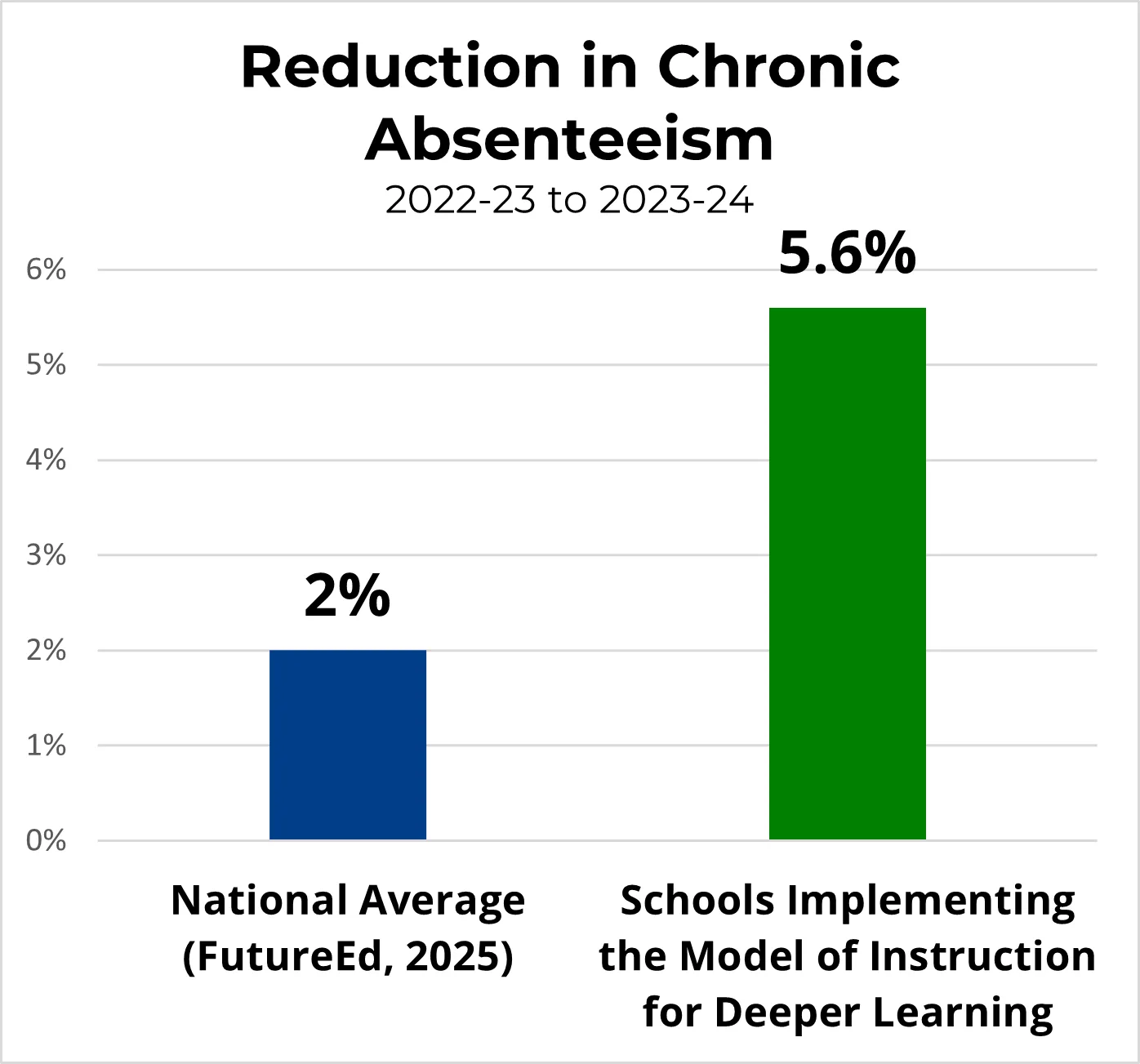
- 79% of schools implementing the Model of Instruction for Deeper Learning reduced chronic absenteeism, with a median reduction of 5.6 percentage points and a top reduction of 20 points.
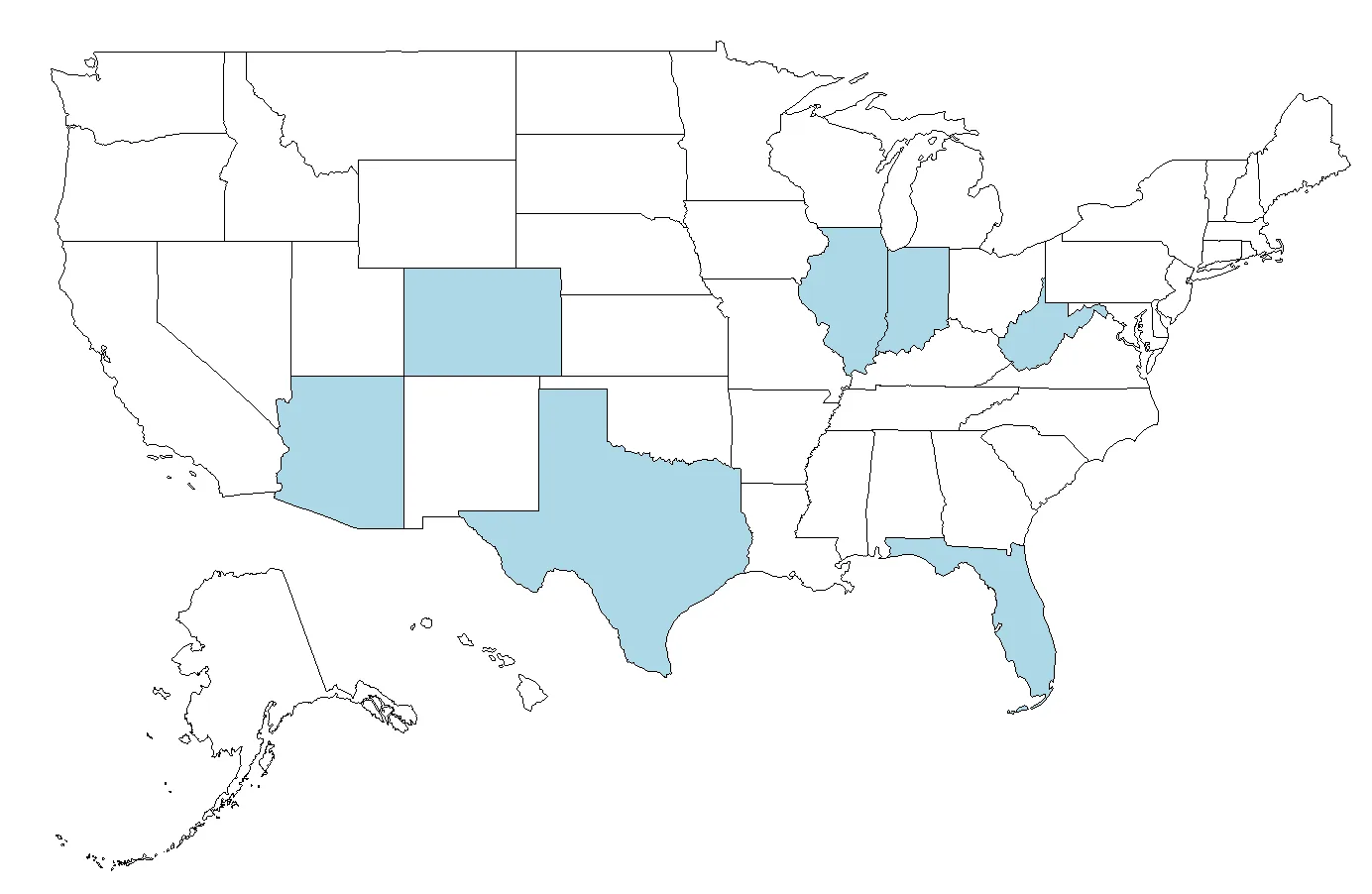
- Schools implementing the model saw more than twice the reduction in chronic absenteeism compared with the national average rate of change over the same period.
- Schools with more than one year of implementation saw a 4–5 times greater reduction in chronic absenteeism than those in their first year, indicating that the model’s impact increases over time.
Read the full research brief: Applied Research Center Brief: Analyzing Chronic Absenteeism Rates in Schools Implementing the Model of Instruction for Deeper Learning (2025)
"When students are engaged in their learning, they want to come to school and they want to be part of the team. I have heard in classrooms where students are saying 'we missed you yesterday, you missed a great activity we did as a team.' So students don't want to miss out."
– Dr. Maura Hobson, Chief of Schools + Curriculum & Instruction, Cedar Rapids Community School District, IA (Board of Education Meeting, June 9, 2025)
Cedar Rapids Community School District (IA): Reduced Chronic Absenteeism
All nine schools receiving intensive support to implement the Model of Instruction for Deeper Learning saw meaningful reductions in chronic absenteeism. District leaders attributed the improvement to increased student engagement and a stronger sense of connection to their learning and peers.
- 9.2 percentage point average reduction in chronic absenteeism
- All participating schools improved by at least 5 percentage points
- The schools with the highest reductions in chronic absenteeism included:
- City View High School: -15.7 points
- McKinley STEAM Academy: -13.8 points
- Johnson STEAM Academy: -12.3 points
- Increased student engagement and team accountability contributed to stronger attendance, according to educators in the district
- Students were more motivated to attend school because they felt connected to their learning and peers
Read the full case study: Cedar Rapids Community School District (2026)
Increased Teacher Retention and Reduced Burnout
Lakewood Elementary (FL): From Hiring 23 Teachers to Only Hiring One
At Lakewood Elementary in Pinellas County, Florida, teacher turnover was a pressing issue.
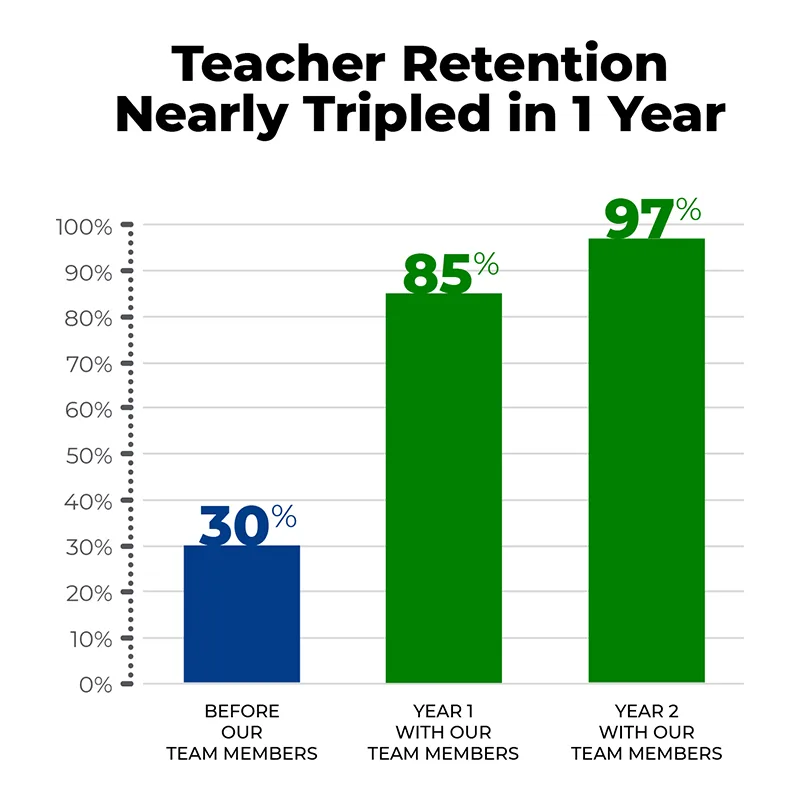
The school culture began to shift through a broader school turnaround effort, with instructional practices from the Model of Instruction for Deeper Learning serving as the instructional foundation. Lakewood saw the following results in teacher retention:
- 23 teaching vacancies before implementation
- 5 vacancies after one year
- 1 vacancy after three years
- Teachers reported feeling more supported
- Improved school culture contributed to stronger teacher retention
Read the full case study: Lakewood Elementary: How This Florida School Raised Their State Rating from the Lowest to One of the Highest in the State (2021)
William D. Moseley Elementary School (FL): Stronger Teacher Retention
As part of a comprehensive school improvement partnership, William D. Moseley Elementary School implemented instructional practices from the Model of Instruction for Deeper Learning, supported by coaching, professional learning, and leadership support.
Teachers and leaders reported that these instructional practices shifted the school culture.
After one year of partnership, William D. Moseley Elementary School saw improvements in teacher retention and staff morale:
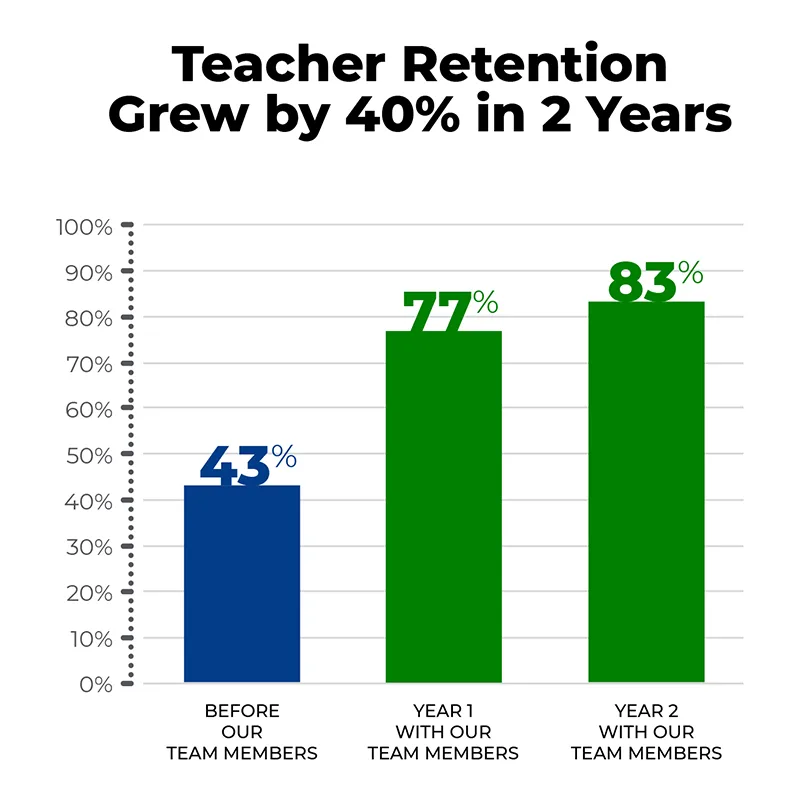
- Teacher vacancies dropped from 20 positions before implementation to 8 after one year
- The following year, the school needed to hire only 6 new teachers
- Teachers reported feeling more supported in their professional practice, contributing to higher retention
"The year before was depressingly one of the darkest periods of my life because I was in a classroom with basically no support... I was considering leaving my career... The partnership is what made the true change in the classroom, which is what actually transformed the culture of the entire school."
– Shelby Bellamy, Instructional Coach and MTSS Coordinator, former 2nd Grade Teacher, William D. Moseley Elementary School, Palatka, FL
Read the full case study: William D. Moseley Elementary School: Becoming a School Where All Students Thrive (2019)
Teacher Burnout Study Across 76 Schools (CO, AZ, IA, IL, IN, WV, NC)
A separate study of 570 teachers in 76 schools across 10 districts in 7 states found:
- Higher implementation of the Model of Instruction for Deeper Learning correlated with lower teacher burnout (r = –0.38, p < 0.001)
- A structural equation model found that a one standard deviation increase in implementation corresponded to roughly a 0.40 standard deviation decrease in overall teacher burnout, after accounting for teacher gender, race, ethnicity, years of experience, and school-level clustering
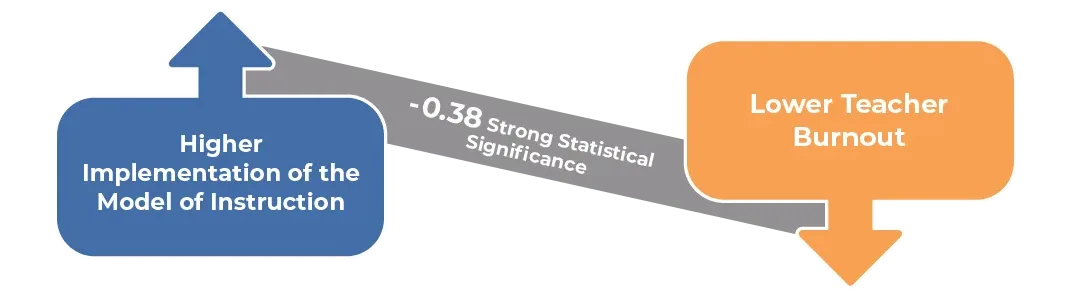
Stronger implementation of the Model of Instruction for Deeper Learning was associated with lower teacher burnout across 570 teachers in 76 schools.
Read the full research brief: How an Instructional Model Is Linked to Lower Teacher Burnout (2025)
Why the Model Works: Peer-Reviewed Research Behind the Design
The outcomes above show the impact of the Model of Instruction for Deeper Learning on classrooms, schools, and districts. A separate body of peer-reviewed research explains why the model is so effective by examining the conditions it was designed to create. These studies are not evaluations of the model itself; they validate its design principles.
Student Self-Efficacy as the Strongest Predictor of Achievement
A 2024 peer-reviewed study in Frontiers in Education by Basileo, Otto, Lyons, Vannini, and Toth examined 2,359 students across 35 middle schools in Germany and found that student self-efficacy was the strongest predictor of academic achievement, with teacher support raising motivation and achievement through its effect on self-efficacy. Building student confidence, motivation, ownership, and agency is a central design goal of the Model of Instruction for Deeper Learning’s team structures.
The study was co-authored by researchers from Instructional Empowerment’s Applied Research Center together with independent university researchers in Germany, and it was conducted in schools with no relationship to Instructional Empowerment. That makes it independent validation of the conditions the model is designed to create.
Read the full study: The Role of Self-Efficacy, Motivation, and Perceived Support of Students’ Basic Psychological Needs in Academic Achievement (Frontiers in Education, 2024). DOI: 10.3389/feduc.2024.1385442
How Leadership Styles and Teacher Support Affect Adoption of the Model
A 2026 peer-reviewed study in Discover Education by Basileo, Lyons, Toth, Otto, and Hofmann surveyed 422 educators across 41 schools in seven states implementing the Model of Instruction for Deeper Learning.
The analysis found that the principal’s leadership style has a significant indirect effect on whether teachers adopt instructional innovation, mediated by teacher autonomy and innovativeness. This is why implementation support in the Model of Instruction for Deeper Learning is built for leaders as well as teachers.
The study was co-authored by Instructional Empowerment’s Applied Research Center with independent university researchers in Germany and Austria.
Read the full study: The Indirect Effects of Leadership Style on Teacher Innovation Adoption Mediated by Autonomy Satisfaction, Frustration and Innovativeness (Discover Education, 2026). DOI: 10.1007/s44217-026-01982-0
Understanding Early-Adopter Teachers
A 2024 peer-reviewed study in Quality Education for All by Basileo and Lyons analyzed more than 600 teacher surveys and interviews to identify what motivates the early-adopter teachers of the Model of Instruction for Deeper Learning and how school leaders can support them.
This study supports the mechanisms by which the model scales across schools and districts—how early-adopter teachers spread innovation and inspire others to adopt new instructional practices.
Read the full study: An Exploratory Analysis of Early Adopters in Education Innovations (Quality Education for All, 2024). DOI: 10.1108/QEA-10-2023-0009
Key Takeaways
The evidence suggests that the Model of Instruction for Deeper Learning is a highly effective approach for raising achievement and improving other student outcomes, backed by peer-reviewed studies, ESSA Tier 2 evidence, and results from district partnerships across 12 states.
- Achievement improves while gaps narrow. Schools see gains in student performance alongside reductions in achievement gaps.
- School culture strengthens. Better attendance, behavior, and engagement point to more positive day-to-day learning experiences.
- Teachers stay longer. Lower burnout and higher satisfaction contribute to stronger retention and more stable learning environments
See What This Could Look Like in Your District
Every school and district in these case studies and research reports had a different starting place and unique context. Our team of experienced education leaders will review your data and offer a personalized recommendation.
Frequently Asked Questions
The Model of Instruction for Deeper Learning® is a research-based instructional model that shifts classrooms from teacher-directed lessons to student-led teams engaged in academic discourse. Students work in teams with assigned roles, clear protocols, and rigorous interdependent tasks that teachers build from their district's existing high-quality instructional materials. It works with any curriculum, at any grade level, and in any subject area.
The Model of Instruction for Deeper Learning meets ESSA Tier 2 (Moderate Evidence). The supporting study is a quasi-experimental analysis in Colorado Springs School District 11 using matched comparison classrooms, in which students of teachers with verified implementation of the Model of Instruction for Deeper Learning scored 22.44 STAR points higher in ELA (p = .045) and 18.24 points higher in math (p = .011). Additional evidence includes a 10,431-student study of Des Moines Public Schools that met What Works Clearinghouse Design Standards with Reservations, peer-reviewed studies published in Frontiers in Education, Discover Education, and Quality Education for All, and multiple case studies of schools and districts.
Yes. Across district partnerships, schools implementing the Model of Instruction for Deeper Learning have reported gains on state assessments, including a 5.3 percentage-point districtwide increase in math proficiency and 2.5 points in ELA at Cedar Rapids Community School District in a single year, and a rise from 10.9% to 35% ELA proficiency over two years at Willard K–6 School in Illinois. In Des Moines Public Schools, students in demonstration schools gained the equivalent of 11 additional days of reading learning and six additional days in math.
Districts have reported measurable change within one school year. Cedar Rapids saw districtwide proficiency and attendance gains after a single year of implementation. Larger gains tend to accumulate over two to three years, as at Willard K–6 School in Illinois, where ELA proficiency rose from 10.9% to 35% over two years, and at Lakewood Elementary in Florida, where discipline referrals fell from 734 to 81 over three years.
Yes. An Applied Research Center analysis across four districts from 2023 to 2025 found that schools implementing the model closed achievement gaps for students with disabilities by up to 90% in math at the elementary level and 92% in the middle grades, and closed gaps for English learners by 6% to 47% in ELA and 4% to 74% in math. Other analyses described in this synthesis also support achievement gap closure for these student groups, as well as for Black students, Hispanic students, and students from lower socioeconomic backgrounds.
No. The Model of Instruction for Deeper Learning is curriculum-agnostic. Teachers learn to build rigorous, interdependent team tasks from the high-quality instructional materials a district has already adopted, so the model layers onto existing curriculum rather than replacing it.
Teachers complete professional development in deeper learning pedagogy, receive classroom resource kits, and engage in ongoing coaching. Teachers who demonstrate the competencies in practice can be verified through Instructional Empowerment's certified verification process, which examines student evidence of implementation as well as teacher practice. Implementation depth matters: in a 2026 study of 6,200 students across 318 classrooms, teachers who reached at least 70% implementation saw a 4.38-point increase in student performance (p = .04).
A Note on This Evidence
The findings in this synthesis come from three kinds of sources, and they carry different weight. Peer-reviewed studies published in academic journals have been through external review. Applied Research Center briefs are conducted by Instructional Empowerment’s What Works Clearinghouse federally certified reviewer, using rigorous methodology including matched-comparison and multilevel methods. School and district case studies are based on publicly available data and outcomes reported by the school or district. Several results were achieved within comprehensive school turnaround partnerships in which the Model of Instruction for Deeper Learning served as the instructional foundation alongside coaching, leadership development, and progress monitoring; those results should be read as outcomes of the full partnership.
Appendix: Evidence Index
| Study or Source | Evidence Type | Scope | Year |
|---|---|---|---|
| The Role of Self-Efficacy, Motivation, and Perceived Support of Students' Basic Psychological Needs in Academic Achievement (Frontiers in Education) | Peer-reviewed journal article | 2,359 students across 35 middle schools in Germany | 2024 |
| An Exploratory Analysis of Early Adopters in Education Innovations (Quality Education for All) | Peer-reviewed journal article | 600+ teacher surveys and interviews | 2024 |
| The Indirect Effects of Leadership Style on Teacher Innovation Adoption (Discover Education) | Peer-reviewed journal article | 422 educators across 41 schools in 7 states | 2026 |
| How a Great City School District Is Improving Performance and Closing Achievement Gaps for All Students (Des Moines Public Schools) | Quasi-experimental study; met What Works Clearinghouse Design Standards with Reservations | 10,431 students, 22 demonstration schools, ~890 teachers | 2019 |
| Double-Digit ELA and Math Gains Associated with the Model of Instruction for Deeper Learning (Colorado Springs School District 11) | Quasi-experimental study with matched comparison classrooms; basis for ESSA Tier 2 | 357 students in ELA and 449 in math, grades 2-11 | 2026 |
| Validated Impact: Linking Deeper Learning Professional Development to Student Achievement | Applied Research Center brief | 6,200 students across 318 classrooms | 2026 |
| Analyzing Chronic Absenteeism Rates in Schools Implementing the Model of Instruction for Deeper Learning | Applied Research Center brief | 76 schools across 10 districts in 7 states | 2025 |
| How an Instructional Model Is Linked to Lower Teacher Burnout | Applied Research Center brief | 570 teachers across 76 schools in 10 districts | 2025 |
| Why Students with Disabilities Are Still Left Out—And How to Change That with Deeper Learning | Applied Research Center analysis | 4 districts, 2023–2025 | 2025 |
| English Learners Are Capable of More—If We Make the Shift to Deeper Learning | Applied Research Center analysis | 4 districts, 2023–2025 | 2025 |
| Cedar Rapids Community School District (IA) | District case study | 31 schools, 14,500+ students | 2026 |
| Willard K-6 School, School District U-46 (IL) | District case study | 1 school | 2025 |
| Woonsocket Education Department (RI) | District case study | 6 classrooms across 3 grade levels for proficiency analysis; plus qualitative data | 2024 |
| Arthur Elementary (OK) | District case study | 1 school — outcomes reported qualitatively | 2024 |
| Lakewood Elementary School, Pinellas County (FL) | District case study — comprehensive turnaround partnership | 1 school, 3 years | 2021 |
| McLaughlin Middle School, Polk County (FL) | District case study — comprehensive turnaround partnership | 1 school | 2021 |
| William D. Moseley Elementary School, Putnam County (FL) | District case study — comprehensive turnaround partnership | 1 school, 2 years | 2019 |
| Starr Elementary & Stolley Park Elementary, Grand Island (NE) | District case study | 2 consolidating schools | 2024 |
| Walnut Middle School, Grand Island (NE) | District case study | 1 school | 2018 |
References
Basileo, L.D. (2019). How a great city school district is improving performance and closing achievement gaps for all students: A 10,000-student study of Des Moines Public Schools. https://instructionalempowerment.com/library/closing-achievement-gaps-in-des-moines-public-school/
Basileo, L.D. (2026). Double-digit ELA and math gains associated with the Model of Instruction for Deeper Learning. https://instructionalempowerment.com/library/instructional-model-curriculum-ela-math-achievement-gains/
Basileo, L. D., Otto, B., Lyons, M. E., Vannini, N., & Toth, M. D. (2024). The role of self-efficacy, motivation, and perceived support of students’ basic psychological needs in academic achievement. Frontiers in Education, 9. https://doi.org/10.3389/feduc.2024.1385442
Basileo, L.D., & Harris, K. (2021). How McLaughlin Middle School exited comprehensive support status, received its best results in 7 years, and outperformed its district learning rates. https://instructionalempowerment.com/library/middle-school-students-outperformed-district-learning-rates/
Basileo, L.D., & Wolf, K. (2021). Lakewood Elementary: How this Florida school substantially outperformed its district’s learning rates through the pandemic. https://instructionalempowerment.com/library/school-outperforms-district-learning-rates-during-covid/
Basileo, L.D. (2026). Validated impact: Linking deeper learning professional development to student achievement. https://instructionalempowerment.com/library/deeper-learning-professional-development-achievement/
Basileo, L.D., & Lyons, M.E. (2024). An exploratory analysis of early adopters in education innovations. Quality Education for All. https://doi.org/10.1108/QEA-10-2023-0009
Basileo, L.D., Lyons, M.E., Toth, M.D., Otto, B., & Hofmann, F. (2026). The indirect effects of leadership style on teacher innovation adoption mediated by autonomy satisfaction, frustration and innovativeness. Discover Education. https://doi.org/10.1007/s44217-026-01982-0
Florida School Grades Archives (2015–2024). https://www.fldoe.org/accountability/accountability-reporting/school-grades/archives.stml
Instructional Empowerment (2024a). Empowering schoolwide student-led learning at Arthur Elementary. https://instructionalempowerment.com/library/empowering-schoolwide-student-led-learning-at-arthur-elementary/
Instructional Empowerment (2024b). Stronger Together: A review of how two schools improved instruction after consolidating [Historical case study]. https://instructionalempowerment.com/library/stronger-together-a-review-of-how-two-schools-improved-instruction-after-consolidating/
Instructional Empowerment (2024c). Woonsocket Education Department boosts student engagement and achievement through Model of Instruction for Deeper Learning. https://instructionalempowerment.com/library/woonsocket-education-department-boosts-student-engagement-and-achievement/
Instructional Empowerment (2025). How Willard Elementary climbed to #2 in ELA growth and #9 in math among Illinois K–6 schools. https://instructionalempowerment.com/library/willard-elementary-model-of-instruction-for-deeper-learning/
Instructional Empowerment (2026a). How Cedar Rapids Community School District transformed student achievement in one year. https://instructionalempowerment.com/library/case-study-cedar-rapids-community-school-district/
Instructional Empowerment (2026b). School turnaround research: Evidence of what works. https://instructionalempowerment.com/library/school-turnaround-research-evidence/
Instructional Empowerment Applied Research Center (2025). Applied research center brief: Analyzing chronic absenteeism rates in schools implementing the Model of Instruction for Deeper Learning. https://instructionalempowerment.com/library/chronic-absenteeism-model-of-instruction-for-deeper-learning/
Lakewood Elementary: How this Florida school raised their state rating from the lowest to one of the highest in the state (2021). https://instructionalempowerment.com/library/how-this-florida-school-raised-student-academic-proficiency-from-the-lowest-to-one-of-the-highest-in-the-state/
Toth, M.D., & Lyons, M.E. (2025). English learners are capable of more—if we make the shift to deeper learning. https://instructionalempowerment.com/library/deeper-learning-english-learners/
Toth, M.D., & Lyons, M.E. (2025). Why students with disabilities are still left out—and how to change that with deeper learning. https://instructionalempowerment.com/library/deeper-learning-students-disabilities/
Toth, M. D., & Sousa, D. A. (2019). The power of student teams: Achieving social, emotional, and cognitive learning in every classroom through academic teaming.
Walnut Middle School: Transforming student behavior (2018). https://instructionalempowerment.com/library/transforming-student-behavior/
William D. Moseley Elementary School: Becoming a school where all students thrive (2019). https://instructionalempowerment.com/library/moseley-elementary-leverages-student-led-team-learning-to-success/
Model of Instruction for Deeper Learning ® is a registered trademark of Instructional Empowerment and is research-validated.