A Synthesis of the Research Validation Behind Instructional Empowerment’s Model
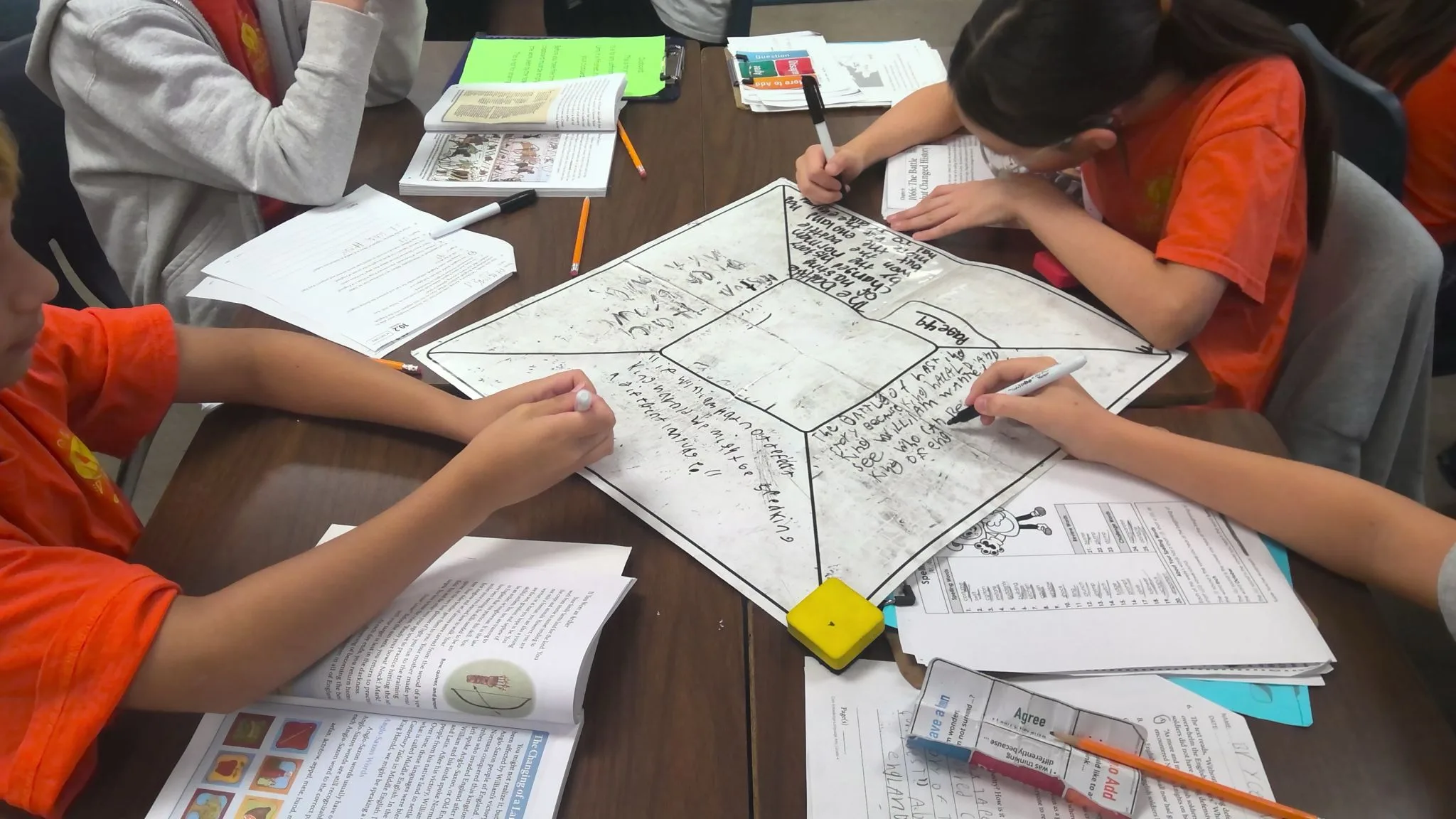
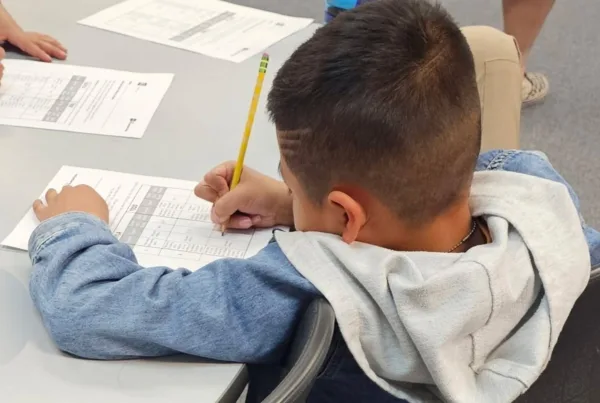
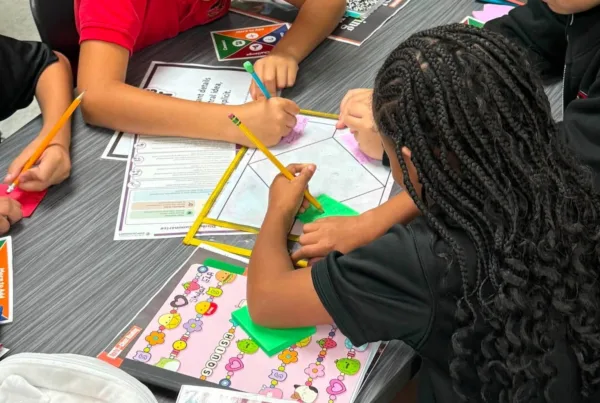
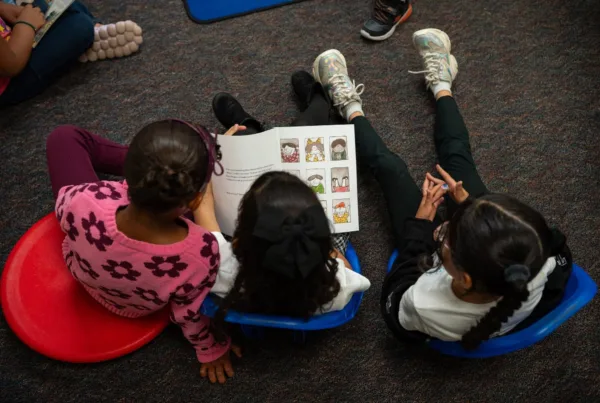
Students in Bullhead City, Arizona, engage in structured, team-based learning that builds ownership, rigor, and collaboration through the Model of Instruction for Deeper Learning.
A Higher Standard of Research
Across education, many school improvement approaches are described as “research-based.” Far fewer are validated through applied research in real classrooms and published in peer-reviewed academic journals.
Instructional Empowerment’s turnaround model is built on that higher standard.
Through its Applied Research Center, the organization continuously evaluates its work across dozens of districts, hundreds of schools, and multiple states, ensuring that its model is grounded in both research and practice.
Instructional Empowerment’s Applied Research Center is led by Lindsey Devers Basileo, Ph.D., a U.S. Department of Education What Works Clearinghouse certified reviewer. All research is conducted using federal standards, and the Model of Instruction for Deeper Learning meets Tier 2 (Moderate Evidence) criteria and every other core component of the turnaround model meets Tier 3 (Promising Evidence) criteria under the Every Student Succeeds Act (ESSA).
These research findings are reinforced by results seen in practice across turnaround partnerships (see Case Study Evidence from Turnaround Schools).
Three Research-Validated Components of School Turnaround
Instructional Empowerment’s turnaround model centers on three integrated components: a rigorous instructional model, real-time measurement tools, and expert coaching—each studied and validated independently.
1. Model of Instruction for Deeper Learning
The Model of Instruction for Deeper Learning® shifts classrooms from teacher-directed instruction to structured, student-led teams where students engage in rigorous, standards-based learning.
Impact on Student Achievement: Colorado Springs District 11
A quasi-experimental study meeting ESSA Tier 2 (Moderate Evidence) criteria (3 schools, including 1 turnaround school; grades 2–11) found:
- Students taught by teachers verified in the Model of Instruction for Deeper Learning scored an adjusted 22.44 STAR points higher in ELA than matched comparison students (p = .045, n = 357)
- Students of verified teachers scored an adjusted 18.24 points higher in math (p = .011, n = 449)
- These gains are equivalent to an additional 55% in ELA and 35% in math compared to typical District 11 fall-to-spring growth

Adjusted spring achievement of students taught by verified vs. matched comparison teachers.
Read the full research brief (2026): https://instructionalempowerment.com/library/instructional-model-curriculum-ela-math-achievement-gains/
Impact on Student Achievement: Cedar Rapids
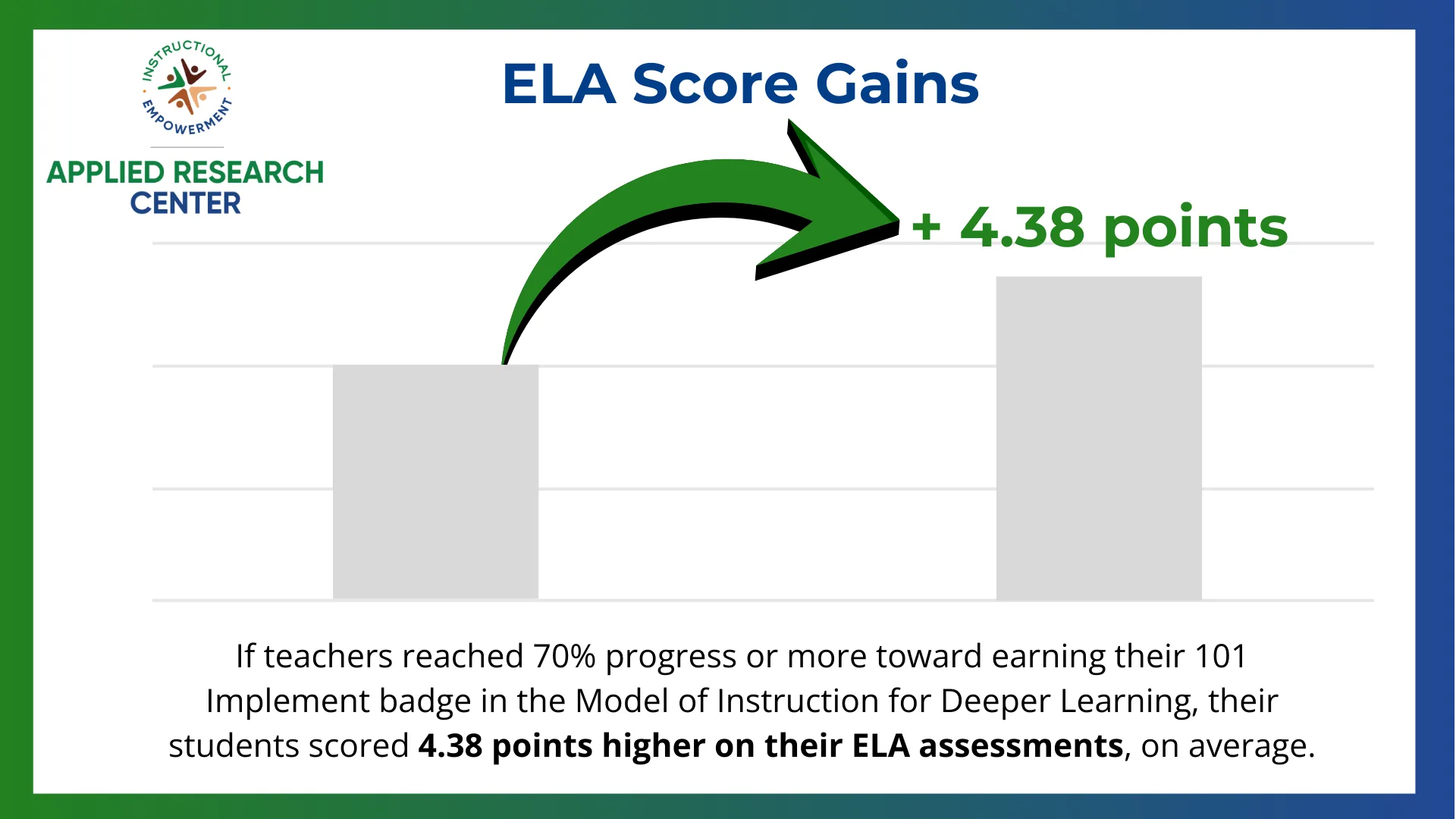
A study of 6,200 students across 318 classrooms in one district found:
- Higher levels of implementation were associated with higher student achievement gains in ELA
- Teachers reaching ≥70% implementation saw +4.38 point increases in student performance (statistically significant, p = 0.04)
- Even partial implementation produced measurable gains within a single year
Read the full research brief (2026): https://instructionalempowerment.com/library/deeper-learning-professional-development-achievement/
Impact on Attendance
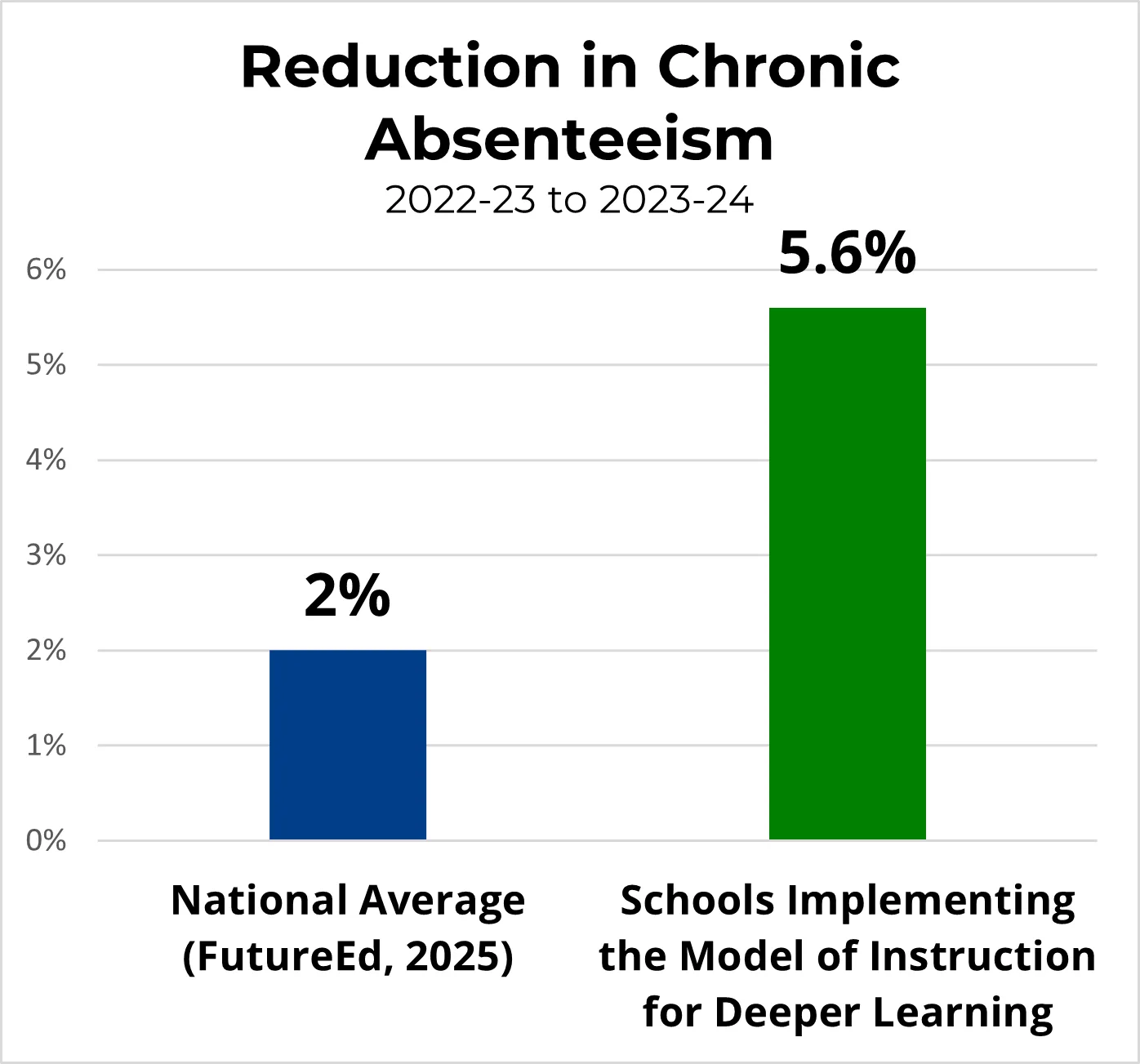
A study of 76 schools across 10 districts in 7 states found:
- Schools implementing the Model of Instruction for Deeper Learning saw over twice as much reduction in chronic absenteeism on average compared to the national average
- Median reduction in chronic absenteeism: 5.6 percentage points
- Highest reduction: 20 percentage points
- 79% of schools reduced absenteeism
Read the full research brief (2025): https://instructionalempowerment.com/library/chronic-absenteeism-model-of-instruction-for-deeper-learning/
Impact on Teacher Burnout and School Culture
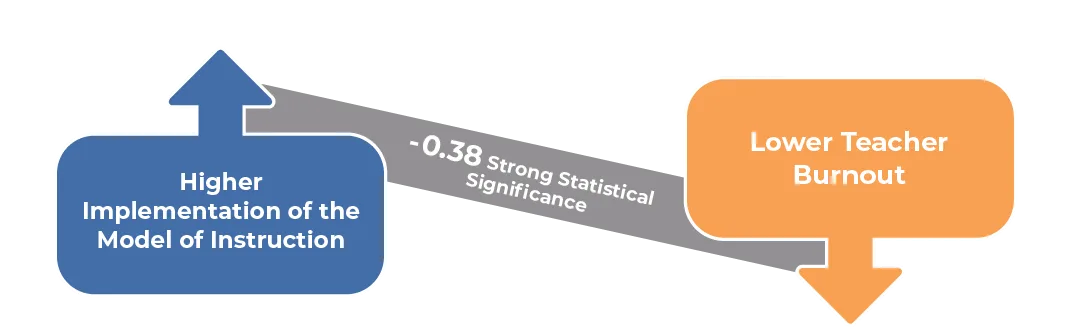
A study of 570 teachers in 76 schools, across 10 districts in 7 states found:
- Higher implementation of the Model of Instruction for Deeper Learning correlated with lower burnout (r = –0.38, p < 0.001)
- Advanced modeling confirmed meaningful, measurable reductions in burnout with higher implementation
Read the full research brief (2025): https://instructionalempowerment.com/library/teacher-burnout-research-brief/
Subscribe for curated education insights delivered every two weeks.
2. Research-Validated Measurement Tools
Instructional Empowerment’s metrics provide real-time visibility into instructional systems, allowing leaders to identify root causes and adjust practice before end-of-year results.
Impact on Achievement, Attendance, Behavior, and Culture
Rigor Appraisal® is a non-evaluative metric conducted quarterly by certified third-party scorers to assess the effectiveness of instructional systems across a school. It provides an objective checkpoint to confirm trends and guide system-level improvement.
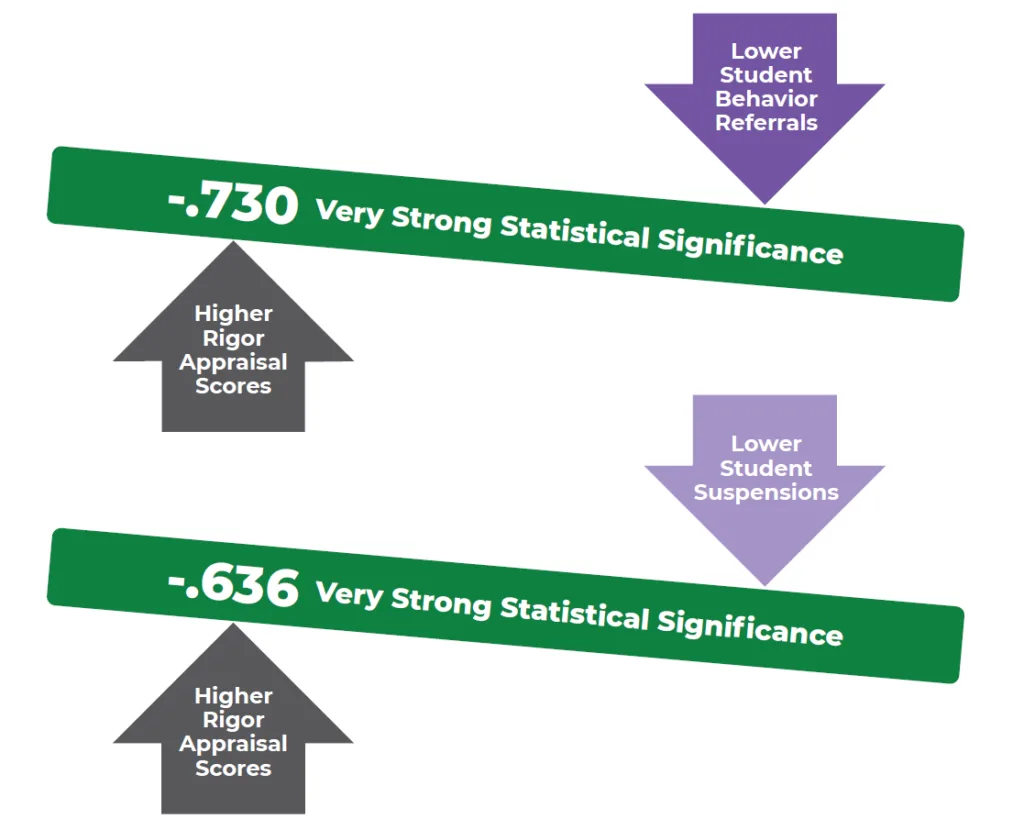
A peer-reviewed study of 53 schools published in SAGE Open found that higher Rigor Appraisal scores were significantly correlated with:
- Higher ELA and math achievement
- Higher attendance rates
- Lower discipline referrals and suspensions
- Stronger school climate
The study also found:
- Student teaming practices significantly predicted higher achievement, especially in schools serving students from low socioeconomic backgrounds
- Increased use of walkthroughs was linked to higher student outcomes
Read the peer-reviewed study (SAGE Open, 2024): https://journals.sagepub.com/doi/10.1177/21582440241261119
Impact on Student Achievement
RigorWalk® is a classroom walkthrough process in which leaders conduct brief visits across multiple classrooms using a shared rubric focused on student evidence of learning.
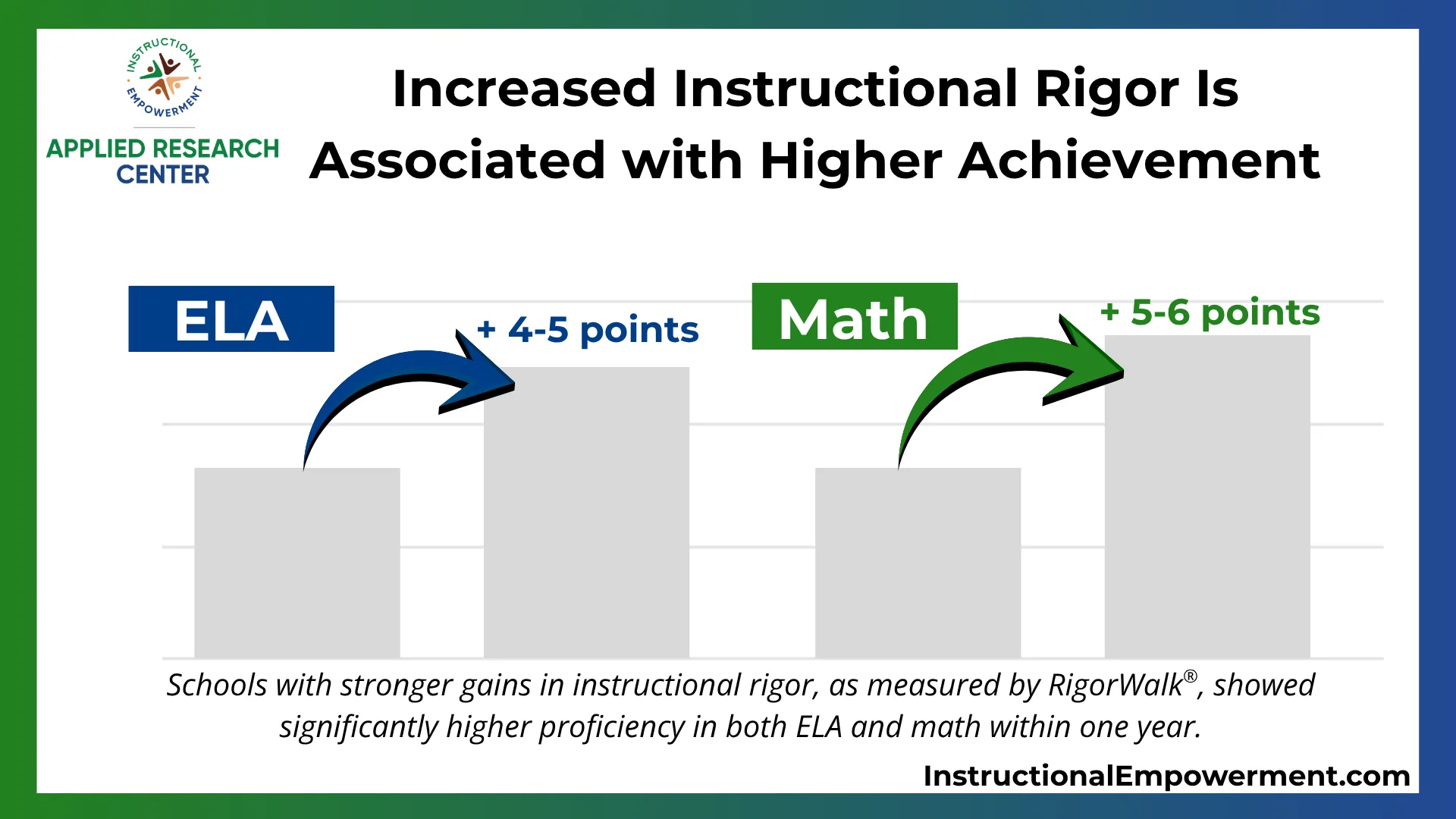
A study of 82 schools, across 12 districts, in 9 states found:
- Higher RigorWalk scores predicted:
- 4–5 percentage point gains in ELA proficiency
- 5–6 percentage point gains in math proficiency
- The results were significant, even after accounting for student demographics, and occurred within a single school year.
Read the full research brief (2026): https://instructionalempowerment.com/library/research-rigorwalk-achievement/
3. Research-Validated Coaching
Instructional Empowerment’s coaching model is designed to build long-term internal capacity for teachers and leaders. All leadership coaches are former school and district leaders who have led school improvement efforts in their own systems. They are trained to align coaching to instructional data and system-level priorities.
Impact on Student Achievement
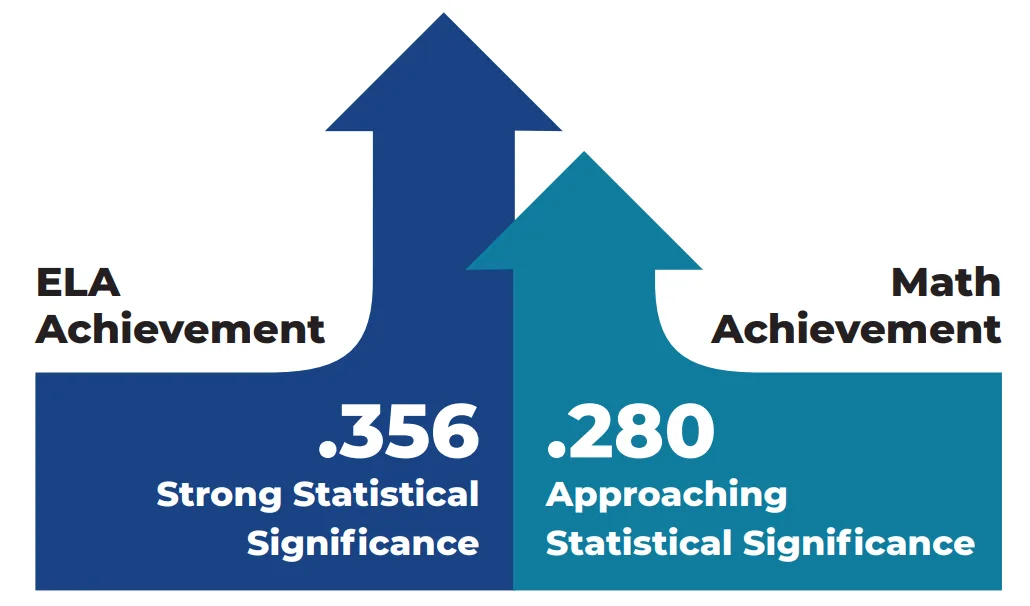
A peer-reviewed study of 53 schools published in the SAGE Open academic journal found:
- The more coaching days a school received, the greater the gains in:
- Student achievement in ELA
- Student achievement in math
- The results were statistically significant
Read the peer-reviewed study (SAGE Open, 2024): https://journals.sagepub.com/doi/10.1177/21582440241261119
A Clear Takeaway for Education Leaders
These findings reinforce a critical distinction in school improvement: not all “research-based” approaches are validated in practice.
Across multiple studies, states, and school contexts, Instructional Empowerment’s model demonstrates that when instructional systems, leadership capacity, and real-time data are aligned, schools can achieve both rapid and sustained improvement.
Learn More from a Leader Who Has Implemented This Work
For district and school leaders exploring turnaround strategies, it can be valuable to speak with someone who has led this work in practice.
Stephanie Terrell, Ed.S, Executive Director of School Transformation, brings more than 30 years of experience as a principal, instructional leader, and teacher. She has supported turnaround efforts nationwide and has worked directly in partner schools such as Lakewood Elementary, McLaughlin Middle School, and Muessel Elementary.