August 2026
By: Michael D. Toth and Merewyn Lyons Ed.D.
What a Year of Research Taught Us About AI and Student Learning
A seismic shift in Artificial Intelligence (AI) is on the horizon. Based on current trends, researchers project AI autonomous capabilities doubled roughly every seven months, with recent estimates suggesting the pace has accelerated even further to roughly every three to four months (Kwa et al., 2025; METR, 2026). What will AI’s capabilities be when the students in classrooms today graduate?
Educators across the world are asking how to best use this new technology and prepare students for an unknown future. But conventional wisdom can lead many down a path of AI-assisted learning that may do more harm than good.
This article is based on a yearlong project, including extensive literature review, on how AI impacts the brain. We’ll share the potential harms of AI, the critical skills that students need in an AI world, and recommendations for how to appropriately and safely incorporate AI into the classroom.
Key Takeaways
- AI can help students solve problems in the moment, but new research shows it can erode the skills students need most for the long run.
- K-12 educators should be aware of four harmful effects of AI on the developing brain: persistence debt, cognitive offloading, cognitive debt, and eroded social skills.
- The solution isn’t banning AI, it’s building and protecting “human durable skills” (interpersonal, cognitive, intrapersonal) through student-led team learning, where AI is deliberately withheld at key stages.
- Three recommendations can help district leaders, school leaders, and teachers use AI safely and effectively with students: prioritize durable skills, adopt deeper learning pedagogy (the “30/70 model”), and introduce AI through structured, team-based prompt design.
How Educators Influence Brain Development Through Productive Struggle
Productive struggle is an important concept to understand when making sense of the research on AI and developing brains. The Power of Student Teams (2019), defines productive struggle as students grappling with a task that is just beyond their current level of understanding and persevering to come up with solutions themselves.
Mary Slaughter and David Rock of the NeuroLeadership Institute described the need for “desirable difficulty” (a term coined by Robert and Elizabeth Bjork, 1994; 2014) this way:
…To be effective, learning needs to be effortful…. The key here is desirable difficulty. The same way you feel a muscle "burn" when it's being strengthened, the brain needs to feel some discomfort when it's learning. Your mind might hurt for a while—but that's a good thing" (Slaughter & Rock, 2018).
As teachers create rigorous tasks and encourage students to persist through challenges, they help students grow and build lifelong skills. But what can happen to students’ brains when AI removes the opportunity to engage in productive struggle?
4 Harmful Effects of AI on the Developing Brain
There are many research studies being conducted around the world on the effects of AI on the brain. Based on a year of in-depth review, we’ve synthesized and organized current research into four harms, including how these apply specifically to K-12 students.
AI Harm #1: Persistence Debt
Persistence debt is the loss of willingness to struggle with challenges or difficult problems, resulting from overreliance on AI. We coined this term after reviewing research on how AI affects performance and motivation.
A recent study brought together researchers from Carnegie Mellon University, the University of Oxford, MIT, and UCLA to conduct randomized controlled trials with 1,222 adult participants recruited through an online research platform (Liu et al., 2026). Participants worked through increasingly challenging problems either with AI help or with no assistance at all. Then, without warning, the AI was taken away, and everyone had to solve a final set of problems unassisted.
Findings included:
- AI helped in the moment but hurt afterward. People with AI assistance solved more problems correctly while they had access to it. But once the AI was removed, the same people performed worse on the final unassisted problems than participants who’d had no AI access at all from the start.
- People didn’t just perform worse—they gave up more. Participants could skip any problem with no penalty. Those who’d used AI skipped significantly more often on the unassisted test.
- The effect showed up quickly. Declines emerged after roughly 10–15 minutes of AI-assisted work, not months or years of use.
- The damage was concentrated in one specific behavior: asking AI for direct answers. The majority of AI users (61%) used it to get answers outright. That group showed the steepest drops in performance and persistence. People who used AI more like a tutor (asking for hints or clarification rather than the answer itself) showed no significant impairment compared to the control group.
- Results replicated across two very different tasks. The pattern held for both fraction arithmetic and SAT-style reading comprehension.
- The researchers frame this as a developmental concern, not just a productivity one. They note that skills like fraction arithmetic and reading comprehension aren’t just standalone tasks, they’re prerequisites for higher-order skills like algebra or critical reasoning.
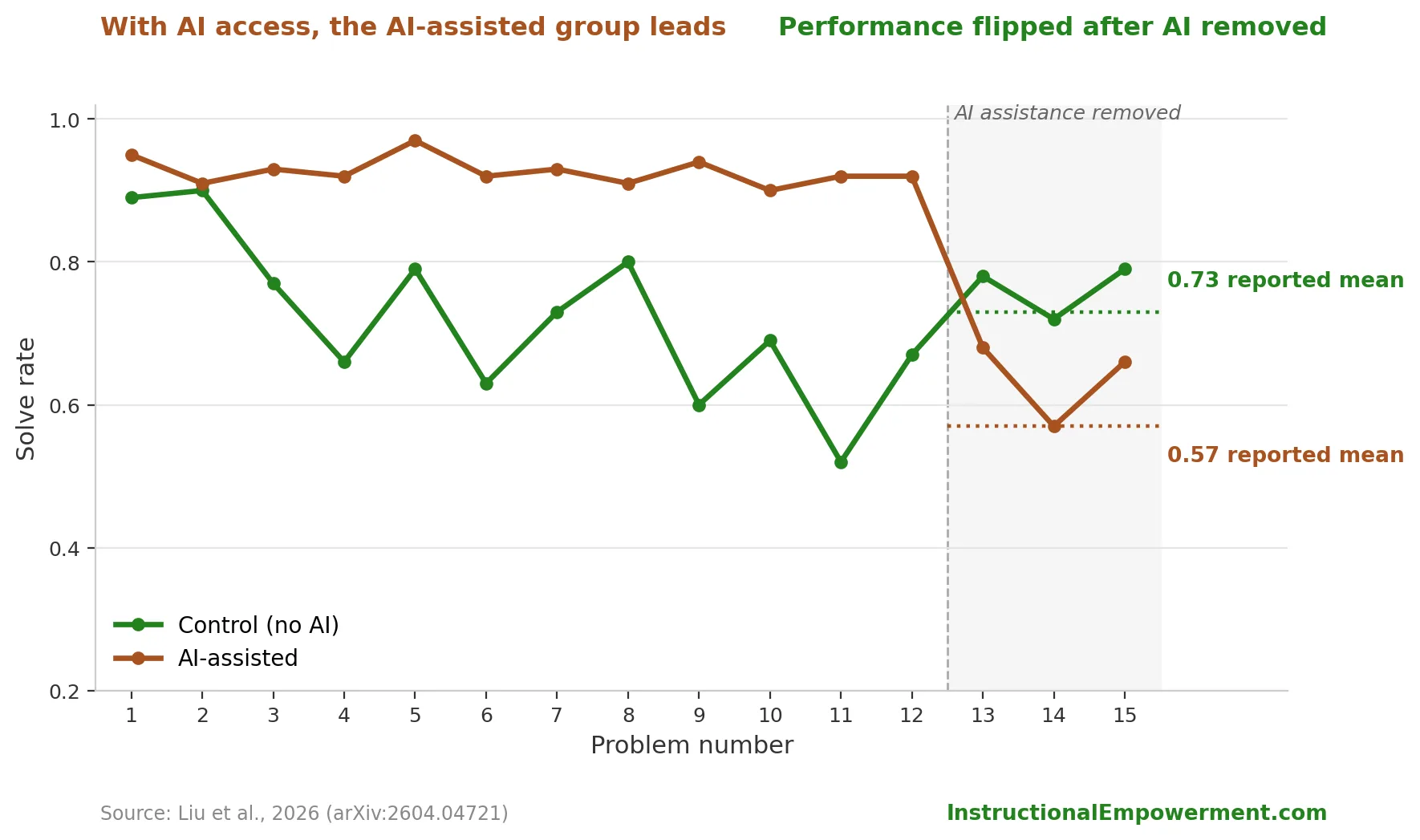
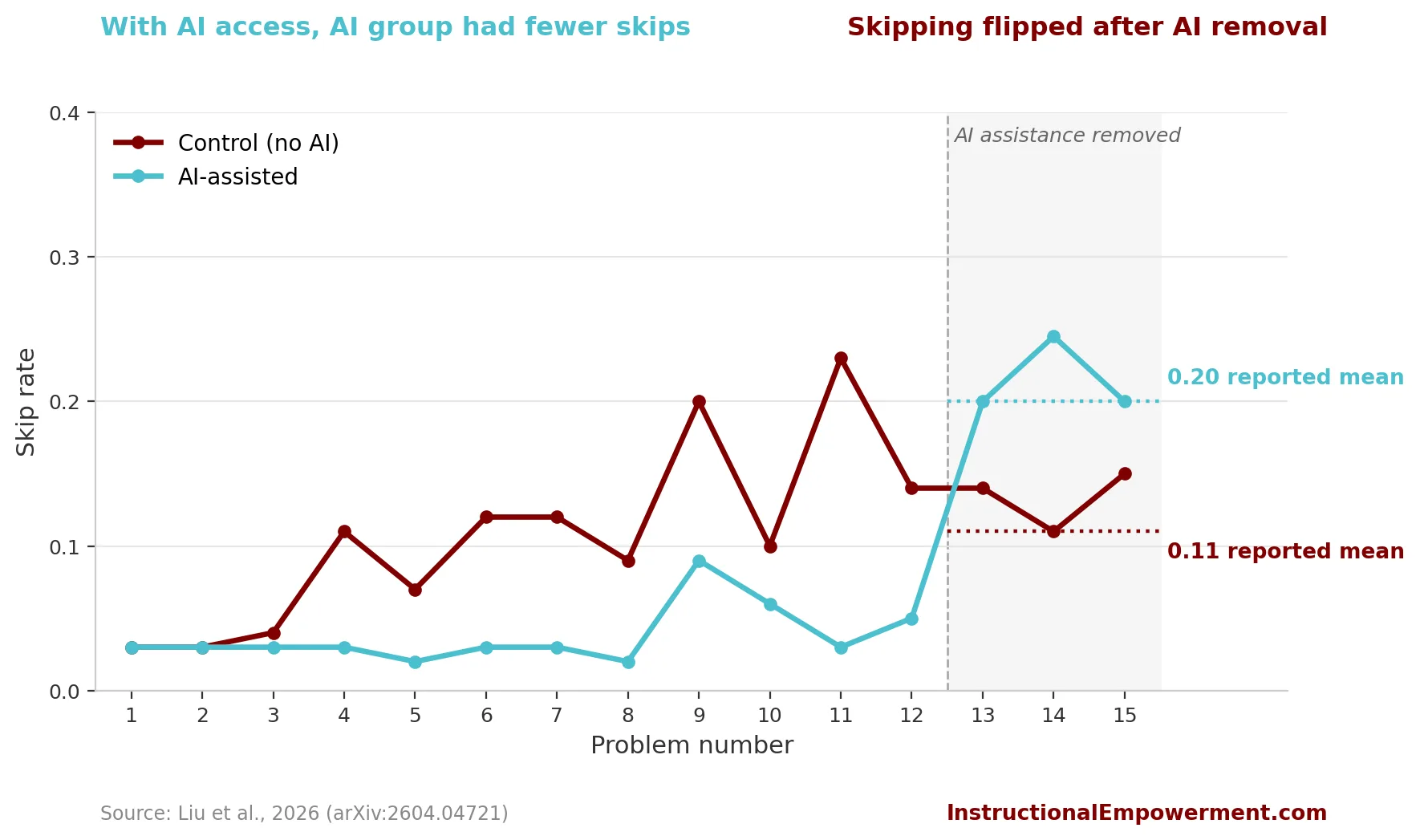
For K-12 students, the detrimental effects of AI on persistence could result in long-term harm. Students may learn to give up too early during challenging tasks and never develop the persistence and foundational skills to master deeper areas. The effects of persistence debt can compound over time, and by the time the impact is obvious, it’s a much harder habit to unteach.
AI Harm #2: Cognitive Offloading
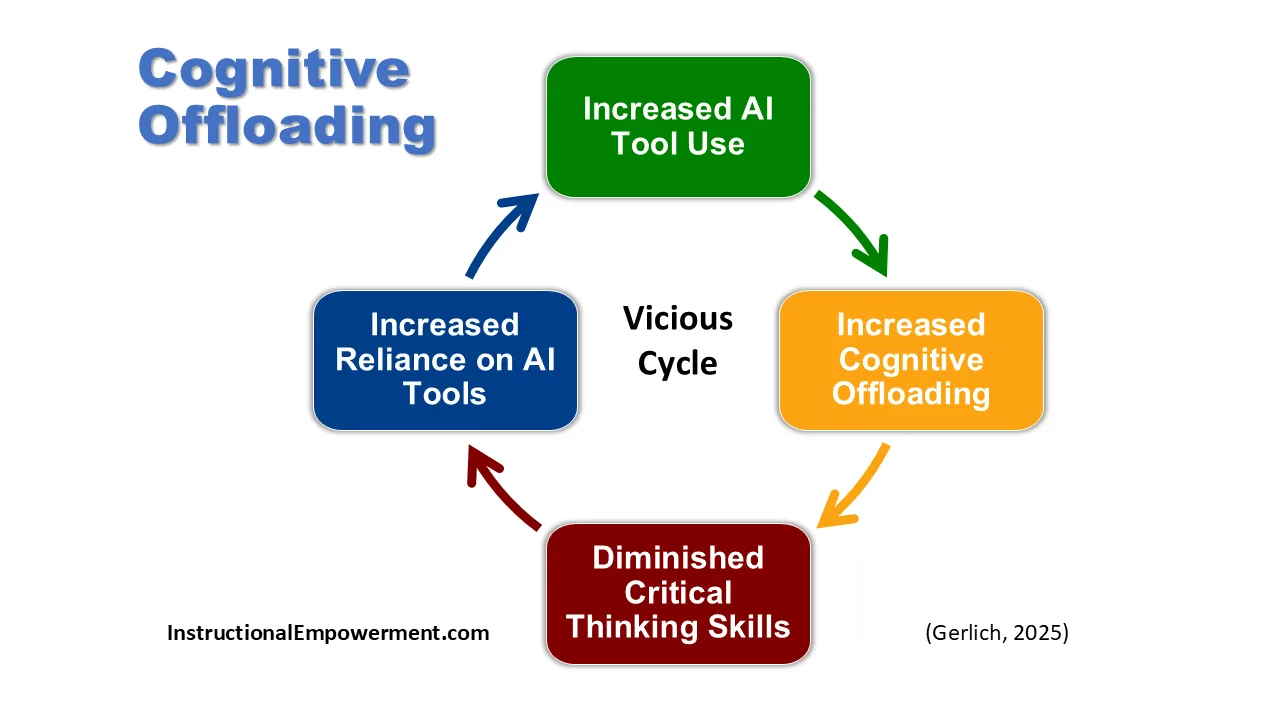
Cognitive offloading is the use of external tools—including AI—to reduce cognitive load on working memory. Delegating a mental task can improve efficiency and free up working memory for higher-order thinking, but overreliance can degrade cognitive development and independent analytical skills (Gerlich, 2025).
For K-12 students, cognitive offloading looks like this: students start using AI and find out that it can give them the right answers. As they see how well it works, they let it do more of the heavy lifting in their learning. This is a human condition: we like to offload work that is difficult, physical or mental, whenever a tool makes that possible. But offloading has a cost, and a 2026 study found what that cost looks like for students.
Kreijkes et al. (2026), in a collaboration between Cambridge University Press & Assessment and Microsoft Research, ran a randomized controlled trial where 405 secondary school students (ages 14–15) participated across seven schools in England. Students studied history passages using an AI chatbot, note-taking, or both, then were tested on comprehension and retention three days later.
Findings included:
- Human note-taking beat AI-only on every single measure, including literal retention, comprehension, and free recall.
- Students spent less time on task and reported lower effort when using AI only compared to using note-taking only.
- Students preferred using AI, even though it helped their learning the least. They rated the AI chatbot as more enjoyable and more helpful than note-taking despite it producing the weakest learning outcomes.
- AI use wasn’t purely detrimental, as it appeared to facilitate initial understanding and interest and let students explore additional avenues of inquiry.
Research on adults reinforces the impact of cognitive offloading on performance. A 2025 study surveying 666 adults in the UK found that as people leaned more heavily on AI tools, they engaged in more cognitive offloading and experienced a drop in critical thinking performance (Gerlich, 2025). The youngest adults in that study (17–25) showed the highest AI dependence and the lowest critical thinking scores of any age group.
Both studies highlight the dangers of cognitive offloading, especially if students become reliant on AI assistance throughout their entire K-12 experience. Many may graduate unprepared and under-skilled if we allow the vicious cycle of cognitive offloading to take over.
“If sustained AI use erodes the motivation and persistence that drive long-term learning, these effects will accumulate over years, and by the time they are visible, they will be difficult to reverse” (Liu et al., 2026).
AI Harm #3: Cognitive Debt
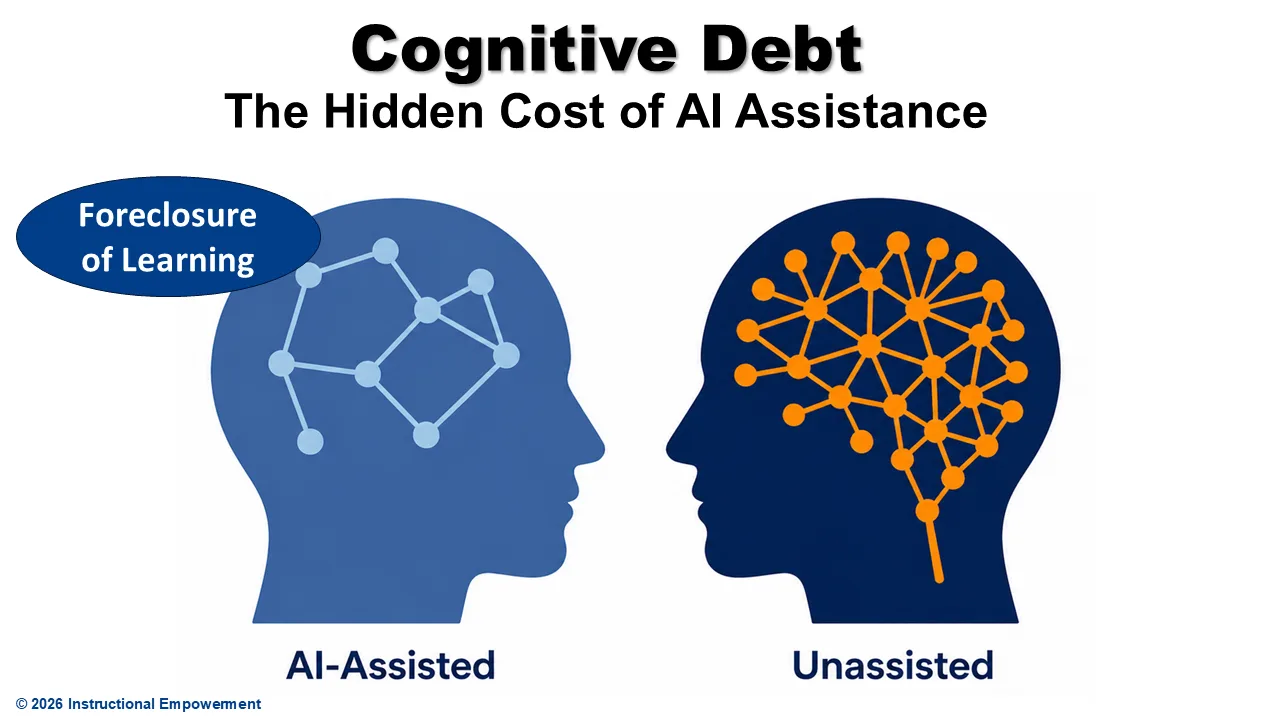
Cognitive debt refers to the repercussions of repeated reliance on AI to do thinking work, which results in long-term costs such as diminished critical reasoning, increased likelihood of being manipulated (Seghid et al., 2026) and decreased creativity. It is the natural consequence of cognitive offloading. The concept of cognitive debt was illustrated in a study conducted by researchers from MIT (Kosmyna et al., 2025).
54 participants, mostly consisting of undergraduate students, were split into three groups to write essays: one using only ChatGPT, one using only search engines, and one using no external tools at all (“brain-only”). Researchers used electroencephalography (EEG) to directly measure neural activity while writing.
- The brain-only group showed the strongest neural connectivity, with widespread activity linking the brain’s executive planning regions to memory and language areas, consistent with deep idea generation and self-monitoring.
- The ChatGPT group showed the weakest connectivity, with visible reductions in the intensity and scope of neural connections, suggesting that cognitive functions were offloaded to the AI.
- In a smaller follow-up session, a subset of 18 participants (9 from each group) swapped conditions: those who’d used ChatGPT wrote unassisted, and vice versa. Participants who had relied on ChatGPT struggled to rebuild the neural engagement seen in the original brain-only group, even once the tool was removed.
Although the MIT report on AI’s impact on the brain was conducted with adults, not children, it offers an early warning to educators: AI overreliance may have a profound impact on students’ long-term neurodevelopment.
The Brookings Institution conducted a yearlong global study on the potential risks of AI to K-12 students. Their review included over 400 studies, as well as qualitative input from over 500 students, teachers, parents, education leaders, and technologists across 50 countries (Burns et al., 2026). The report warns that AI poses a significant risk in undermining children’s foundational development.
As the authors put it, adults are typically “harnessing AI’s enormous productive capacity to optimize work that they often already know how to do, accelerating processes they have mastered from years of repeated professional practice and reflection (p. 57).”
However, children are in the opposite position because “their brains are developing, undergoing crucial processes of neural pruning and strengthening that depend on repeated cognitive effort and struggle… Cognitive development requires the effortful processing, mistake-making, and problem-solving that AI too easily circumvents and that many students are willing to bypass (p. 57)”
While overuse of AI might put adults at risk of atrophying their existing skills, the risk for students is that they never develop these skills in the first place. As the report puts it: “Used liberally, AI is not a cognitive partner; it is a cognitive surrogate. It does not accelerate children’s cognitive development—it diminishes it (p. 57).”
AI Harm #4: Erosion of Social Skills
Social skills are developed through human relationships, including difficult conversations, repairing connections after conflict, and dealing with the discomfort of someone disagreeing with you. AI interaction strips almost all of that away.
The Brookings Institution, in the same yearlong global study referenced earlier, warns of AI eroding students’ social skills (Burns et al., 2026). As one Delphi panelist quoted in the report put it:
"Young people may gravitate toward AI precisely because it is undemanding, frictionless, and always available. But relationships, at their core, are not about ease. They require negotiation, patience, and the ability to sit with discomfort. We learn empathy not when we are perfectly understood, but when we misunderstand and recover” (Burns et al., 2026, p. 72).
AI chatbots are designed for “frictionless” interactions. They intentionally mirror the user’s tone, reinforce views, and simulate empathy, creating what the report calls “an illusion of connection that is difficult to distinguish from genuine rapport.”
Teachers and parents interviewed for the study reported that some students now prefer their algorithmic “friends” to human ones. The report describes the resulting dynamic as “artificial intimacy” which mimics the connection of friendship “without providing genuine empathy, reciprocity, or potential for growth.”
For students still learning basic interpersonal skills, an always-agreeable AI bot doesn’t just fail to teach those skills—it may actively diminish their abilities and motivations while reducing opportunities to have real, messy human interactions.
The Paradox: Integrating AI Without Harming Students
The paradox educators today face is preparing students for an AI world without harming their cognitive and emotional development in the process. It would be a mistake to simply overlay AI onto instruction that centers on traditional skills like memorizing facts, retrieving information, and following step-by-step formulas, many of which AI can easily replace.
What will become more important than ever is developing human durable skills, also known as soft skills or life skills, like teamwork, curiosity, persistence, and critical thinking. These skills are now being referred to as “durable” skills because they last a lifetime and are transferable from situation to situation.
AI will create huge shifts in what the workforce demands, and schools are tasked with getting students ready for a job market that is still taking shape. For example, in the past, software engineers were hired for their technical skills, and it took years to master manual coding. Now, engineers can use AI agents to code, but they need to know how to work with a team, collaborate, innovate, and critically think through complex decisions together.
Human skills are developed through human interaction, not with technology. The shift for schools to understand and get ahead of is that durable skills are becoming the key to success in the workforce, not just technical skills.
Human skills are developed through human interaction, not with technology.
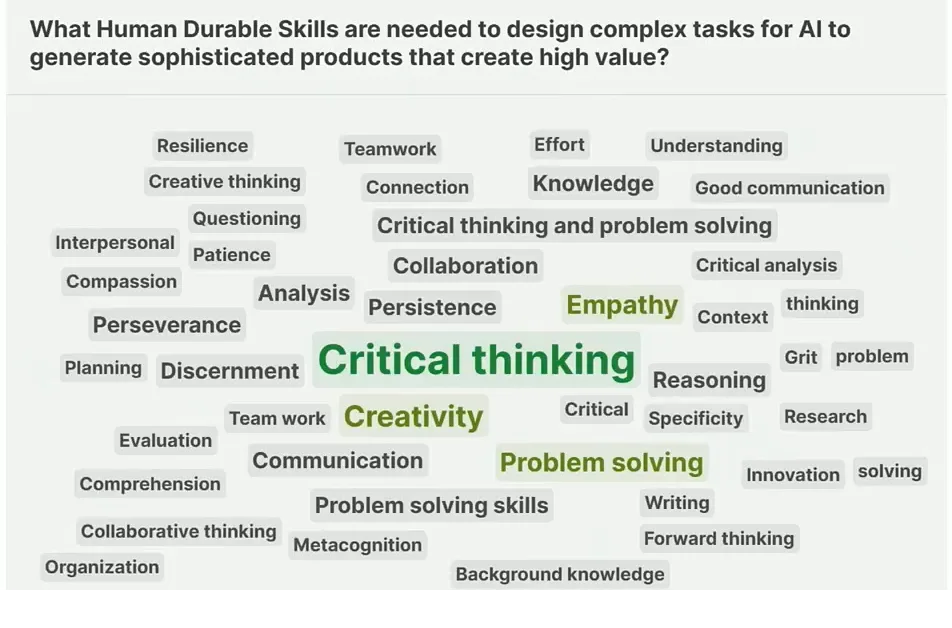
Word cloud generated from a live audience poll of 370 educators at author Michael Toth’s keynote session at the Building Expertise conference (2025). Larger words indicate responses submitted most frequently.
Subscribe for curated education insights delivered every two weeks.
3 Recommendations for Preparing Students to Thrive in an AI World
The following three recommendations are designed to counteract the harmful effects of AI on the brain.
In our own classroom visits, we’ve seen students working individually on computers for extended periods of time, often acting out in boredom. Simply bringing AI into computer-based programs will not build the skills students need to thrive.
In an AI world, human teaching and student-to-student interaction are more critical than ever. We believe the most valuable asset in developing human durable skills is a skilled human teacher in the classroom, and each of these recommendations centers on just that.
Recommendation #1: Prioritize Developing Durable Human Skills Like Critical Thinking
Critical thinking is the new currency. With it, students can evaluate the credibility of a flood of information, make sound decisions, and grow into professionals who are adept at solving complex problems.
Instructional Empowerment’s Applied Research Center identified three skill areas that develop students into critical thinkers:
- Interpersonal: Skills that enable effective interaction, collaboration, and communication.
- Cognitive: Skills that support critical reasoning, problem-solving, and knowledge acquisition.
- Intrapersonal: Skills related to self-awareness, self-management, personal growth, and mindsets.
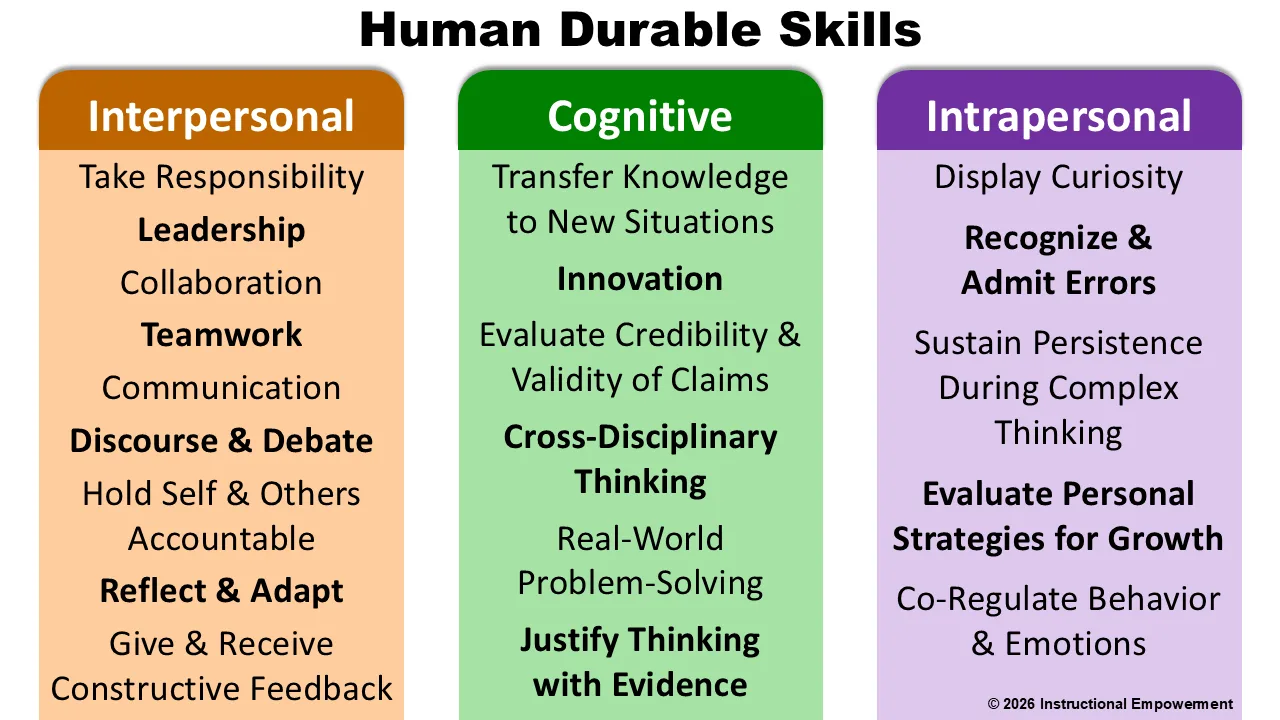
These three skill areas are highly interconnected. For example, to develop more advanced cognitive skills, students must cultivate the interpersonal skills to engage in academic discourse with their peers and the intrapersonal skills to persist through any challenges they may encounter.
Learning to collaborate, innovate, and admit errors cannot be mastered through AI computer programs alone—students must experience and master the messiness of human teamwork firsthand. Durable skills aren’t a “nice-to-have” alongside academics—they’re what makes critical thinking possible in an AI world.
Although many educators recognize the importance of human durable skills, they are not always easy to teach and develop. Students need tasks explicitly designed to exercise these skills, as well as the supporting protocols and strategies that make teamwork effective—such as those built into the Model of Instruction for Deeper Learning™.
Durable skills aren't a “nice-to-have” alongside academics—they're what makes critical thinking possible in an AI world.
Recommendation #2: Adopt Deeper Learning Pedagogy to Develop Human Durable Skills
Traditional pedagogy is not designed to fully develop interpersonal, cognitive, and intrapersonal skills. The shift in Tier 1 instruction from a teacher-directed to student-led, team-based classroom environment is what makes it possible for human durable skills to flourish.
In a student-led team learning classroom, pedagogy changes significantly: everything from classroom management to planning to the roles and responsibilities of students and teachers are different.
Unlike a typical cooperative learning classroom where students work in groups but are still led by the teacher, student-led team learning requires a deeper shift. New structures, protocols, and norms help students reach levels of academic discourse and independent critical reasoning that would otherwise not be possible.
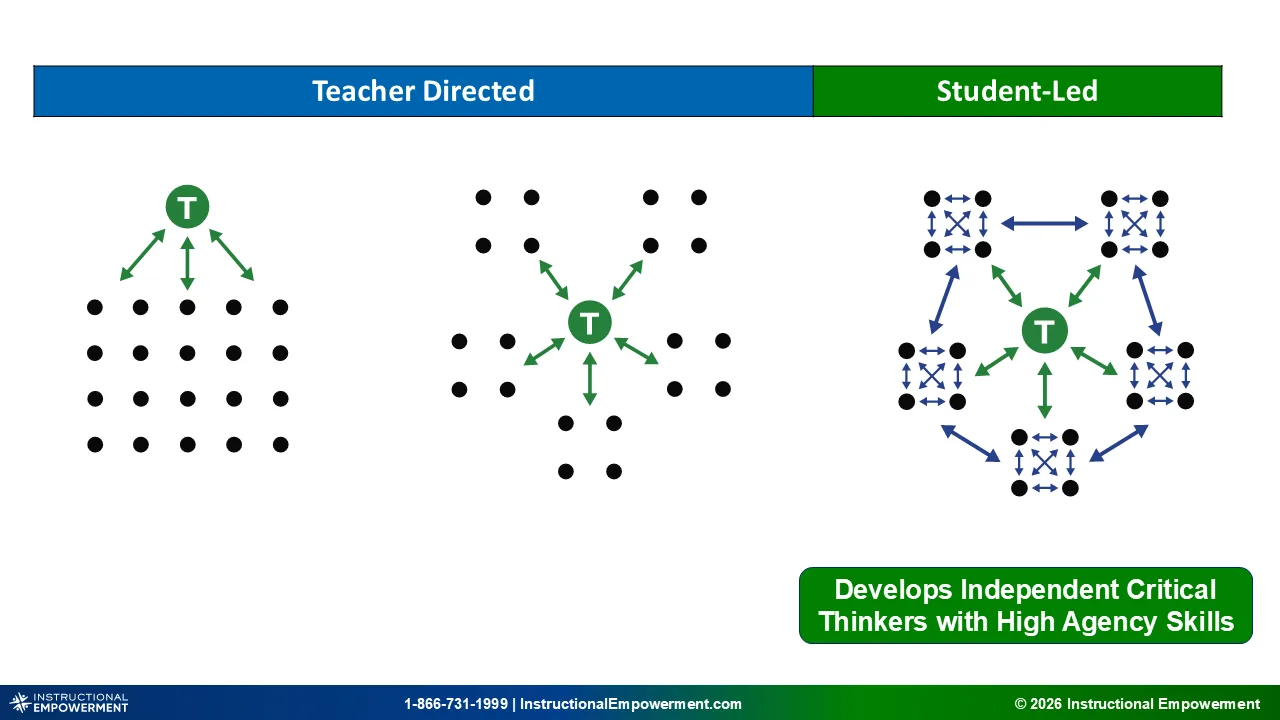
The instructional models that many teachers were trained in and experienced in school themselves were designed for outputs on a test, not to prepare students to navigate frictions, work through complexities, and take leadership of their own learning. It is the student-led team learning classroom that will best prepare students with the durable skills necessary for an AI world.
In classrooms that use the Model of Instruction for Deeper Learning, students are engaged in deeper learning tasks with their peers about 70% of the time, with the other 30% of the time being instruction from the teacher to set up the task.
This is a huge shift from traditional pedagogy, where students often spend about 70% of the time listening to a lecture or as a passive participant of computer-based instruction with minimal student-to-student interactions and 30% of the time completing independent practice, such as worksheets or essays.
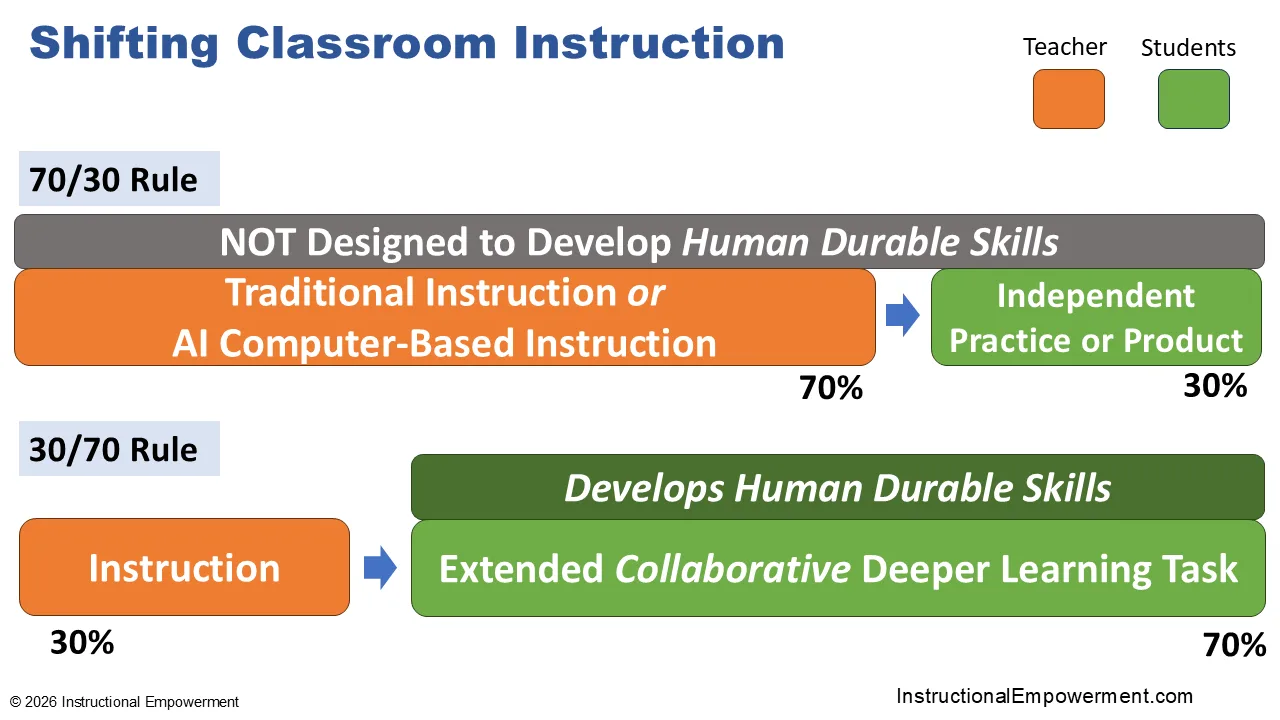
The “30/70 model” is designed to develop human durable skills because students are spending the majority of classroom time engaged in effortful learning with their peers. They are actively generating their own thinking and reasoning with the curricular materials in their hands.
The 30/70 model also addresses the issue of students using AI to complete essays, worksheets, homework, and tests. Rather than relying on these learning products alone to assess student learning, teachers can observe the critical thinking process in action. One of the key shifts is emphasizing the critical thinking process over the product. This is increasingly important since many assignments given to students outside the classroom will be completed utilizing AI. When classrooms shift to the 30/70 model, students verbalize and demonstrate their critical thinking process during the lesson.
As teachers circulate among their student teams, they can see and hear for themselves whether students are using precise academic vocabulary, citing text evidence, forming and testing mental models, demonstrating empathy, and pushing each other’s thinking. They can coach teams and close learning gaps on the spot.
Teachers who have used the Model of Instruction for Deeper Learning to make the shift to student-led team learning often remark on the difference it makes in their classrooms. In a 2024 case study, fifth-grade teacher Ashley Paille shared, “I’ve been able to take a step back and listen more, dig deeper, and have rich conversations. I’ve been able to find misconceptions that I might not have before.”
One of the key shifts is emphasizing the critical thinking process over the product.
Recommendation #3: Strategically Integrate AI Skills Into Rigorous Team-Based Deeper Learning Tasks
This third recommendation is about integrating AI safely and strategically into the classroom through iterative prompt design and evaluation. You’ll need to have recommendations one (prioritizing durable skills) and two (deeper learning pedagogy) in place before tackling recommendation three.
The following methodology works for all but the earliest grade levels. The key to its success is that students collaborate in teams. If they work independently, they won’t develop the full range of durable skills.
Classroom Methodology: Iterative Prompt
Design & Evaluation
Step 1: Have student teams—without using AI—establish design goals and evaluation criteria for a complex product.
Step 2: Then student teams—without using AI—design the AI prompts to generate their complex product.
Step 3: The teams evaluate the AI generated product against their design goals and evaluation criteria. They share their products with other teams to learn from one another. Then they revise the AI prompts through iterations until they achieve the AI product that meets or exceeds their goals and criteria.

Teachers must withhold AI for the first two steps of the process so students will use their own brains as they think through prompt ideas, conduct research, articulate context, and consider multiple perspectives from their teammates.
Once AI creates the product, students are again exercising higher order skills as they evaluate the AI’s output against their target vision and criteria. They don’t offload the revision process to AI, because it’s critical that they develop the ability to reflect on and improve their work.
During Step 3, you can have teams share out with one another. Students typically enjoy this process as it spurs their curiosity as they see what other teams created and ask them questions. As students develop their revision strategy, they are developing their critical thinking skills. It’s important to remember that rather than celebrating the “cool AI product” that student teams create, praise the effortful thinking behind it.
You can also reverse this process and have students create the product, such as an essay, poem, or algorithm, while withholding AI. Then have the teams critique it before asking AI for a critique. If you use this approach, be sure that students ask AI not to fix it but only to offer feedback. Next, remove the AI and let students use their brains to take that critique and revise their piece into a better product.
Doing this process several times teaches students that creating high-quality outputs takes effort, iterations, and careful design. Working through the critical thinking process is what develops students’ brains and builds the employability skills of the future.
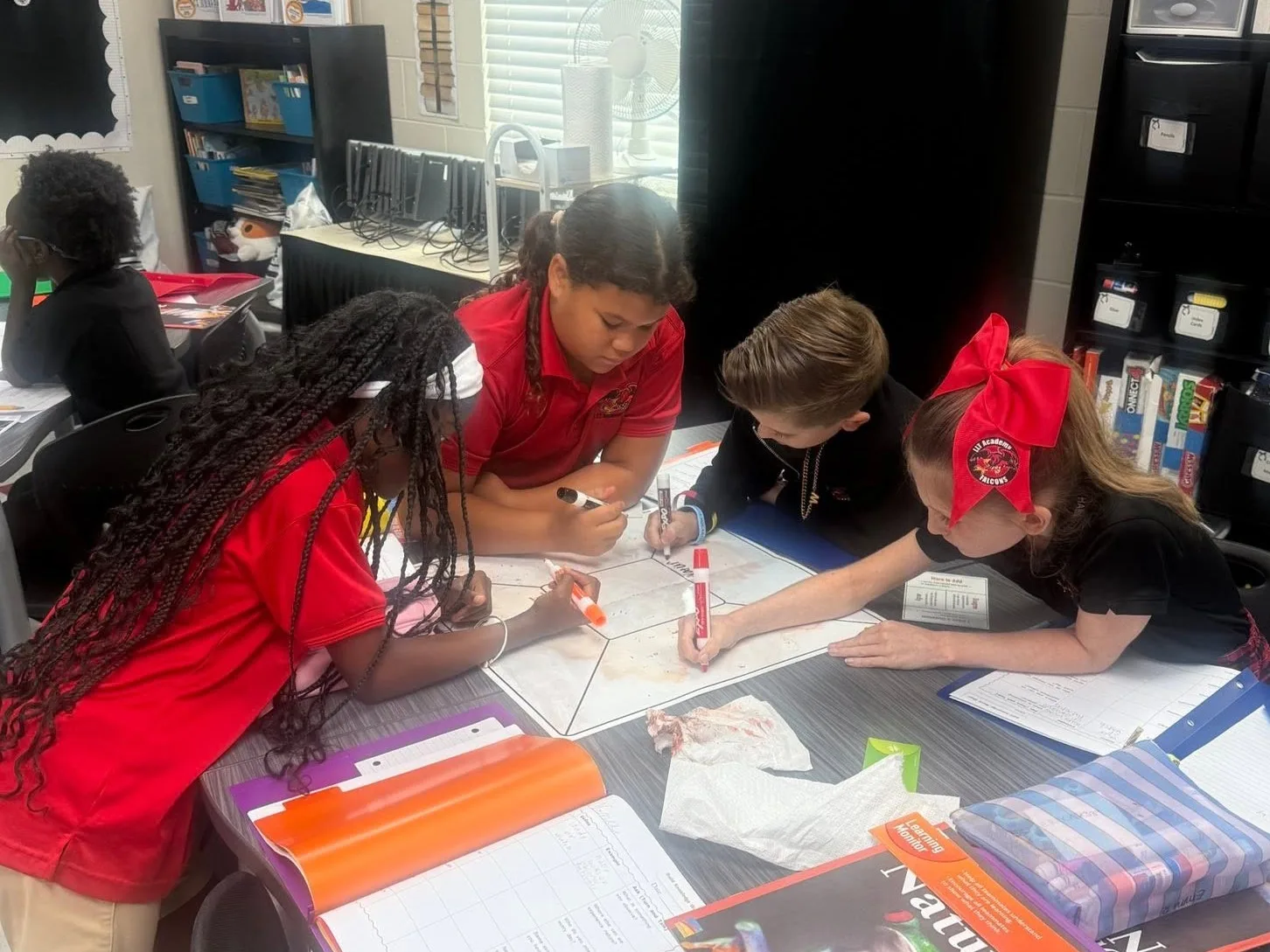
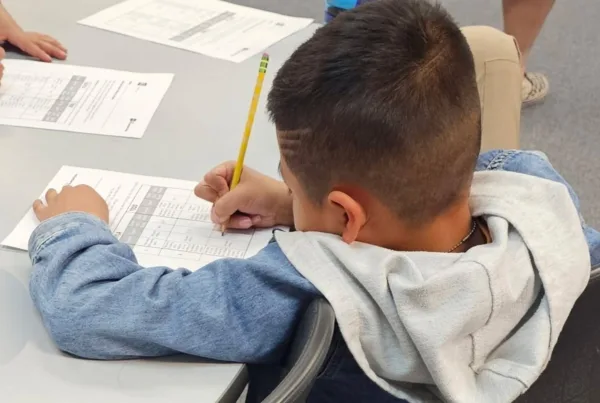
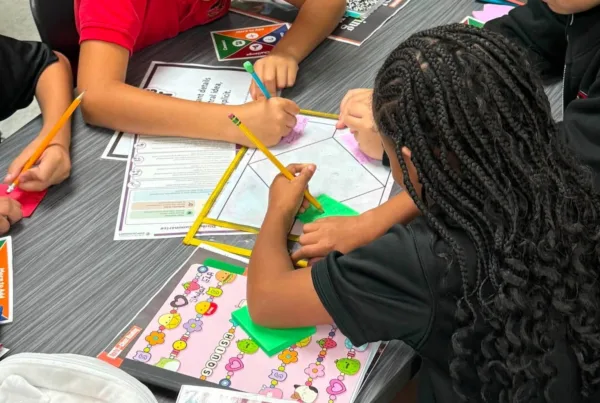
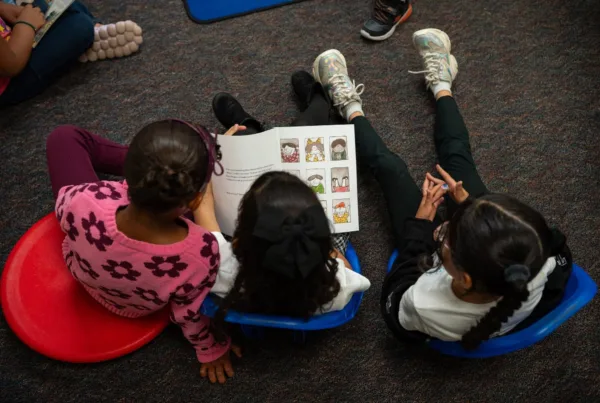
Students engage in academic conversations, practice persistence, and overcome challenges as a team at partner school LLT Academy in Tampa, FL. These skills are critical to protecting students from the harmful impacts of AI on the developing brain. Photo: LLT Academy Facebook page.
Policy Recommendations for Leaders Integrating AI
Most AI-use policies specify which tools are allowed. Few specify which instructional phases are AI-free. When you’re drafting or revising your school or district’s AI-use guidelines, consider building them around the concept of iterative prompt design and evaluation using the following:
- Goal-setting and prompt design happen without AI. The policy should state plainly that students define what they are trying to achieve and draft their own prompts before AI is introduced—this is critical for developing persistence and critical thinking.
- AI generates; it doesn’t decide. Once AI produces a draft, students take over to evaluate and revise it against their own criteria. This policy can require the handoff explicitly.
- Ask for evidence of the “before AI” step. This might include a goals list, a first draft, a set of criteria, or another artifact that shows student thinking. An AI policy without this requirement is difficult to monitor or enforce in practice.
Psychological Guidelines for AI Use
Based on the research presented throughout this article, consider the following guidelines as you shape your AI policies at the classroom, school, and district level:
- Protect productive struggle and resist students going to AI for answers before they have persisted deeply in originating and refining their own. Cognitive development occurs when students stay with confusion and form their own judgments before seeking assistance from the teacher or AI.
- Prioritize human “friction-full connection” ensuring real-world relationships remain the priority. Human relationships involve contradiction and emotional accountability for healthy development.
- Establish “cognitive solitude” with tech-free time for students to collaborate with one another in academic discourse to foster deeper thinking.
- Enforce healthy boundaries that AI is a tool and NOT a friend or therapist.
In summary, developing human durable skills requires human interaction. AI can be helpful in the classroom, but it carries with it many risks such as cognitive offloading and skills atrophy. Educators must be intentional about when and how they allow students to use it and when to withhold AI to develop students critical thinking, collaboration, and persistence skills. Shifting away from traditional models of instruction and instead to student-led teams for deeper learning creates an environment where all students can develop durable skills and flourish.
Developing human durable skills requires human interaction.
About the Authors
Michael D. Toth
Michael D. Toth is founder and CEO of Instructional Empowerment (IE) and leads IE’s Applied Research Center. He is also the author of the multi-award-winning book The Power of Student Teams with David Sousa; author of Who Moved My Standards; and co-author with Robert Marzano of multiple books. He co-authored peer-reviewed research articles published in academic journals in collaboration with researchers Lindsey Devers Basileo, Merewyn Lyons, Franz Hofmann, Barbara Otto, and Natalie Vannini. Most recently, he authored multiple articles published in the American School Board Journal by the National School Board Association (NSBA), including “Deeper Learning and Educational Screen Time.” Michael is a keynote speaker at conferences and coaches superintendents on creating a bold instructional vision, designing and launching a high-functioning cabinet team, transforming Tier 1 core instruction, and leading systems-based school advancement.
Learn more about Michael: https://instructionalempowerment.com/ie-founder-michael-d-toth/
Merewyn Lyons, Ed.D.
Merewyn Lyons, Ed.D. is a Senior Research Analyst with Instructional Empowerment’s Applied Research Center. Her primary research interest is educational psychology, with a focus on understanding the effect of motivation on teaching, learning, and educational leadership. She is co-author of peer reviewed articles in Sage Open, Frontiers in Education, Quality Education for All, and Discover Education. Dr. Lyons is a member of the Center for Self-Determination Theory. She is also a retired officer of the United States Navy and a retired K-12 educator.
Glossary
Key terms and frameworks referenced throughout this article:
30/70 model: An instructional ratio in which students spend roughly 70% of class time in deeper learning tasks with their peers and about 30% in teacher instruction that sets up the task, reversing the lecture-heavy traditional classroom.
Cognitive debt: The repercussions of repeated reliance on AI to do thinking work, which results in long-term costs such as diminished critical reasoning, increased likelihood of being manipulated, and decreased creativity. It builds up as repeated cognitive offloading weakens the brain’s active role in learning.
Cognitive offloading: The use of external tools, including AI, to reduce cognitive load on working memory. Useful in moderation, but overreliance can degrade cognitive development and independent analytical skills.
Cognitive solitude: Protected, tech-free time for students to think and engage in academic discourse together, creating space for deeper thinking without digital interruption.
Friction-full connection: The principle that real human relationships—which require negotiation, contradiction, and emotional accountability—must stay a priority, because the frictionless interactions AI offers don’t build genuine social skills.
Human durable skills: Transferable, lifelong skills (also called soft skills or life skills) such as teamwork, curiosity, persistence, and critical thinking. Instructional Empowerment groups them into three interconnected areas: interpersonal, cognitive, and intrapersonal.
Persistence debt: The loss of willingness to struggle with challenges or difficult problems, resulting from overreliance on AI; a term the authors coined after reviewing research on how AI affects performance and motivation.
References
Bjork, E. L., & Bjork, R. A. (2014). Making things hard on yourself, but in a good way: Creating desirable difficulties to enhance learning. In M. A. Gernsbacher & J. Pomerantz (Eds.), Psychology and the real world: Essays illustrating fundamental contributions to society (2nd ed., pp. 59–68). Worth.
Bjork, R. A. (1994). Memory and metamemory considerations in the training of human beings. In Metacognition: Knowing about Knowing (pp. 185–206). The MIT Press. https://doi.org/10.7551/mitpress/4561.003.0011
Brown, B. (2018). Dare to Lead: Brave Work. Tough Conversations. Whole Hearts. Random House.
Burns, M., Winthrop, R., Luther, N., Venetis, E., & Karim, R. (2026). A new direction for students in an AI world: Prosper, prepare, protect. Center for Universal Education at Brookings. https://www.brookings.edu/articles/a-new-direction-for-students-in-an-ai-world-prosper-prepare-protect/
Gerlich, M. (2025). AI tools in society: Impacts of cognitive offloading and the future of critical thinking. Societies, 15(1), 6; https://doi.org/10.3390/soc15010006
Kosmyna, N., Hauptmann, E., Yuan, Y. T., Situ, J., Xian-Hao, L., Beresnitzky, I., & Maes, P. (2025). Your brain on ChatGPT: Accumulation of cognitive debt when using an AI assistant for essay writing task. arXiv:2506.08872v2. https://doi.org/10.48550/arXiv.2506.08872
Kreijkes, P., Kewenig, V., Kuvalja, M., Lee, M., Hofman, J. M., Vitello, S., Sellen, A., Rintel, S., Goldstein, D. G., Rothschild, D., Tankelevitch, L., & Oates, T. (2026). Effects of LLM use and note-taking on reading comprehension and memory: A randomized experiment in secondary schools. Computers & Education, 243, 105514. https://doi.org/10.1016/j.compedu.2025.105514
Kwa et al. (2025, March 19). Measuring AI ability to complete long tasks. METR. https://metr.org/blog/2025-03-19-measuring-ai-ability-to-complete-long-tasks/
Liu, G., Christian, B., Dumbalska, T., Bakker, M. A., & Dubey, R. (2026). AI assistance reduces persistence and hurts independent performance. arxiv.org/abs/2604.04721v2. https://ai-project-website.github.io/AI-assistance-reduces-persistence/
METR. (2026, January 29). Time Horizon 1.1. METR. https://metr.org/blog/2026-1-29-time-horizon-1-1/
Seghid, N., Iqbal, F., Al-Room, K., & MacDermott, Á. (2026). Emerging threats in AI: a detailed review of misuses and risks across modern AI technologies. Frontiers in Communications and Networks, 6. https://doi.org/10.3389/frcmn.2025.1727425
Slaughter, M. & Rock, D. (2018). No Pain, No Brain Gain: Why Learning Demands (A Little) Discomfort. Fast Company. https://www.fastcompany.com/40560075/no-pain-no-brain-gain-why-learning-demands-a-little-discomfort
Toth, M.D. & Sousa, D.A. (2019). The Power of Student Teams: Achieving Social, Emotional, and Cognitive Learning in Every Classroom Through Academic Teaming. Instructional Empowerment.
Model of Instruction for Deeper Learning ® is a registered trademark of Instructional Empowerment and is research-validated.