An Applied Research Center Brief on Student-Led Team Learning
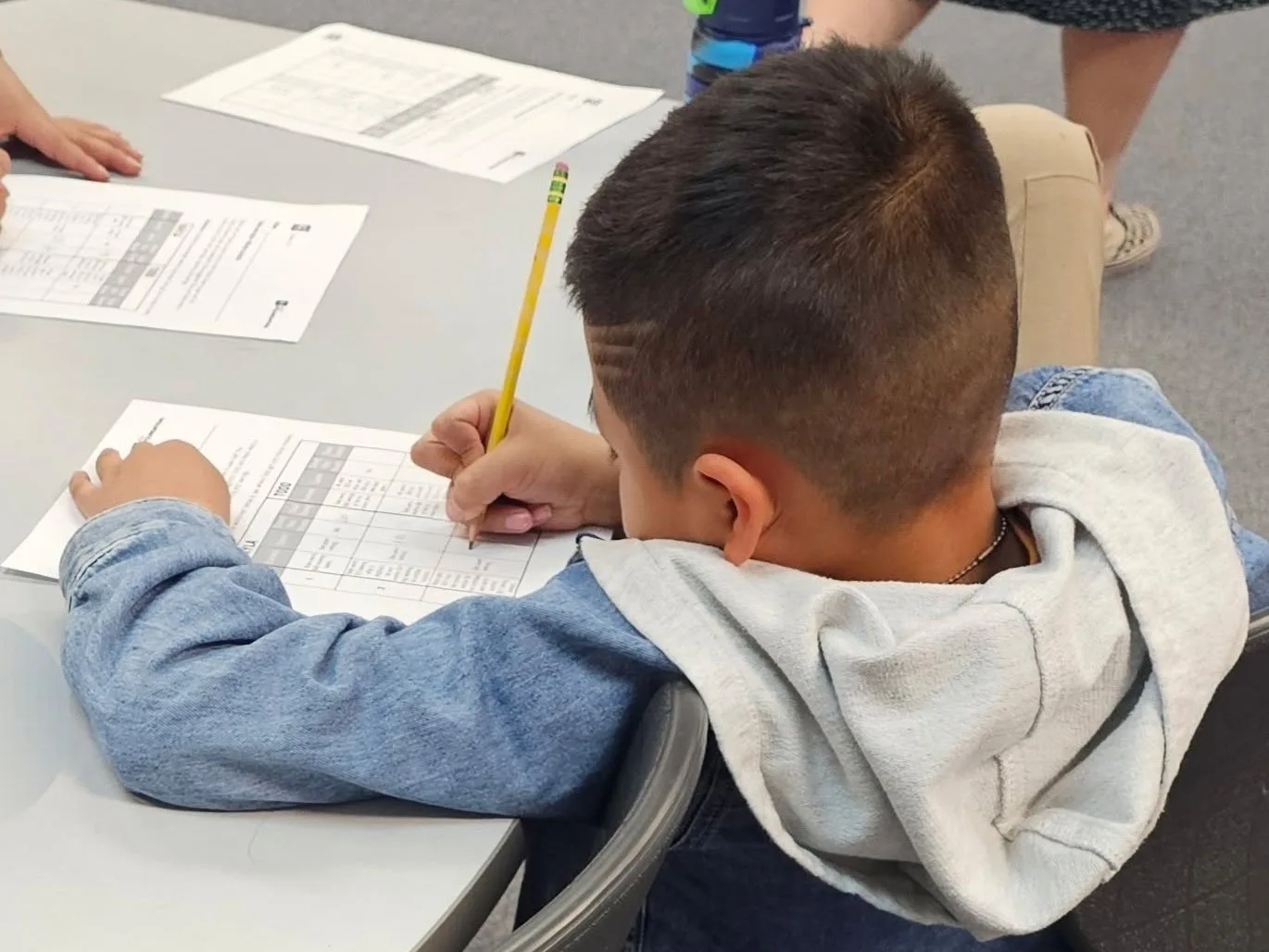
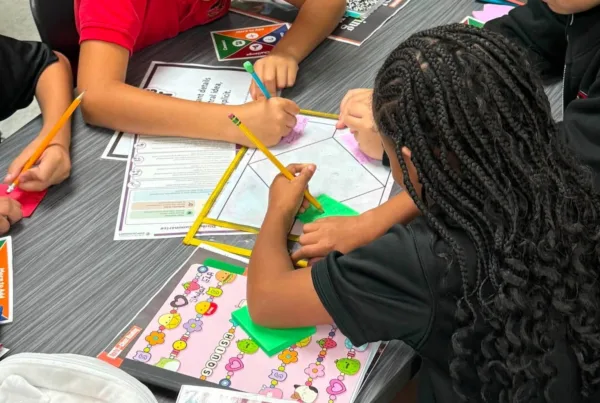
A student at Colorado Springs School District 11 works at his desk. The district partnered with Instructional Empowerment to survey students about their well-being and determine whether there was a connection with the classroom instructional model. Photo: Colorado Springs School District 11 Facebook page.
October 2026
Executive Summary
In a survey of 1,112 students in Grades 3–12 in Colorado Springs School District 11, students who experienced stronger student-led team learning through the Model of Instruction for Deeper Learning® reported higher well-being.
- Well-being and autonomy: Team learning was associated with both higher well-being (r = .59) and greater autonomy over learning (r = .59).
- The role of autonomy: Autonomy satisfaction explained approximately 76% of the association between team learning and well-being.
- Implication for leaders: An autonomy-supportive approach like the Model of Instruction for Deeper Learning may be a practical lever for supporting student well-being.
Can Classrooms Meet Students’ Social Needs While Raising Achievement?
Schools increasingly seek to develop collaboration, communication, critical thinking, and self-directed learning skills (National Research Council, 2012; Fullan et al., 2018). At the same time, students naturally gravitate toward environments that satisfy their needs for autonomy and social connectedness, and research suggests that when their needs are not consistently met in everyday life, children increasingly seek them online (Shen et al., 2013).
The challenge for schools is to create classrooms that engage students academically, build durable interpersonal skills, promote well-being, and strengthen achievement.
Little research has been conducted on how collaborative learning may support students’ motivation and well-being. Instructional Empowerment’s Model of Instruction for Deeper Learning provides a context for studying how student-led team learning relates to well-being and the mechanisms that may help explain that relationship.
Do Students Need Social Connectedness in the Classroom to Experience Higher Well-Being?
Yes, research supports the importance of social connectedness in promoting students’ well-being and positive behavioral outcomes.
Social support from peers and teachers, as well as a sense of social connectedness, directly and indirectly enhances psychological well-being, resilience, and life satisfaction (Li et al., 2025; Su & Wang, 2022; Rehman et al., 2020; Man & Jing, 2025).
Satisfying students’ needs for autonomy, social competence, and relatedness (with both peers and teachers) is consistently linked to higher well-being, more prosocial behavior, and fewer behavioral conduct problems. Perceived autonomy is associated with lower negative affect, while social competence and relatedness foster both positive affect and prosocial motivation (Collie, 2022; Collie, 2024; Wu & Zhang, 2022; Collie et al., 2024; Vasiou et al., 2024).
While some students may experience social connectedness during extracurriculars and other non-academic activities, not all students participate in those activities, and the traditional teacher-centered model of instruction often doesn’t close that gap. It tends to rely heavily on lecture and independent practice, with few opportunities for consistent and substantial social interactions between students during class time.
This study examines whether an instructional model built around student-led teams is associated with higher student well-being during academic learning.
Is Student Well-Being Linked to Academic Achievement?
Yes, research strongly supports a positive link between student well-being and academic achievement, but the relationship can vary by age and gender and is not always direct.
Multiple meta-analyses and large-scale studies confirm a significant, though generally small, positive correlation between student well-being and academic achievement across age groups and countries (Kaya & Erdem, 2021; Marrone et al., 2024; Cárdenas, 2022). Students with higher well-being tend to perform better academically, and this effect is robust across different well-being domains and academic subjects (Kaya & Erdem, 2021; Marrone et al., 2024).
Important Nuances:
- Age and Gender: The well-being–achievement link is stronger in younger students and may weaken with age (Klapp et al., 2023; Kaya & Erdem, 2021). For adolescent girls, higher well-being predicts better achievement, but high achievement can sometimes reduce later well-being due to stress (Bortes et al., 2021).
- Not Always Direct: Some studies find no direct effect of well-being on achievement, but rather indirect effects through engagement or other mediators (Schnell et al., 2025; Holzer et al., 2022).
Increasing achievement is a priority for many school districts, so an instructional model that supports both achievement and well-being could improve student outcomes without adding another initiative for schools to implement.
What Does Previous Research Show About the Model of Instruction for Deeper Learning?
Instructional Empowerment’s Applied Research Center has conducted extensive research to validate the effectiveness of the Model of Instruction for Deeper Learning. Numerous studies have linked the model to:
- Increased student achievement in ELA and math: In a study in Colorado Springs School District 11, students taught by teachers verified in the model scored an adjusted 22.44 STAR scale-score points higher in ELA and 18.24 points higher in math than matched comparison students using the same curriculum.
- Higher ELA achievement gains: In a study of 6,200 students across 318 classrooms in Cedar Rapids Community School District, students whose teachers demonstrated implementation of the model saw higher gains on a benchmark ELA assessment than students whose teachers did not.
- Better student attendance: In a study of 76 schools implementing the model, 79% reduced chronic absenteeism, with a median reduction of 5.6 percentage points, more than twice the national average of 2 points.
- Lower teacher burnout: In a survey of 570 teachers across 10 districts in seven states, teachers with higher implementation of the model reported lower burnout.
This new research analysis examined whether students’ experiences with the model were associated with well-being and explored one potential mechanism—autonomy satisfaction—that may help explain that relationship.
How Does the Model of Instruction for Deeper Learning Work?
The Model of Instruction for Deeper Learning is a research-based instructional model that shifts classroom instruction from traditional teacher-directed methods to student-led teams with academic discourse. It can be implemented with any curriculum and in all grade levels and subject areas.
What Do the Team Structures Look Like?
The model equips each student team with a defined set of structures: assigned team roles, norms and protocols for academic discourse, critical thinking guides, and rigorous tasks that require students to collaborate.
Teachers learn to build rigorous, interdependent tasks from the district’s curriculum. Students work within the team structures, gradually taking on more responsibilities as they learn to lead, collaborate, and think critically.
Unlike typical group work, specific protocols ensure equal participation, accountability, and deeper learning, with less reliance on the teacher for constant support.
What Is the Role of Autonomy in the Model?
The difference between traditional teacher-directed learning and the autonomous team learning environment that the Model of Instruction for Deeper Learning creates is visible in how learning moves forward.
In a teacher-directed classroom, the teacher often guides students step-by-step toward the answer. Even when students are working in groups, the teacher remains the primary source of direction, support, and validation. Students may participate in discussion, but the teacher controls most of the decisions about how learning unfolds and when conclusions are reached.
In the Model of Instruction for Deeper Learning, students develop the autonomy to take greater responsibility for their own learning. The teacher designs engaging tasks, provides resources and structures, and establishes clear team roles and responsibilities, but students do the intellectual work of exploring ideas, testing thinking, resolving confusion, and reaching conclusions together. Support comes not only from the teacher, but also from peers, team processes, and learning resources.
An Example of Autonomous Team Learning
A fourth-grade math lesson illustrates the distinction. Student teams were working through a complex problem when they discovered that different teams had arrived at different answers. Rather than telling students which answer was correct, the teacher challenged them to figure it out together. Teams debated their reasoning, examined one another’s evidence, and applied previously learned mathematical concepts to defend their conclusions. When students became stuck, the teacher did not reveal the answer. Instead, she offered a hint connected to a mathematical principle students had learned earlier and allowed teams to continue their investigation. Ultimately, students determined the correct answer themselves (Toth & Sousa, 2019).
This example illustrates an important distinction: autonomy does not mean students are left on their own. Students need support as they wrestle with learning, but that support does not always need to come directly from the teacher. When tasks are designed to promote interdependence, collaborative thinking, and shared responsibility, students learn to rely on one another and available resources to advance their understanding. In the learning environment that the Model of Instruction for Deeper Learning is designed to create, students become active owners of the learning process rather than passive recipients of information.
Research suggests that students are less motivated to engage in learning when they have little opportunity to exercise choice or autonomy (Bartholomew et al., 2018). By gradually shifting responsibility for learning from the teacher to students and their teams, educators can develop both academic understanding and the self-management skills necessary for independent learning.
How Do Students Experience Social Connectedness in the Model?
Care, empathy, and belonging are powerful components of learning that are often not intentionally built into traditional, teacher-centered instruction. In the Model of Instruction for Deeper Learning, social connectedness is developed through structured student teams that help students participate in rigorous academic work. When students feel a sense of belonging in their learning teams, they can more effectively engage in challenging content.
The norms and structures of the model establish classroom routines designed to support participation, accountability, and academic safety. As students build social bonds and gain confidence participating in academic discourse and working with challenging grade-level text, many teachers see stronger engagement within student teams.
Study Design
The Applied Research Center analyzed student survey data from Colorado Springs School District 11 to examine the relationship among team learning experiences, autonomy satisfaction, and well-being. This section summarizes the sample, measures, and analytic methods used in the study.
Districtwide Demographics
District: Colorado Springs School District 11
State: Colorado
Number of schools: 61
Student enrollment: 23,458
Race/ethnicity:
- 45.8% White
- 36.2% Hispanic or Latino
- 9.5% two or more races
- 6.4% Black or African American
- 1.3% Asian
- 0.4% American Indian or Alaska Native
- 0.4% Native Hawaiian or Pacific Islander
Other demographic characteristics:
- 58.1% qualify for free or reduced-price lunch
- 14% students in special education
- 8.1% English learners
- 1.5% homeless
Source: Colorado Department of Education, 2026
Sample Studied
- Grade Levels: 3–12
- Subjects: English Language Arts and Math
- Students: 1,112
- Classrooms: 49
Data Sources and Measures
Student Survey Data
- Teachers who implemented the Model of Instruction for Deeper Learning in reading and math opted in and conducted the student survey in the fall semester of 2025, the first of two survey waves.
- The survey consisted of validated multi-item scales. The Teaming Effectiveness measure was created by Instructional Empowerment’s Applied Research Center and is aligned to the Model of Instruction for Deeper Learning implementation. The Autonomy Satisfaction and Student Well-Being measures are independent constructs that were created and validated by researchers not associated with Instructional Empowerment.
- Teaming Effectiveness (Basileo et al., 2026): Students’ perceptions of how well their team works together using the model’s structures, such as roles, norms, and academic discourse protocols
- Autonomy Satisfaction (Van der Kaap-Deeder et al., 2015): The degree to which students feel a sense of choice and ownership over their learning
- Student Well-Being (Thompson, 2007; Collie, 2022): Students’ self-reported sense of feeling well, supported, and positive about school
Methodology
In plain language, the analysis was designed to answer two questions: whether students who reported stronger team learning experiences also reported higher well-being, and whether autonomy satisfaction helped explain that relationship. These methods do not prove that student-led team learning caused higher well-being, but they strengthen confidence that the observed relationships are meaningful.
What Statistical Methods Were Used?
The analysis first used correlations to measure the strength and direction of the relationships among the three survey measures. It then used a multilevel structural equation model, a statistical approach that can examine relationships among several hard-to-measure concepts while also accounting for the fact that students are grouped within classrooms. This is important because students in the same classroom may have shared experiences—such as the same teacher, routines, and team structures—that make their responses more similar to one another than to students in other classrooms.
The model treated Teaming Effectiveness, Autonomy Satisfaction, and Student Well-Being as latent constructs, meaning each concept was estimated from multiple survey items rather than from a single question.
How Were Missing Data, Demographics, and Model Fit Handled?
The analysis used robust maximum likelihood to estimate relationships among the constructs and Full Information Maximum Likelihood to retain available survey information when some responses were missing. Rather than removing a student’s response set because one item was blank, this approach uses available data to produce more stable estimates.
The model also used fit statistics (CFI, TLI, RMSEA, SRMR) to assess how well it represented the survey data. The model showed strong fit, supporting confidence that the survey measures represented the intended Student Well-Being, Autonomy Satisfaction, and Teaming Effectiveness constructs.
The sample included students across multiple grade levels, and the model included demographic controls for Hispanic, Black, and female students to examine whether the main relationships held after accounting for selected student characteristics.
How Was the Analysis Structured?
The analysis was conducted in two steps.
First, a correlational analysis examined the strength and direction of the relationships among Teaming Effectiveness, Autonomy Satisfaction, and Student Well-Being.
Second, a multilevel structural equation model tested whether autonomy satisfaction helped explain the relationship between team learning and well-being.
Together, these analyses allowed the research team to distinguish between the overall association between team learning and well-being and the portion of that association that may operate through students’ sense of autonomy.
Key Findings
How Strong Was the Association Between Team Learning, Well-Being, and Autonomy?
The correlational analysis found three large, statistically significant relationships (p < .001 for every comparison). Higher Teaming Effectiveness was strongly associated with higher Student Well-Being (r = .594) and Autonomy Satisfaction (r = .589). Student Well-Being was also strongly associated with Autonomy Satisfaction (r = .697).
The findings highlight the central role of effective team learning and autonomy-supportive practices in promoting student well-being, suggesting the importance of classrooms emphasizing rigorous, respectful, and collaborative team interactions within self-directed team learning structures.
r = .594
Teaming ↔ Well-Being
r = .589
Teaming ↔ Autonomy
r = .697
Well-Being ↔ Autonomy
All three relationships fall in the “large effect” range by conventional research standards (r of .50 or higher)—among the strongest patterns typically observed in survey-based research. This is consistent with Gignac and Szodorai’s (2016) analysis of 708 correlations drawn from meta-analyses in individual-differences research, which found that fewer than 3% reached r = .50 or higher.

Figure 1. The association between student-led team learning and student well-being (r = .594) falls in the large range by conventional benchmarks (Cohen, 1988).
Does Autonomy Explain the Link Between Team Learning and Well-Being?
Largely, yes. The second step of the analysis tested whether autonomy satisfaction mediated the relationship between Teaming Effectiveness and Student Well-Being. In this first survey wave, after accounting for Autonomy Satisfaction, Teaming Effectiveness retained a direct (but substantially reduced) association with student well-being (β = .17), while the indirect association between Teaming Effectiveness and Student Well-Being via Autonomy Satisfaction was substantial (β = .51), accounting for approximately 76% of the total association.
This means that more effective team learning was associated with higher well-being, and that most of this association was explained through students’ autonomy satisfaction. While “team learning” is sometimes loosely defined as students working in small groups, this study suggests that autonomy may need to be intentionally built into classroom team structures to support student well-being.

Figure 2. About 76% of the association between student-led team learning and student well-being was explained by students’ autonomy satisfaction.
What Are the Limitations of This Study?
This study has several limitations. Because the analysis is cross-sectional (one survey wave) and lacks a control group, it cannot show that team learning caused higher well-being. The data comes from student self-reports in a single district, and participating teachers opted in to administer the survey, so these classrooms may differ from others. A follow-up analysis using a second wave of survey data (Basileo et al., 2026), currently in preparation, examines these relationships over time. Future research could also compare classrooms with and without the model.
Does This Study Meet ESSA Evidence Standards?
Under the Every Student Succeeds Act (ESSA), Tier 3, or Promising Evidence, requires at least one well-designed and well-implemented correlational study with statistical controls for selection bias that shows a statistically significant positive effect. The results of this study provide evidence consistent with ESSA Tier 3 criteria for student well-being outcomes. Separately, the Model of Instruction for Deeper Learning meets ESSA Tier 2 (Moderate Evidence) for student achievement, based on a quasi-experimental study in Colorado Springs School District 11 (Instructional Empowerment Applied Research Center, 2026).
Story from a District 11 Classroom: Social Connectedness and Academics
Aaron Ford is the principal of Audubon Elementary School in Colorado Springs School District 11. The school partnered with Instructional Empowerment to implement the Model of Instruction for Deeper Learning. This classroom example illustrates what the model can look like in practice: when students have structured roles, shared responsibility, and a safe way to participate in academic discourse, team learning can support both social connectedness and access to rigorous work.
Becoming Part of a Team
“One student comes to mind who struggled a lot behaviorally, was low academically, and just struggled to fit in. He did not want to be part of his team or class. He frequently left the room or caused disruptions. But the next year, when he had a teacher who was skilled at inclusion and implementing the Model of Instruction for Deeper Learning, he became an active participant. He has his teammates helping him. He’s a student who struggles to read and write, but using the model’s tools, the teacher was able to adapt tasks so the student could participate in the task and discussion.
One day when it hit me the most was when another group was presenting their argument. I knew this student would argue with anybody and everybody. But this time, he was able to use a discussion card from the model’s resources to respectfully disagree. He cited text evidence, and it was really neat to see—in that moment, you would not know that student had learning struggles. He very much seemed like he was a part of the team and part of the class.”

Aaron Ford
Principal of Audubon Elementary, Colorado Springs School District 11
What Should Educators Take Away from This Study?
- Student-led team learning is linked to student well-being. While student well-being is complex and shaped by various factors, this study offers evidence that more effective team learning is associated with higher student well-being. This gives teachers and leaders a concrete approach to pursue when both well-being and academics are priorities.
- Promoting students’ well-being can be integrated into academic learning. Student well-being is something districts often pursue through separate initiatives and programs. The association between the Model of Instruction for Deeper Learning and well-being suggests that well-being can be supported within academic learning, giving more students consistent access to experiences that fulfill their needs and build durable interpersonal skills at the same time.
- Student autonomy is a critical aspect of effective team learning. Most of the positive association between the Model of Instruction for Deeper Learning and student well-being was explained through student autonomy, pointing to a likely mechanism through which the model is linked to student well-being. The model is designed to create autonomy through intentional structures such as roles, responsibilities, and protocols, which sets it apart from traditional group activities.
This study adds to a growing body of evidence that classroom instruction is meaningfully linked to student outcomes beyond achievement. For school and district leaders looking for strategies that support both rigorous learning and student well-being, the Model of Instruction for Deeper Learning offers a promising, evidence-informed option to consider.
Suggested Citation:
Instructional Empowerment Applied Research Center. (2026). Is the Model of Instruction for Deeper Learning linked to higher student well-being? An Applied Research Center brief on student-led team learning. https://instructionalempowerment.com/library/student-well-being-model-of-instruction-for-deeper-learning
Frequently Asked Questions
The Model of Instruction for Deeper Learning is a research-based instructional model from Instructional Empowerment that shifts classroom instruction from teacher-directed methods to student-led teams engaged in academic discourse. It can be used with any curriculum and in all grade levels and subject areas.
In a survey of 1,112 students in Grades 3–12 in Colorado Springs School District 11, the study found strong positive associations among effective team learning, autonomy satisfaction, and student well-being.
In this study, autonomy satisfaction explained approximately 76% of the association between team learning and well-being. This suggests that team structures are most likely to support well-being when students take real responsibility for their learning, not simply when they work in groups.
No. The study shows strong associations in survey data, but it does not prove causation. The findings suggest that autonomy-supportive team learning may be a promising area for school and district leaders to examine further.
The Model of Instruction for Deeper Learning meets ESSA Tier 2 (Moderate Evidence). The supporting study is a quasi-experimental analysis in Colorado Springs School District 11 using matched comparison classrooms, in which students of teachers with verified implementation of the Model of Instruction for Deeper Learning scored 22.44 STAR points higher in ELA (p = .045) and 18.24 points higher in math (p = .011). Additional evidence includes a 10,431-student study of Des Moines Public Schools that met What Works Clearinghouse Design Standards with Reservations, peer-reviewed studies published in Frontiers in Education, Discover Education, and Quality Education for All, and multiple case studies of schools and districts.
About the Research Analyst
Dr. Lindsey Devers Basileo
Dr. Lindsey Devers Basileo is the Director of Research at Instructional Empowerment’s Applied Research Center. She earned her doctorate from Florida State University in 2010 and is a nationally certified reviewer for the What Works Clearinghouse, specializing in Group Design Standards (Version 4.0 and 4.1). Her research interests include school improvement, educational innovations, self-determination theory, Diffusion of Innovation theory, Group Design Standards, survey design and collection, and both quantitative and qualitative methods. Dr. Basileo has authored multiple peer-reviewed studies and reports on instructional models, school improvement, and educator practice.
References
Bartholomew, K. J., Ntoumanis, N., Mouratidis, A., Katartzi, E., Thøgersen-Ntoumani, C., & Vlachopoulos, S. (2018). Beware of your teaching style: A school-year long investigation of controlling teaching and student motivational experiences. Learning and Instruction, 53, 50–63. https://doi.org/10.1016/j.learninstruc.2017.07.006
Basileo, L. D., Lyons, M. E., Toth, M. D., & Otto, B. (2026). Student teaming and autonomy satisfaction as drivers of well-being in deeper learning environments. [Manuscript in preparation].
Bortes, C., Ragnarsson, S., Strandh, M., & Petersen, S. (2021). The bidirectional relationship between subjective well-being and academic achievement in adolescence. Journal of Youth and Adolescence, 50, 992–1002. https://doi.org/10.1007/s10964-021-01413-3
Cárdenas, D. (2022). Youth well-being predicts later academic success. Scientific Reports, 12. https://doi.org/10.1038/s41598-022-05780-0
Cohen, J. (1988). Statistical power analysis for the behavioral sciences (2nd ed.). Lawrence Erlbaum Associates.
Collie, R. (2022). Social-emotional need satisfaction, prosocial motivation, and students’ positive behavioral and well-being outcomes. Social Psychology of Education, 25, 399–424. https://doi.org/10.1007/s11218-022-09691-w
Collie, R. (2024). Social-emotional need satisfaction and students’ academic engagement and social-emotional skills. Educational Psychology, 44, 117–135. https://doi.org/10.1080/01443410.2024.2324751
Collie, R., Martin, A., Renshaw, L., & Caldecott-Davis, K. (2024). Students’ perceived social-emotional competence: The role of autonomy-support and links with well-being, social-emotional skills, and behaviors. Learning and Instruction, 90, 101866. https://doi.org/10.1016/j.learninstruc.2023.101866
Colorado Department of Education. (2026). Colorado Springs 11 (1010). https://www.cde.state.co.us/schoolview/explore/profile/1010
Fullan, M., Quinn, J., & McEachen, J. (2018). Deep learning: Engage the world change the world. Corwin.
Gignac, G. E., & Szodorai, E. T. (2016). Effect size guidelines for individual differences researchers. Personality and Individual Differences, 102, 74–78. https://doi.org/10.1016/j.paid.2016.06.069
Holzer, J., Bürger, S., Lüftenegger, M., & Schober, B. (2022). Revealing associations between students’ school-related well-being, achievement goals, and academic achievement. Learning and Individual Differences, 95, 102140. https://doi.org/10.1016/j.lindif.2022.102140
Instructional Empowerment Applied Research Center. (2026). Double-digit ELA and math gains associated with the Model of Instruction for Deeper Learning. https://instructionalempowerment.com/library/instructional-model-curriculum-ela-math-achievement-gains/
Kaya, M., & Erdem, C. (2021). Students’ well-being and academic achievement: A meta-analysis study. Child Indicators Research, 14, 1743–1767. https://doi.org/10.1007/s12187-021-09821-4
Klapp, T., Klapp, A., & Gustafsson, J. (2023). Relations between students’ well-being and academic achievement: Evidence from Swedish compulsory school. European Journal of Psychology of Education, 1–22. https://doi.org/10.1007/s10212-023-00690-9
Li, R., Hassan, N., Zhu, Q., Sha, O., & Dong, J. (2025). A systematic review on the impact of social support on college students’ wellbeing and mental health. PLOS One, 20. https://doi.org/10.1371/journal.pone.0325212
Man, X., & Jing, Z. (2025). The role of prosocial tendencies in the relationships between gratitude, perceived social support, and psychological well-being among Chinese university students: A structural equation modeling approach. Frontiers in Psychology, 16. https://doi.org/10.3389/fpsyg.2025.1510543
Marrone, R., Lam, B., Barthakur, A., Brinkman, S., Dawson, S., & Gabriel, F. (2024). The relationship between wellbeing and academic achievement: A comprehensive cross-sectional analysis of system wide data from 2016–2019. Journal of Learning Analytics. https://doi.org/10.18608/jla.2024.8357
National Research Council. (2012). Education for life and work: Developing transferable knowledge and skills in the 21st century (J. W. Pellegrino & M. L. Hilton, Eds.). National Academies Press. https://doi.org/10.17226/13398
Rehman, A., Bhuttah, T., & You, X. (2020). Linking burnout to psychological well-being: The mediating role of social support and learning motivation. Psychology Research and Behavior Management, 13, 545–554. https://doi.org/10.2147/prbm.s250961
Schnell, J., Saxer, K., Mori, J., & Hascher, T. (2025). Feeling well and doing well. The mediating role of school engagement in the relationship between student well-being and academic achievement. European Journal of Psychology of Education, 40. https://doi.org/10.1007/s10212-025-00947-5
Shen, C., Liu, R.-D., & Wang, D. (2013). Why are children attracted to the Internet? The role of need satisfaction perceived online and perceived in daily real life. Computers in Human Behavior, 29(1), 185–192. https://doi.org/10.1016/j.chb.2012.08.004
Su, N., & Wang, H. (2022). The influence of students’ sense of social connectedness on prosocial behavior in higher education institutions in Guangxi, China: A perspective of perceived teachers’ character teaching behavior and social support. Frontiers in Psychology, 13. https://doi.org/10.3389/fpsyg.2022.1029315
Thompson, E. R. (2007). Development and validation of an internationally reliable short-form of the Positive and Negative Affect Schedule (PANAS). Journal of Cross-Cultural Psychology, 38(2), 227–242. https://doi.org/10.1177/0022022106297301
Toth, M. D., & Sousa, D. A. (2019). The power of student teams: Achieving social, emotional, and cognitive learning in every classroom through academic teaming. Instructional Empowerment.
Van der Kaap-Deeder, J., Vansteenkiste, M., Soenens, B., Loeys, T., Mabbe, E., & Gargurevich, R. (2015). Autonomy-supportive parenting and autonomy-supportive sibling interactions. Personality and Social Psychology Bulletin, 41(11), 1590–1604. https://doi.org/10.1177/0146167215602225
Vasiou, A., Vasilaki, E., Mastrothanasis, K., & Galanaki, E. (2024). Emotional intelligence and university students’ happiness: The mediating role of basic psychological needs’ satisfaction. Psychology International. https://doi.org/10.3390/psycholint6040055
Wu, G., & Zhang, L. (2022). Longitudinal associations between teacher-student relationships and prosocial behavior in adolescence: The mediating role of basic need satisfaction. International Journal of Environmental Research and Public Health, 19. https://doi.org/10.3390/ijerph192214840
Model of Instruction for Deeper Learning® is a registered trademark of Instructional Empowerment and is research-validated.