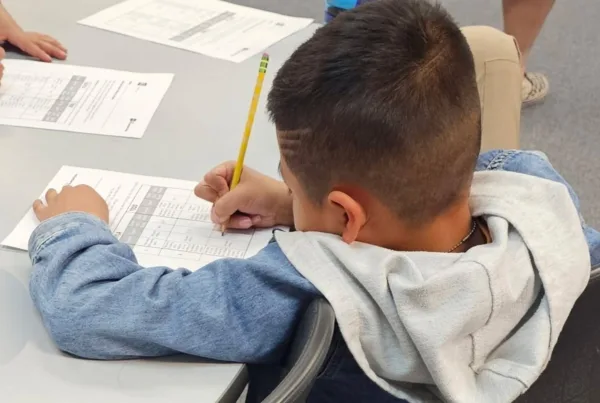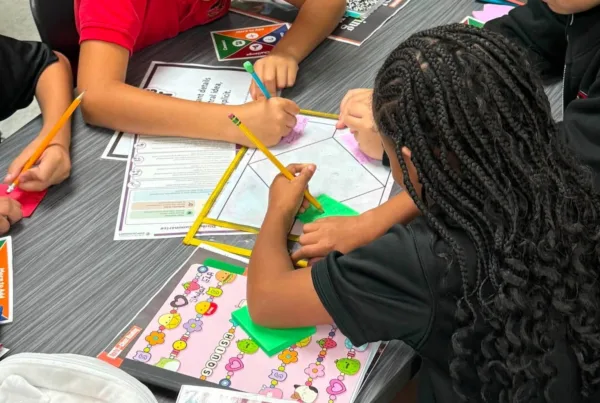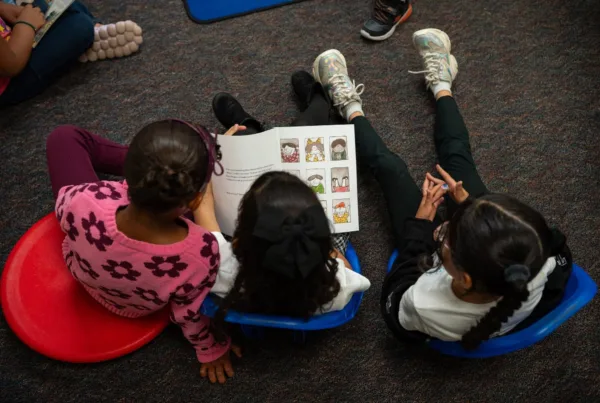
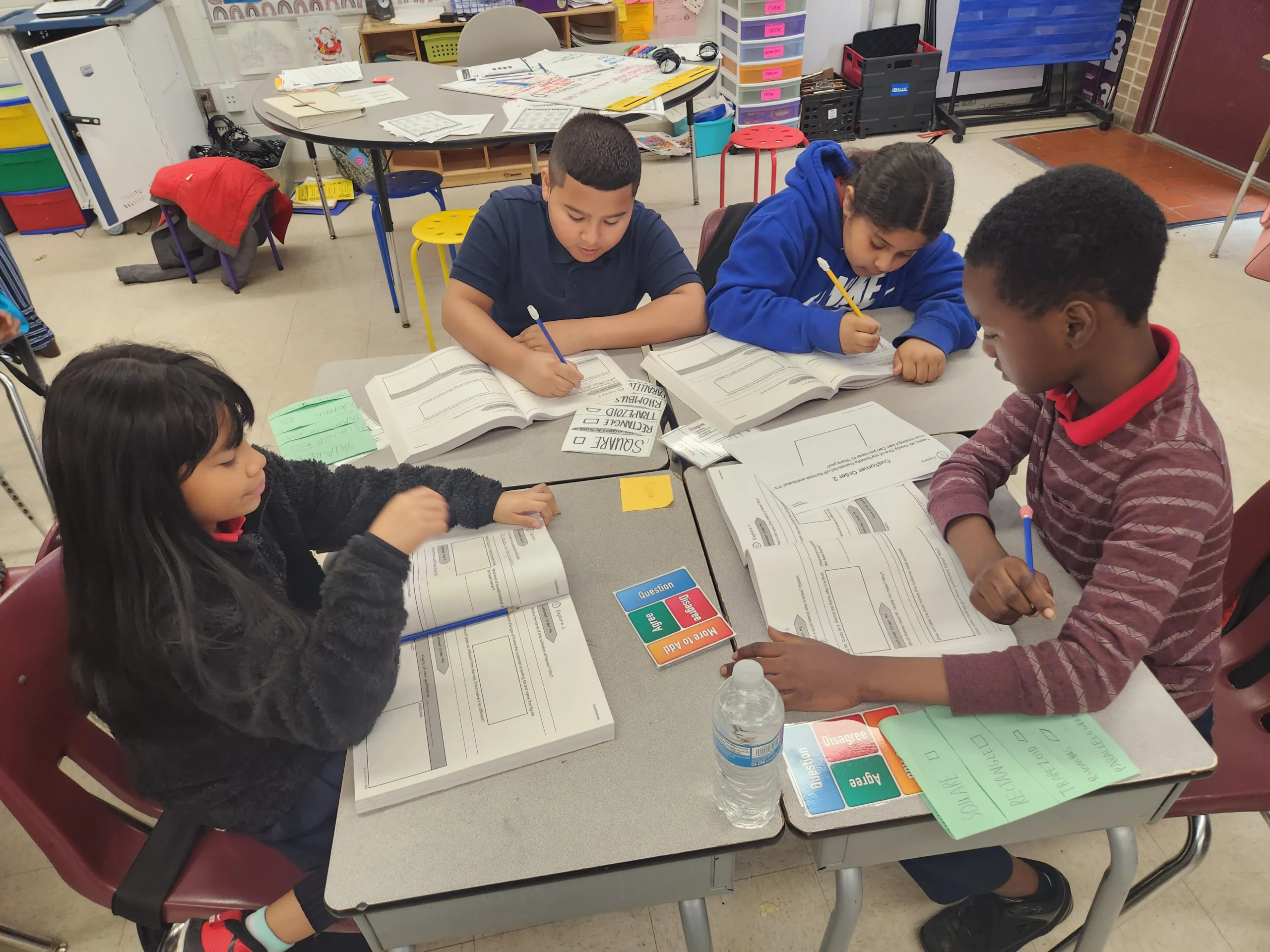
Students at Shaw Elementary collaborate on a rigorous math task in student-led teams, experiencing productive struggle as they explain their thinking, challenge one another, and work towards mastery.
Topics Covered
-
- What Is Academic Rigor?
- How Rigor Creates Productive Struggle and Growth Mindset
- What Does Academic Rigor Look Like?
- Why Is Rigor So Difficult to Achieve?
- What Is a Rigorous Task?
- How Do Resources Support Rigor?
- How Do Teachers Get Students Engaged in Rigor?
- How Do Educators Handle a Mistake?
- Using Four Levers to Increase Academic Rigor
- How Principals Can Support Teachers with Rigorous Planning
- Summary
- Learn More About Shifting to Rigor
Academic rigor: Everyone in education talks about it, and we all want it in our schools and classrooms. But what does academic rigor really look like, why is it important, and how do we use it to empower all students?
After 30 years of experience working in classrooms and studying education research, it’s become clear to me that academic rigor is one of the most powerful leverage points for improving student achievement and motivation.
And yet, as I’ve seen in my classroom coaching, academic rigor is also one of the most underutilized aspects of instruction.
If you’re struggling to consistently provide students with academic rigor, you’re not alone. Students need to develop agency skills to fully benefit from academic rigor, and creating a culture of rigor and agency in classrooms requires a series of instructional shifts.
In this ultimate guide to academic rigor, I’ll cover everything you need to know to create an academically rigorous culture in classrooms.
What Is Academic Rigor and Why Is it So Important?
In The Power of Student Teams (2019), Michael Toth and David Sousa define academic rigor as:
Having an academic culture in the classroom in which there are high expectations for all students to achieve challenging core curriculum standards—content and skills—through engagement and higher-order thinking with autonomy from the teacher (p. 13).
Let’s break that definition into parts and reflect on the full meaning of academic rigor:
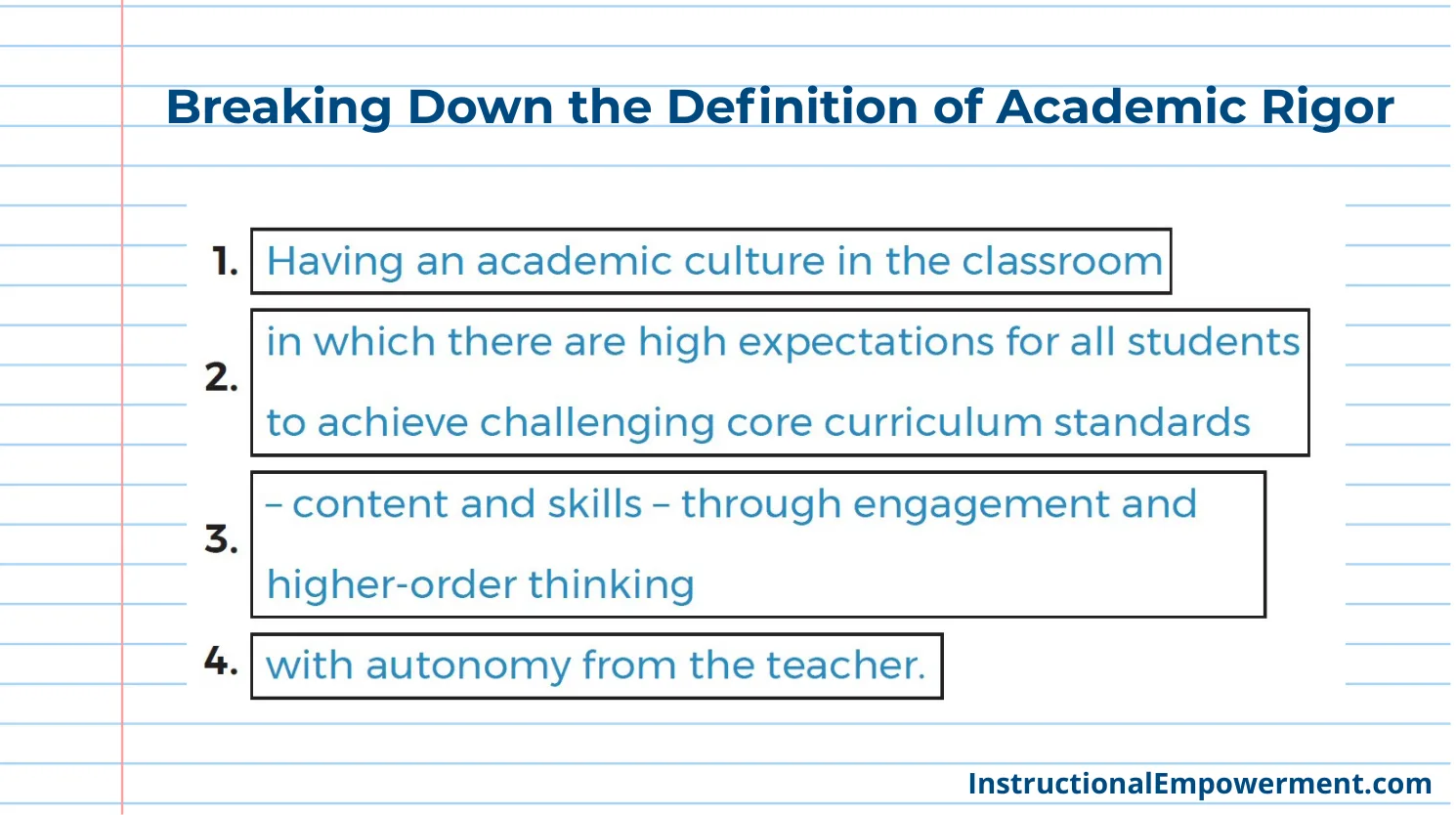
1. Rigor Is a Classroom Culture:
Wow, that’s big—if rigor is a classroom culture, that means there is no magic rigorous assignment, and it’s not about asking the perfect question or simply taking away the anchor chart during the assignment. Rigor is achievable only if we have expectations and routines that consistently focus on the conditions for rigor.
“Academic rigor is a culture—not an assignment.”
2. There Are High Expectations for All Students to Achieve Challenging Core Curriculum Standards:
In order to talk about high expectations for all students, we need to talk about learning environments that support all students. It isn’t enough to say we want all students to be treated fairly. It’s about truly defining what we want students to experience in this supportive learning environment and planning out the logistics so every student can achieve the standards of a rigorous curriculum.
What needs to be in place in the classroom? How can we offer support and guidance? We can’t simply pay lip service to high expectations for all students. We need to define what a classroom culture looks like if we have high expectations and then make that culture a reality.
“Academic rigor means high expectations—and the structures for all students to get there.”
3. Students Will Achieve Content and Skills Through Engagement and Higher-Order Thinking:
This part of the definition is what we most often think of as academic rigor. But even if we know students benefit from higher-order thinking, the challenge is consistently engaging students in the level of higher-order thinking called for in the standards.
It’s important that as you work on developing a rigorous culture in your classroom, you stay focused on the standards and learning targets. In a rigorous classroom, tasks are focused on moving learning toward the standards while providing multiple opportunities for students to engage in thinking and skills required by the standards.
“Academic rigor happens when students reach the higher-order thinking of the standards.”
4. Students Need Autonomy from the Teacher:
In many lessons, we see the teacher walk the students, or whole class, to the answer instead of students discovering the answer themselves. Students need opportunities for autonomy—and that doesn’t mean autonomy just as they demonstrate their learning, but also during the process of learning itself.
I often hear from teachers that they walk the students to the answer because students “can’t do the work on their own.” I think the statement is more accurate when reworded: “Students can’t take the leap to the answer on their own.” This is because students need support as they wrestle with their learning. But that support doesn’t always need to come from the teacher, and it definitely shouldn’t be spoon-fed to students.
Support can instead come from learning resources and peer interaction, allowing students to do the work themselves and, as a result, be owners of their learning.
“Academic rigor requires that students take ownership of their own learning.”
The Aspects of Rigor Are Interdependent
All the pieces that make up the definition of academic rigor are intertwined. If you leave out any part, academic rigor will be much harder, if not impossible, to achieve in your classroom(s).
- Engagement and higher-order thinking are built on the foundation of high expectations and classroom culture.
- Student autonomy isn’t possible without high expectations and has no purpose without engagement and higher-order thinking.
- It is only when engagement and higher-order thinking are paired with autonomy from the teacher that there can be productive struggle.
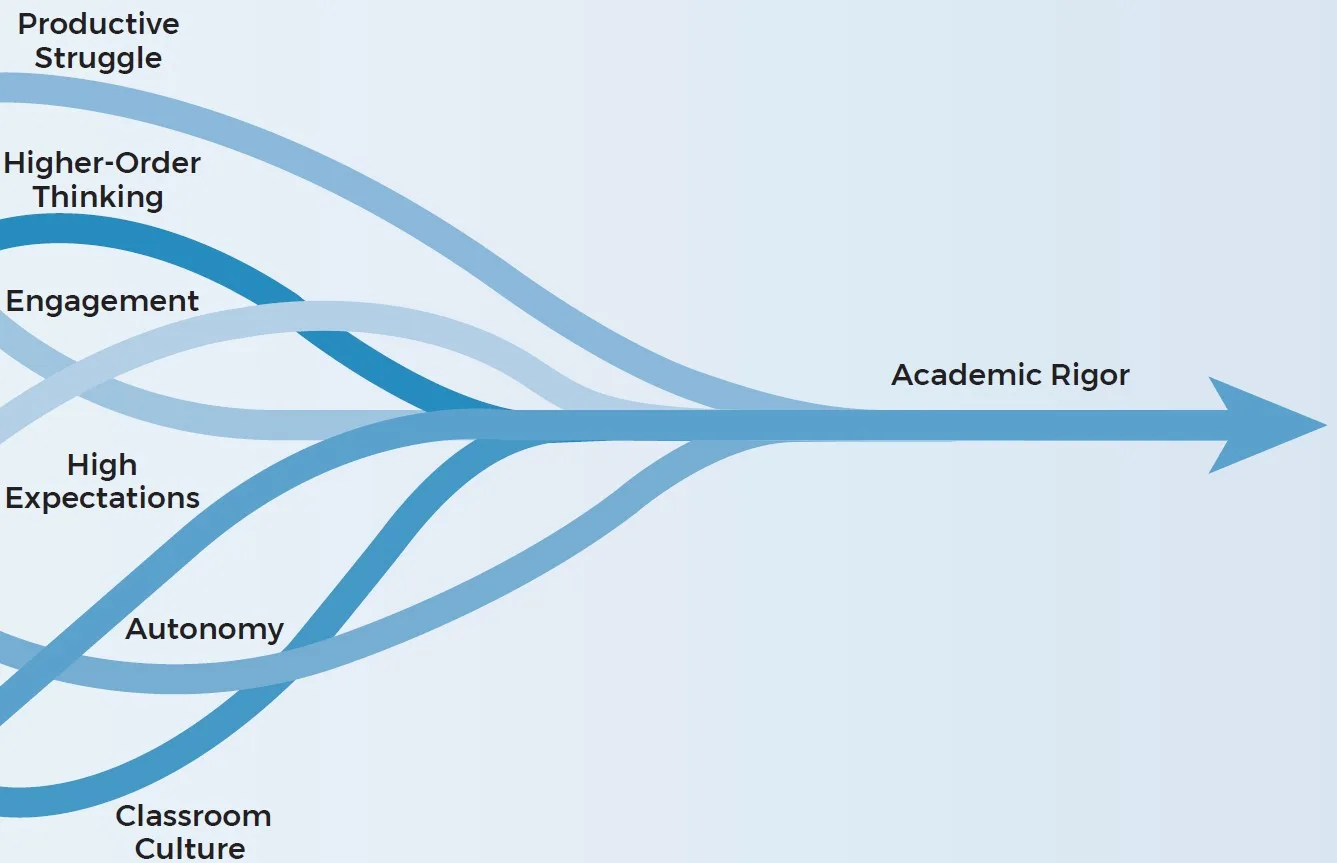
Just as these pieces of the definition for academic rigor are intertwined, it is also impossible to talk about rigor without talking about productive struggle and growth mindset.
Why Is it Good for Students to Struggle?
As mentioned, students need autonomy from the teacher as they learn, not just as they demonstrate learning on a test. A combination of autonomy and rigorous academics helps students routinely experience productive struggle and develop a growth mindset. Academic rigor requires that students take ownership of their own learning.
Carol Dweck, in her book Mindset (2006), describes growth mindset:
“Academic rigor requires that students take ownership of their own learning.”
People with a growth mindset feel they can overcome obstacles and develop new skills, so they understand the importance of persistence and determination. Because of this, a growth mindset is found to temper the effects of poverty on academic achievement (Claro, et al., 2016).
Growth Mindset Training Alone Isn’t Enough
Building on Dweck’s work, growth mindset training for students has been created and researched, but the results are mixed.
For example, one study found that when the classroom culture promoted challenge-seeking, growth mindset training had a stronger positive effect on achievement. But in classrooms that did not value challenge-seeking, the results were muted (Young, 2019). This suggests that growth mindset training alone isn’t enough to raise student achievement.
Dweck and other researchers emphasize that classroom culture plays a critical role in helping all students succeed. Developing growth mindset depends on supportive peers who are “challenge-seeking” (Yeager, et al., 2019).
When I hear the phrase “challenge-seeking,” I think of a rigorous classroom culture with plenty of productive struggle—and one where students experience the psychological safety needed to take risks, fully engage in rigor, and build agency.
How a Culture of Productive Struggle Builds Growth Mindset
Productive struggle and academic rigor play an important part in building growth mindset. How will students know that their skills and intelligence can be improved if they don’t see the growth happening for and within themselves during lessons?
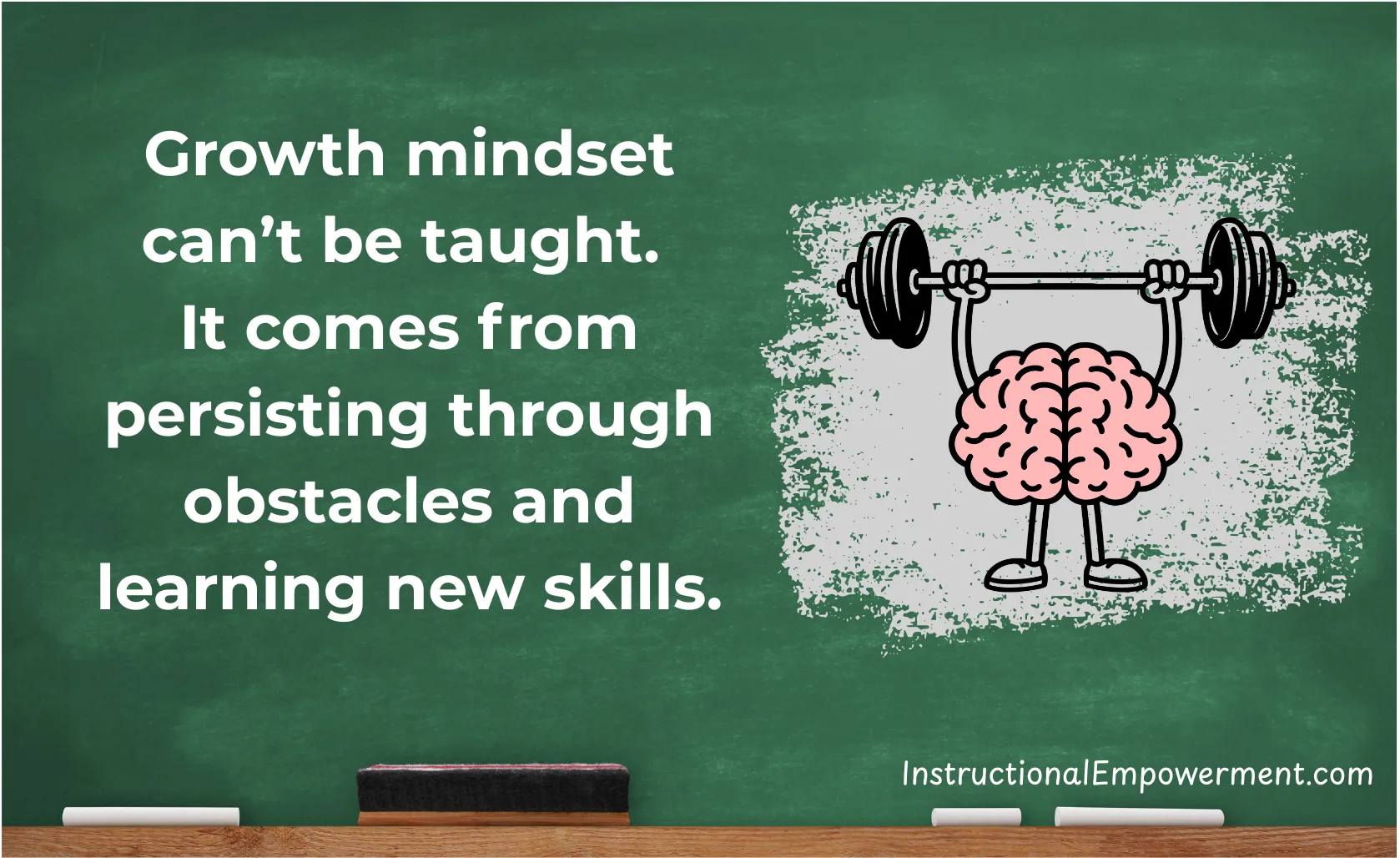
Growth mindset can’t be taught in a lesson; it must come from persistence and determination as students engage in rigorous academics. It is the act of overcoming obstacles and learning new skills that leads students to understand they are capable.
Few people have confidence in skills they have never, or seldom, been asked to demonstrate. Confidence grows through repeated practice and by applying skills to new situations.
For example, I have a growth mindset in the kitchen because I cook often. I am willing to try new skills and adapt as needed. If I seldom cooked, I wouldn’t feel confident trying new recipes and substituting ingredients. I would most likely follow a few recipes, being afraid to try new seasonings and combinations of ingredients, since I wouldn’t have practiced overcoming obstacles in the kitchen.
The same is true in the classroom. The only way for students to have a growth mindset about learning is for them to consistently practice overcoming academic obstacles and developing new skills in a supportive environment.
What Do Academic Rigor and Productive Struggle Look Like in the Classroom?
Academic rigor and productive struggle prepare students for the kinds of challenges they’ll face as adults, such as situations where there isn’t a clear answer and problems must be solved collaboratively.
Productive struggle is embedded in most of our adult brainstorming sessions. I’m sure you can recall the last time you engaged in problem-solving, tested your thinking, or debated your ideas at work.
In the workplace, we often don’t know the expected answer going into conversations. The conversation’s purpose is to come to a new solution. These brainstorming sessions push our thinking so that we can come up with new, innovative ideas.
We often have a hard time making the connection between our adult productive struggle and, for example, kindergarten students engaging in productive struggle as they work to identify the beginning, middle, and end of a story.
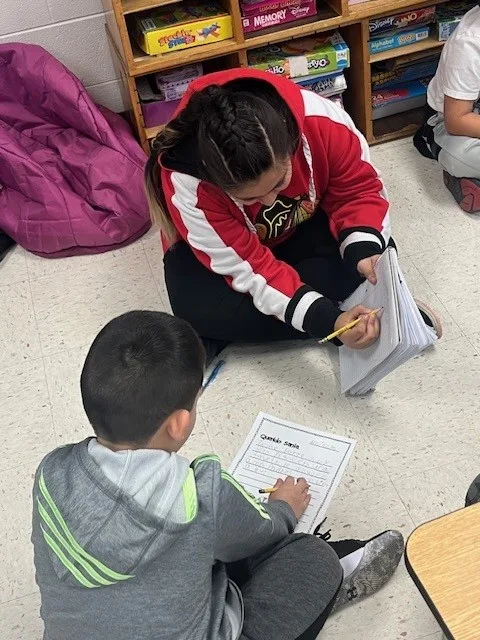
Students in School District U-46 in Elgin, Illinois, discuss, debate, and productively struggle with rigorous content.
In the classroom, academic rigor and productive struggle look like:
- Students trying out new ideas and informally debating with each other
- Students connecting their thinking with peers and expanding their ideas based on others’ contributions
- Students defending their stances with evidence
Imagine what a classroom looks like when students are engaged in productive struggle and experiencing academic rigor.
It may be noisy; it may look a little chaotic at first. This isn’t a classroom with students silently working on a single worksheet at their desks. These students are collaborating and seeking out learning resources as they discuss and explore. A rigorous classroom also has tasks, provided by the teacher, that are worthy of student debate and struggle.
Productive struggle looks and sounds different based on variables such as the grade level, subject, and background knowledge. What matters is recognizing when students are truly wrestling with ideas and challenging themselves.
An Example of Academic Rigor and Productive Struggle in a First-Grade Classroom
Diana Montes is a first-grade teacher at Cedar River Academy in Cedar Rapids Community School District, Iowa. She is implementing the Model of Instruction for Deeper Learning in her classroom and seeing students flourish as they experience rigor and agency. Diana highlights an example of a project where her students pushed past their comfort zones and practiced new academic skills.
“It’s exciting that they’re cooperating with each other and collaborating with each other. A project that I had my kids do was to focus on a certain habitat. I asked them to create a design. Some weren’t even creating designs, some were even using words, and that was really exciting for me to see as a first-grade teacher, because for a lot of them it’s hard to write. I saw a lot of kids who were willing to step out of their comfort zone, like kids who struggle with reading and writing would try to write their own words. They would raise their hand and ask, what’s that letter for that sound? Because they wanted to try to write words. They wanted to do something that they aren’t completely confident in doing but wanted to try anyway. Because they knew that they were in a safe space to be able to do that.”
Diana Montes
Teacher, Cedar River Academy, Iowa (2025)
Why Is Academic Rigor So Difficult to Achieve in Lessons?
Academic rigor can be difficult to achieve because tasks are often not set up for productive struggle.
For productive struggle to occur, the task needs to be just beyond what a student can easily do; students must learn and grow to achieve the task. They must have the confidence to look for answers and know how to find them without always relying on the teacher.
There isn’t really a struggle at all if students can complete the task without learning or discovering something new. If the knowledge and skills are already in the students’ heads, they are not learning, nor are they struggling—they are simply recalling.
However, if the task feels impossible, students may unproductively struggle, and you may find yourself going from student to student trying to help them all. This is why I often hear teachers say, “I tried to make the task rigorous, but the kids couldn’t do it.”
“The struggle is not productive if there is no support for students to overcome the struggle.”
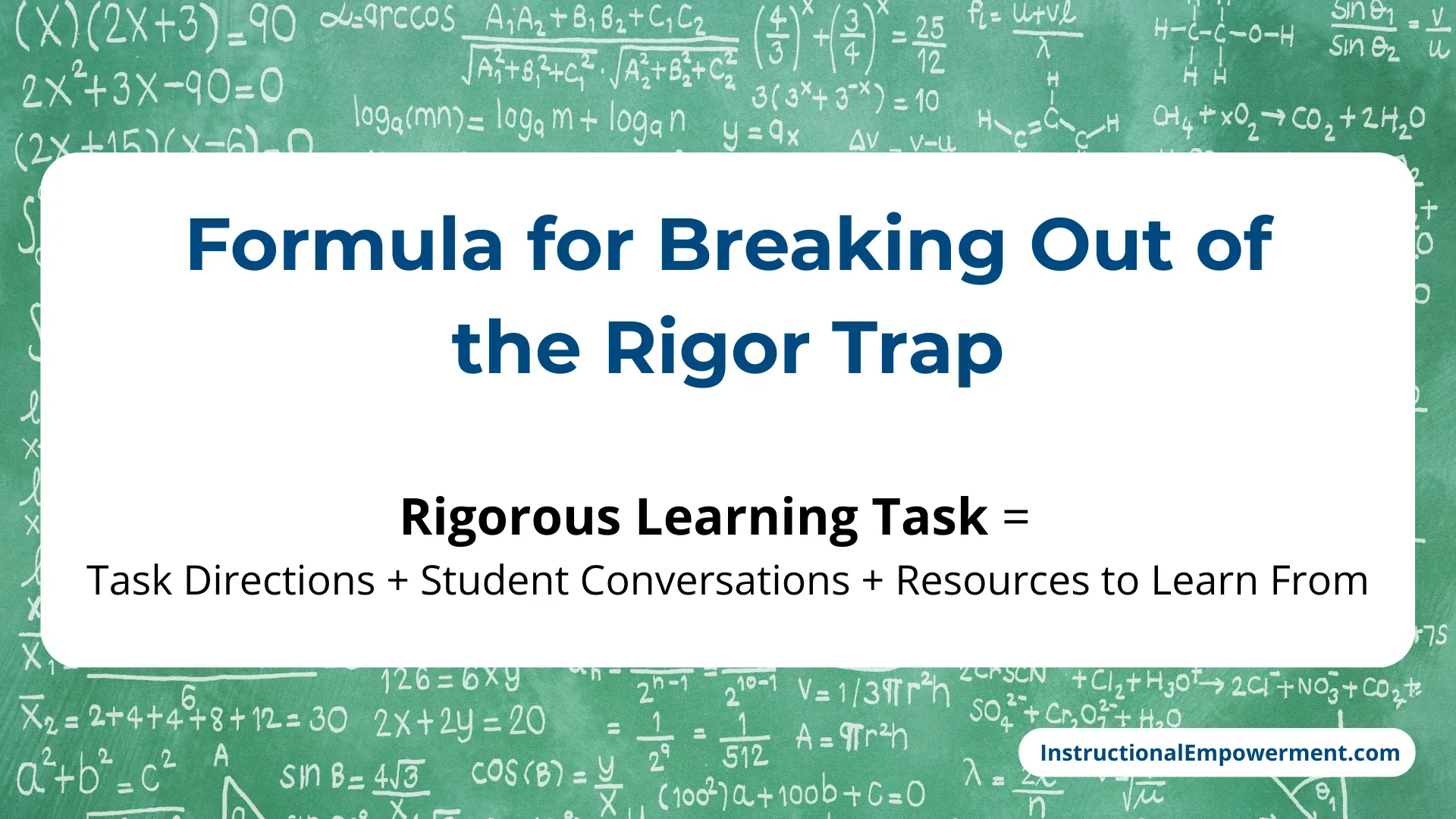
When teachers are expected to create rigorous tasks that foster student autonomy, they may interpret autonomy as “without any support.” But expecting students to complete tasks that go beyond recall without guidance sets them up for failure. I call this the Rigor Trap: the misconception that students will figure out rigorous tasks entirely on their own, as if understanding and new learning will just magically appear in their brains.
The Rigor Trap
The problem with achieving academic rigor may not lie in the task itself. The issue often lies in the lack of structures and support for the task.
Academic rigor and productive struggle are derailed when students lack the resources to engage in a challenging task on their own, without needing the teacher to walk them through it step by step.
If we want students to gain new understanding outside of what they already know and think at the analysis and knowledge utilization levels—and the teacher can’t realistically be expected to run around supporting each individual student to learn and grow during the task—what options are left?
There are two other sources students can leverage to learn and grow during tasks: student-to-student interaction and resources.
Here are three questions you can ask yourself to prevent the Rigor Trap:
- Have I provided clear directions so students understand what is expected of them?
- How can students support each other and engage in conversations during the task?
- How can students access appropriate resources in a timely manner as they learn?
Subscribe for curated education insights delivered every two weeks.
What Is a Rigorous Task?
A task is what the student does to produce evidence of progress toward the learning target. The term “task” doesn’t indicate depth or difficulty; it simply means there should be evidence of learning.
A rigorous task, in contrast, can be defined as a task that challenges students to think deeply and engage in productive struggle. It provides clear directions for students to engage with their resources and each other as part of producing their evidence of learning.
When designing a rigorous task, teachers must plan beyond the questions students will answer and drill down to how the students will demonstrate their knowledge and skills.
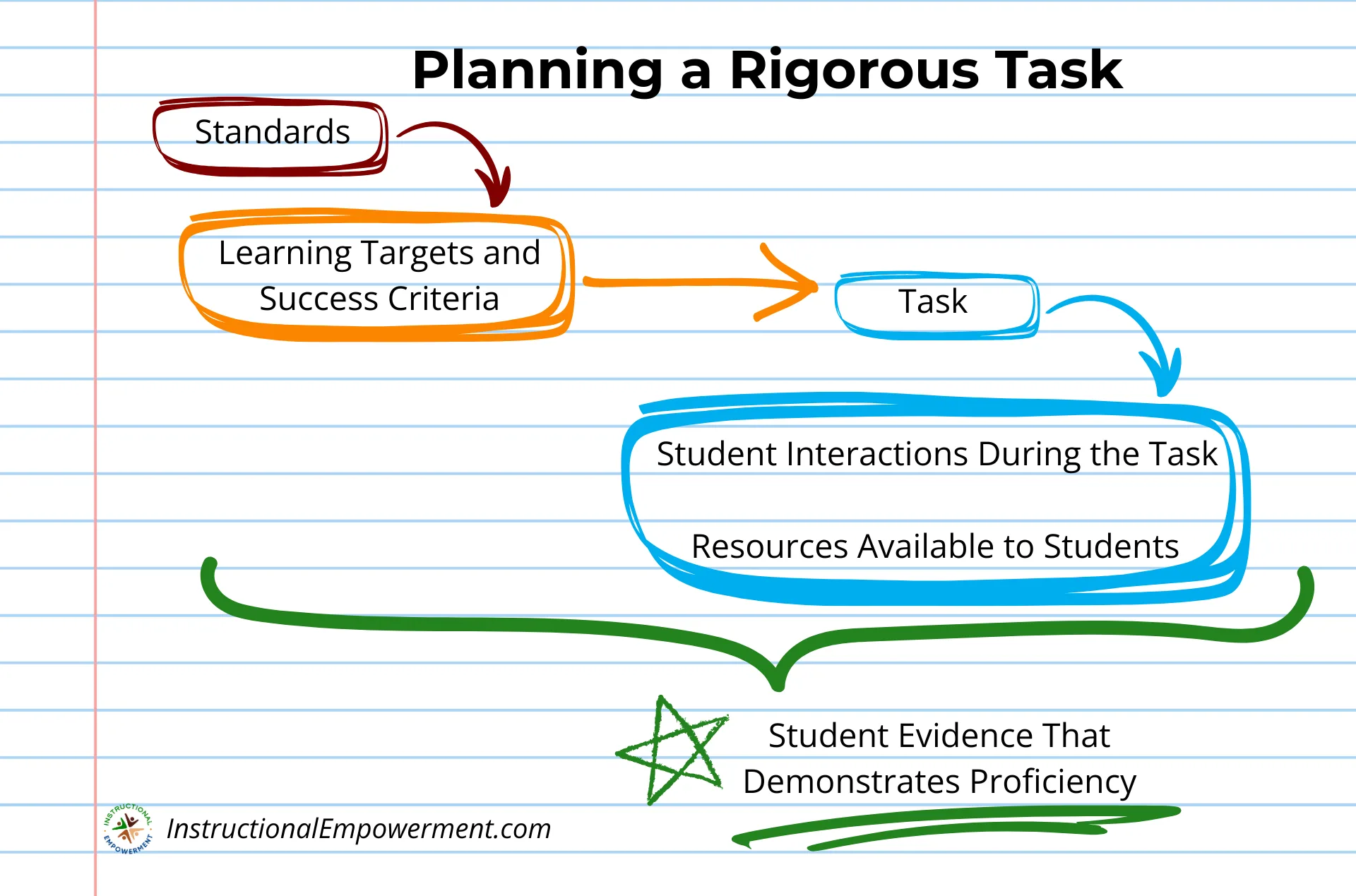
Teachers should plan out the direct line from standards, to learning targets and success criteria, to task, to student interactions during the task, to resources available, and ultimately to the student evidence the teacher expects to see that demonstrates proficiency.
It isn’t until this level of planning that we become intentional about ensuring that all students have an opportunity to demonstrate individually while learning collectively.
Example of a Low-Rigor vs. High-Rigor Task
Standards: 11-12th Grade ELA (CCSS.ELA-Literacy.RL.11-12.1, CCSS.ELA-Literacy.RL.11-12.5, CCSS.ELA-Literacy.RL.11-12.6)
Learning Target: Distinguish what is directly stated in the text from what is really meant using strong and thorough text evidence.
Success Criteria:
- I can comprehend what the text says explicitly.
- I can draw inferences from the text.
- I can grasp the point of view from what is stated in the text, from what is really meant.
- I can cite text evidence to support the analysis of the text.
Traditional Low-Rigor Task
- Read: Students read “Entropy” by Andrea Rinard.
- Identify: Students find two literary elements used in the story.
- Write: Students write 2–3 sentences explaining what each element means.
Why it’s low rigor: Students identify elements but do not analyze how they interact with other elements or how they affect the meaning of the overall piece.
High-Rigor Team Task
- Read: Students read “Entropy” by Andrea Rinard and consider the prompt: “How does Rinardʼs use of literary elements impact the meaning of the story? Use text evidence to support your answer.”
- Think: Individually, students identify a powerful literary device from the story to analyze
(even if they don’t yet understand it) and write it on their team’s shared Summarizing Mat
(resource from the Model of Instruction for Deeper Learning).
- Share: Students take turns sharing chosen quotes. After each person shares, the team works together to use context to make meaning about what the author is conveying.
- What is explicitly stated?
- What do you understand about the quote?
- What evidence around the text can you use to make meaning of the quote?
- What conclusions can you glean from the information you have?
- Summarize: As a team, students answer the prompt: “How does Rinardʼs use of literary elements impact the meaning of the story? Use text evidence to support your answer.”
Why it’s rigorous: Students are required to think deeply and independently, engage in discussion with peers, and refine their understanding collaboratively. The task challenges students to synthesize multiple ideas and produce meaningful evidence of learning.
Source for rigorous task: Model of Instruction for Deeper Learning Teacher Suite Resource Library
How Do Resources Support Academic Rigor and Productive Struggle?
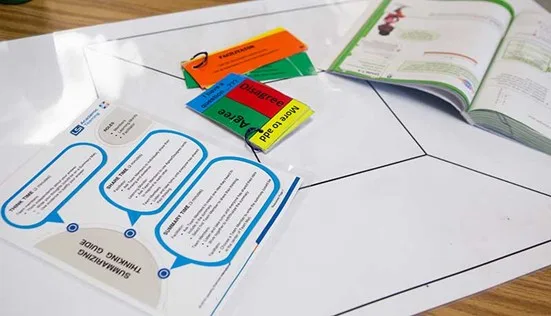
Example of structures in the Model of Instruction for Deeper Learning Toolkit for students.
I taught for 13 years, and in those years, the students in my class worked in teams and I expected them to collaborate, learn, and support each other. The resulting teamwork was impressive much of the time!
Despite my students collaborating and supporting each other, I couldn’t quite get the teams to truly own the learning and productively struggle without my constant help. I was more the facilitator or coach of the teams than a true consultant to student teams who were driving their own learning.
What I didn’t understand then was the power of resources.
When teams rely on one kid with the answer to supply their learning, resentment and frustration can build. As the teacher, I was trying to lessen this stress by running around between all the teams providing “just in time” support.
When I work with teachers now, I address this issue by helping them set up structures and expectations with learning resources as an integral part of student teaming and academic rigor.
What Does it Look Like When Student Teams Have Resources to Learn From?
There are some small and large shifts teachers can make to ensure teams have the support they need to learn, but I can’t stress enough the importance of putting the text in the hands of students at every level and subject.
This means that as teams work, they should have in front of them their novel, poem, picture book, textbook, and/or the notes they took or that the teacher provided.
Tasks are not tests; teams must be able to readily access the information they need to learn or discover new thinking as they work.
Examples of Resources to Support Higher Academic Rigor
The following examples of small shifts can help educators provide more student resources to support academic rigor and productive struggle:
- Notes/worked problems available to students
- Reminders given to use the anchor charts
- Relevant textbook pages identified on the board
- Manipulatives accessible to students who need them
- Multiplication tables and/or formula sheets
- Vocabulary notebook, eDictionary, or hard copy dictionary available
- Access to a second source of learning such as a YouTube lesson
How Does a Teacher Get Students Engaged in Academic Rigor?
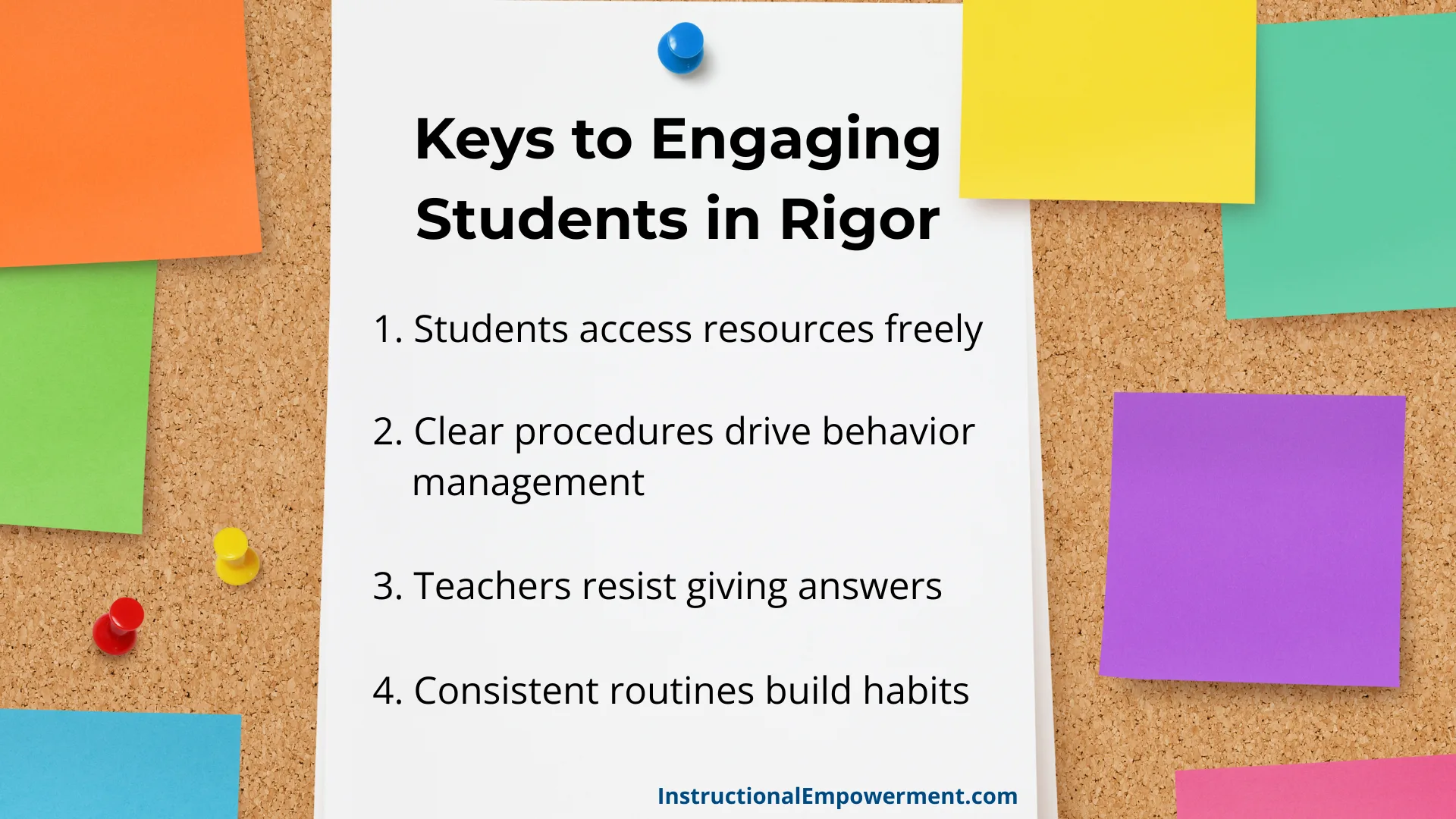
Teaching for rigor means helping students become more self-managing. The key characteristic of any of the resources listed in the section above is that students need access to them without asking the teacher for permission.
If you are worried about students misusing this privilege, set procedures around the use of resources and expect those procedures to be followed. If a student wanders around the room disturbing other students as they are heading to the word wall, address their disturbance or show them their path—don’t deny them the resource.
Allowing students access to resources at any time is likely a new routine in most classrooms, so at first, expect that it won’t be natural for students to use their resources instead of the teacher.
Teachers can create ways to remind themselves not to give the student the answer but instead remind students that their first source of support should be their resources. It can be a challenge to break old habits. I’ve seen a teacher carry around a stickie reminding herself not to answer questions, while I’ve seen another teacher include it in her lesson notes so she could end her modeling with a reminder to students about which resources would be most helpful in the day’s lesson.
No matter how big or small the resources are, the key is consistency. Students need to form the habit of using their resources—not only because it is vital to productive struggle and academic rigor, but because self-management is a lifelong skill we all need.
How Should a Teacher Who Supports Academic Rigor and Productive Struggle Handle a Mistake in Class?
“We cannot predict what students will learn, no matter how we design our teaching.”
– Dylan Wiliam (Embedded Formative Assessment, 2017, p. 52)
As Dylan Wiliam points out, we all know that even the best lesson plans are seldom 100% effective. So, how do you respond when students make mistakes or cannot demonstrate mastery of their learning?
While planning definitely matters, it isn’t the only critical piece of a rigorous classroom. A teacher’s response in the moment when students are NOT learning often is the thin line that separates the good lesson from the not as fruitful lesson.
A big part of responding to students’ mistakes and misconceptions is being able to assess student learning in the moment. In their book, Classroom Assessments for Student Learning (2020), Jan Chappuis and Rick Stiggins distinguish between assessment instruments and assessment practice.
Assessment instruments include the task, quiz, or whatever tool you are using to assess learning.
Assessment practice is when students and teachers identify if the student has mastered the learning and respond by making decisions based on that knowledge.
Centering conversations around assessment instruments alone limits the conversation because it doesn’t address what to do if students are not learning. Instruments simply focus on how to know if students are learning. It isn’t until we have conversations around assessment practices that we can incorporate a response.
Let’s look at assessment systems from three perspectives to better understand how to handle student mistakes and support academic rigor.
1. Teacher:
- What is the teacher doing as students are working?
- Has the teacher provided resources and peer interaction so that they are able to move around the room scanning and checking in as students work?
- What small instructional decisions has the teacher planned for if students make mistakes and need a small bump to move forward?
2. Student:
- Do students know the learning target?
- Do students see the connection between the task and the learning target?
- Are there routines in place for students to plan, self-reflect, and adjust as they work?
3. Peer:
- Are there opportunities and routines for student peers to give each other feedback during the task—not just after the task?
- Carol Dweck emphasizes the importance of peer culture. Have you created opportunities to foster a challenge-seeking culture and support higher-order thinking through collaboration routines?
In a rigorous task, there should be multiple opportunities for support and feedback during a lesson that can help teachers and students handle mistakes productively and continue to foster academic rigor.
How to Use Four Levers to Increase Academic Rigor
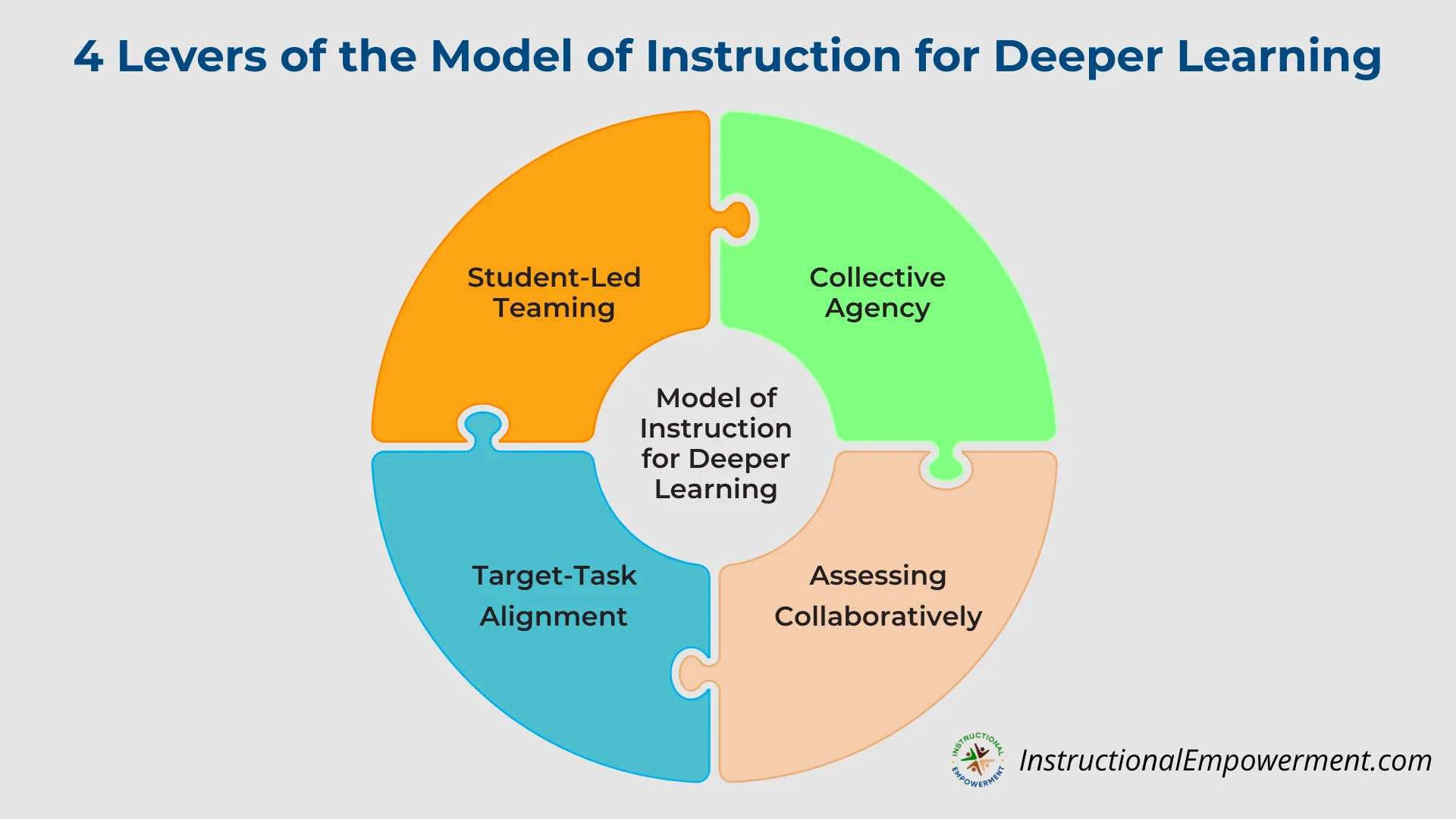
Our team of researchers and former educators at Instructional Empowerment created a framework to discuss academically rigorous instruction. We categorize the major aspects of rigorous classroom instruction into four “levers” so educators can see the big picture of how different areas work together:
- Target Task Alignment: Students access information and resources to demonstrate intent and rigor of standards
- Student-Led Teaming: Teammates leverage individual strengths as they share their thinking and productively struggle
- Collective Agency: Students develop academic and life skills as they interact with peers
- Assessing Collaboratively: Instructional decisions made by students and teachers, through co-agency, are based on student evidence and its alignment to the standard(s)
All four of these levers are dependent on each other:
- Target-task alignment and student teaming go hand in hand to reach rigor.
- Collective agency is necessary for student-led teams to take ownership of their own learning
- Assessment is the responsibility of both the team and the teacher.
Therefore, keep in mind that there is not one single magic lever. It takes coordinating all four levers to shift to a culture of rigor in your classroom(s).
How Principals Can Support Teachers with Planning for Rigor
Helping teachers plan for rigor and agency, while aligning to standards, takes support from leaders.
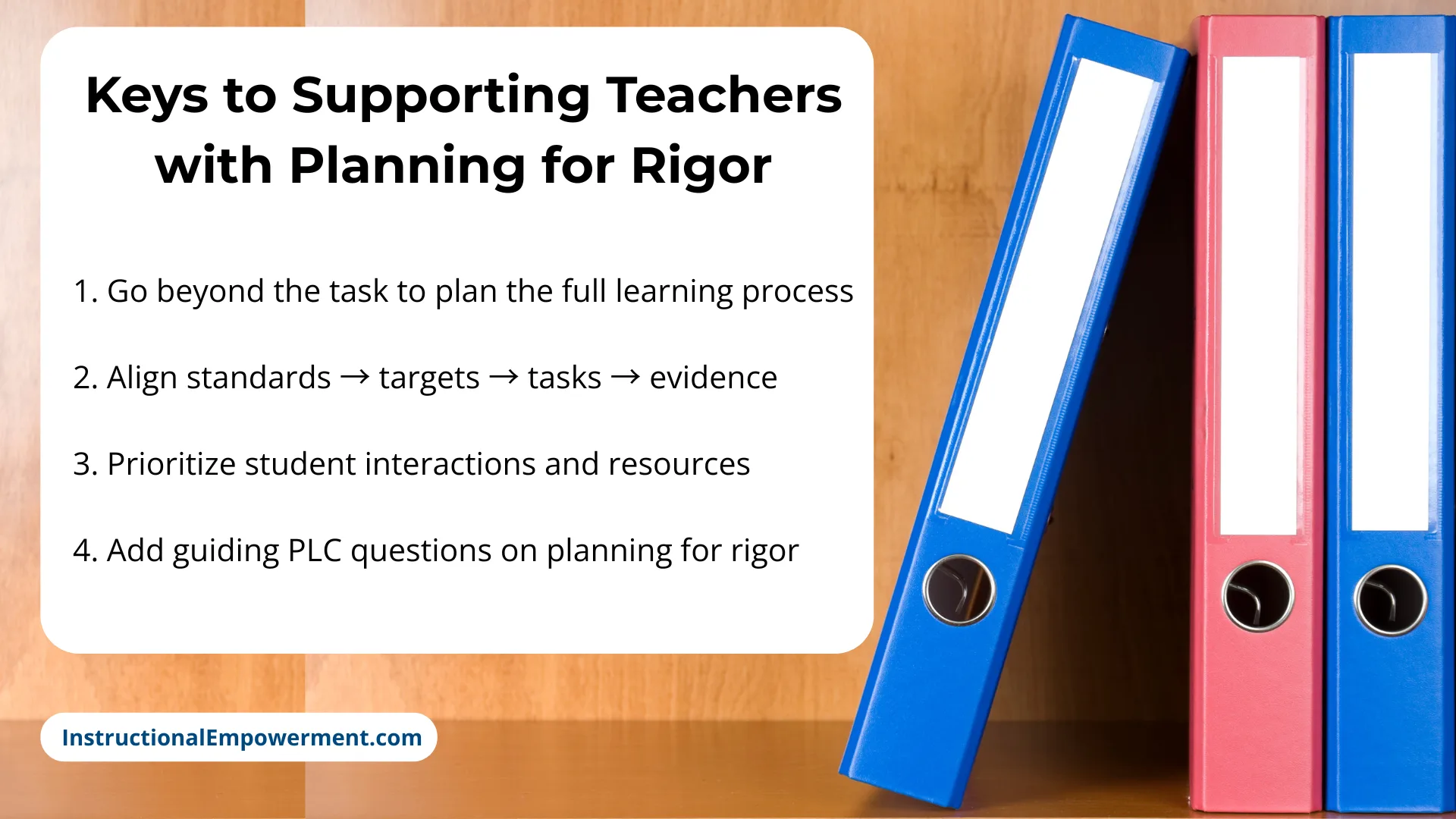
As already stated, rigor is more than a task. Therefore, when planning, it is important to plan out the direct line from standards, through learning targets and success criteria, the question/directions, resources available, student interactions during the task, and ultimately to the student evidence the teacher expects to see that demonstrates proficiency of the standard. This sets up systems to support a culture of rigor in the classroom, which is much more than simply providing a task.
If you lead teacher teams that co-plan, think about how you can make small shifts to your planning processes that will integrate more peer interaction structures and learning resources into lessons without overwhelming the planning process.
I have never worked with a planning team that had enough time to plan, so it is important to prioritize what matters. Many planning teams spend most of their time on learning targets and never get to the details of what students will actually do during tasks. Spending time planning learning resources and thinking about how student conversations will be supported is always time well spent in planning sessions—and, I would argue, more productive to student learning than fine tuning the learning targets year after year.
How can you add a question or two to your PLC planning process that helps teachers plan for the processes necessary to shift their classrooms to a culture of academic rigor?
“Prioritize what matters during planning time.”
Summary
To engage students in academic rigor, we need to define what academic rigor will look like and sound like in our classrooms.
Remember to ask four essential questions:
- What will be the role of the teacher during learning?
- What will be the role of the students?
- What support systems need to be in place to create a culture for growth mindset and productive struggle?
- What support systems need to be in place to plan rigorous tasks?
In answering these questions, we can realize the power within us to create academic rigor in all classrooms for all students.
Learn More About Shifting to a Culture of Rigor
-
Books
- Read step by step how to implement a model of rigor and agency in Fostering Deeper Learning: A Handbook for the Model of Instruction for Deeper Learning by Deana Senn.
- Learn about the neuroscience behind student teams and how this model can help students develop life skills far beyond traditional pedagogy in the multi-award-winning book by Michael D. Toth and David A. Sousa, The Power of Student Teams.
-
Professional Development and Coaching
Explore the Model of Instruction for Deeper Learning™, which places students at the center of their learning, shifting from traditional teacher-directed methods to student-led team learning.
In this approach, students collaborate in structured, interdependent teams, guided by clear roles and responsibilities. The model can be implemented individually by teachers, or through a school or district pilot.- Job-embedded professional development helps teachers build student ownership and drive academic growth through modules that take less than an hour a week, with immediate classroom use.
- A school pilot equips a small team of teachers and leaders to create momentum around deeper learning and see results in student outcomes within 16 weeks.
- Job-embedded professional development helps teachers build student ownership and drive academic growth through modules that take less than an hour a week, with immediate classroom use.
Share Your Stories and Questions
No matter where you are on your journey to rigor, consistency is key, and having a community of likeminded educators will accelerate your growth.
I would love to hear your questions and success stories!
About the Author
Deana Senn, MSSE
Deana Senn, MSSE, is an Education Consultant and award-winning author of Fostering Deeper Learning: A Handbook for the Model of Instruction for Deeper Learning. She is a school instructional model expert educator and led the creation and development of IE’s Model of Instruction for Deeper Learning content and coaching tools. Deana supports internal faculty and partner districts to shift the culture of classrooms by increasing rigor and student agency through the intentional implementation of the Model of Instruction for Deeper Learning.
Deana calls upon her 20+ years of experience in education to support leaders and teachers in increasing engagement, ensuring equal learning for all students, and closing achievement gaps through student conversations and rigorous learning. She is an award-winning author and international speaker who conducts research and development for Instructional Empowerment. Having experience that spans the United States and Canada in rural and urban districts, she is passionate about creating innovative solutions for all students, teachers, and leaders.
References
Chappuis, J. & Stiggins, R. (2020). Classroom assessments for student learning: Doing it right – using it well (3rd ed). Pearson.
Claro, S., Paunesku, D., & Dweck, C. S. (2016). Growth mindset tempers the effects of poverty on academic achievement. Proceedings of the National Academy of Sciences, 113 (31), 8664-8668. https://doi.org/10.1073/pnas.1608207113
Dweck, C. S. (2006). Mindset: The new psychology of success. Random House Publishing Group.
Senn, D. (2025) Fostering Deeper Learning: A Handbook for the Model of Instruction for Deeper Learning. Instructional Empowerment.
Toth, M. D. & Sousa, D. A. (2019). The power of student teams: Achieving social, emotional, and cognitive learning in every classroom through academic teaming. Learning Sciences International.
Wiliam, D. (2017). Embedded formative assessment. Solution Tree.
Yeager, D. S., Hanselman, P., Walton, G. M., Murray, J., Crosnoe, R., Muller, C., Tipton, E., Schneider, B., Hulleman, C. S., Hinojosa, C. P., Paunesku, D., Romero, C., Flint, K., Roberts, A., Trott, J., Iachan, R., Buontempo, J., Man Yang, S., Carvalho, C. M., & Dweck, C. S. (2019). A national experiment reveals where a growth mindset improves achievement. Nature, 573(7774), 364–369. https://doi.org/10.1038/s41586-019-1466-y
Young, J. R. (2019, August 7). New study shows where ‘growth mindset’ training works (and where it doesn’t). EdSurge. https://www.edsurge.com/news/2019-08-07-new-study-shows-where-growth-mindset-training-works-and-where-it-doesn-t
Subscribe for curated education insights delivered every two weeks.
About Instructional Empowerment
Our mission is to end generational poverty and eliminate achievement gaps through redesigned rigorous Tier 1 Instruction that ensures deeper learning for ALL students.