Same District, Same Curriculum, Different Instructional Model
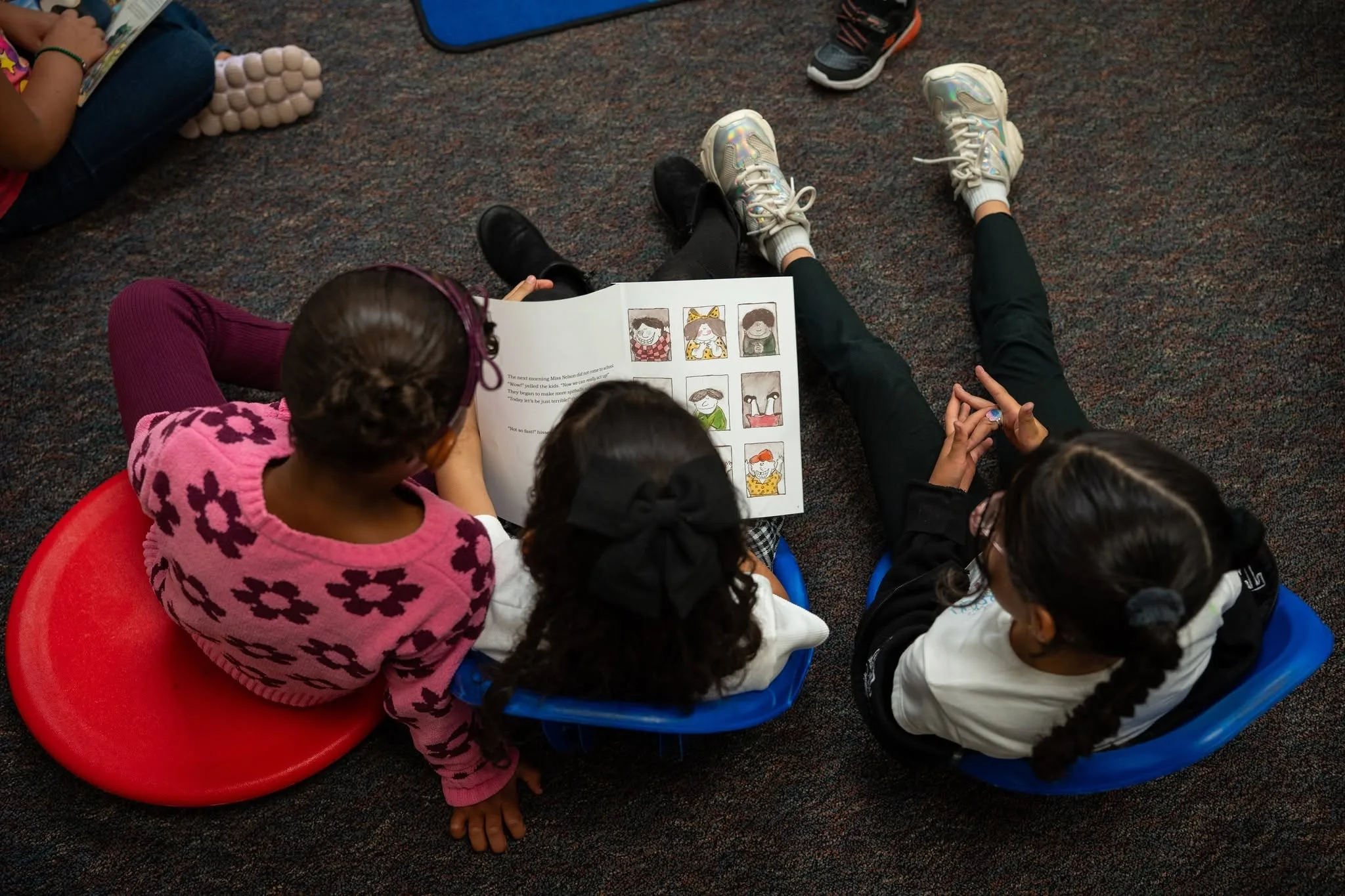
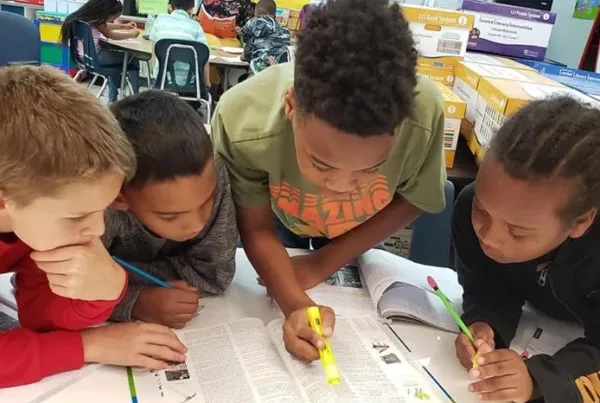
Students reading together at Colorado Springs School District 11. The district partnered with Instructional Empowerment for a research study to determine whether there was a connection between the classroom instructional model and student achievement. Photo: Colorado Springs School District 11 Facebook page.
August 2026
Executive Summary
In the same district and with the same curriculum, students taught by teachers verified in the Model of Instruction for Deeper Learning® scored an adjusted 22.44 STAR scale-score points higher in ELA and 18.24 points higher in mathematics than matched comparison students. These findings suggest that the instructional model—not just instructional materials—is a powerful lever for district leaders to increase achievement.
Study Overview
Colorado Springs School District 11 partnered with Instructional Empowerment on this pilot study to examine whether verified implementation of the Model of Instruction for Deeper Learning® was associated with stronger student achievement. Because the study compared teachers working in the same district, matched to the same grade level and high-quality curriculum, the analysis focused on verified implementation of the instructional model as the key difference.
Why Isn't High-Quality Curriculum Alone Raising Achievement?
Today’s students enter classrooms with very different developmental experiences than previous generations, including increased screen time and changes in parenting and society. Many also experience the lingering effects of social isolation from the COVID pandemic on the development of cognitive, language, communication, executive function, and social-emotional skills (Le et al., 2025; Perrigo et al., 2025).
At the same time, employers and state departments of education increasingly emphasize durable skills such as collaboration, communication, critical thinking, self-direction, and agency, most visibly through the Portrait of a Graduate profiles states and districts have adopted.
Together, these shifts have raised expectations for what classrooms must produce. Yet despite growing investments in high-quality instructional materials (HQIM) to support rigorous curricula and higher-order skills, low achievement remains widespread. Nationally, nearly two-thirds of 4th, 8th, and 12th grade students are not proficient in reading, and proficiency rates are even lower in mathematics (National Center for Education Statistics, 2025 b, c, d, e, f, g).
One reason for the disconnect may be that strong curricular materials specify what students should learn but do not always equip teachers with the classroom structures needed to help all students engage with that rigor. Without those structures, educators may fall back on unvetted, lower-rigor sources (Steiner, 2024), or they may use HQIM within a traditional instructional model where students listen passively, memorize information, and recall facts, not experiencing the full impact of the HQIM.
This study focuses on a different instructional model: one where students actively engage in academic discourse, critical thinking, and collaborative problem solving through the Model of Instruction for Deeper Learning®. By isolating teachers’ implementation of this instructional model as the variable within the same district that is using the same curriculum, this research study offers some of the first evidence that the instructional model itself, not just the curricular materials, may be the missing lever for achievement gains. For chief academic officers and district leaders, the central question is how to ensure a high-quality curriculum translates into consistently rigorous classroom practice.
Previous Research Validation of the Model of Instruction for Deeper Learning
Instructional Empowerment’s Applied Research Center has conducted extensive research to validate the effectiveness of the Model of Instruction for Deeper Learning. Numerous studies have linked the model to:
This new research analysis was designed to isolate the effect of the model by studying teachers who were implementing the model with fidelity (as verified by a third party), matched with comparison teachers in the same grade levels.
How Does the Model of Instruction for Deeper Learning Work?
The Model of Instruction for Deeper Learning® is a research-based instructional model that shifts classroom instruction from traditional teacher-directed methods to student-led teams with academic discourse. It can be implemented with any curriculum and in all grade levels and subject areas.
What the Team Structures Look Like
The model equips each student team with a defined set of structures: assigned team roles, norms and protocols for academic discourse, critical thinking guides, and rigorous interdependent tasks that require students to collaborate utilizing HQIMs. Teachers learn to build rigorous, interdependent tasks from the district’s HQIMs. Students work within the team structures, gradually taking on more responsibilities as they learn to lead, collaborate, and think critically. Unlike typical group work, specific protocols ensure equal participation, accountability, and deeper learning, with less reliance on the teacher for constant support.
Personalized Support Within Tier 1
Because the team structures require equal voice and participation, students can share background knowledge, hear academic concepts explained from their peers’ perspectives, and receive personalized support within Tier 1 instruction that can prevent excessive referrals to Tier 2 or Tier 3 interventions.
Surface Learning vs. Deeper Learning
The difference between this deeper learning model and traditional instruction is visible in how students interact with one another and the academic content. For example, in a typical turn-and-talk, students often exchange answers briefly and return to a worksheet, stopping at surface level learning. They are talking and participating, but nothing about the task or the structure requires them to fully engage with the HQIM.
Within the deeper learning model, the same students use team structures that require them to share evidence, reasoning, and disciplinary language as they challenge and refine each other’s thinking. The same students with the same HQIM are fully capable of analyzing, debating, and defending ideas when the task and the team structures are designed for it.
Professional Learning and Verification
To implement the model, teachers complete professional development in deeper learning pedagogy, receive kits of classroom resources, and engage in coaching support. Teachers who demonstrate the evidence-based competencies in practice can be verified in the model through Instructional Empowerment’s certified verification process.
Verification is critical because it examines both teacher and student evidence of implementation: verifiers look not only at what the teacher does but also whether students demonstrate the target skills. Many instructional frameworks focus primarily on teacher actions, so requiring observable student competencies sets a higher standard for implementation.
Study Design
The Applied Research Center analyzed data in partnership with Colorado Springs School District 11. The following section provides an overview of the study sample, the data sources and measures, and the methods used. Throughout this brief, comparison teachers are District 11 teachers in the same grade levels who had not earned verification in the model, and comparison students are the students they taught.
Districtwide Characteristics
- 45.8% White
- 36.2% Hispanic or Latino
- 9.5% two or more races
- 6.4% Black or African American
- 1.3% Asian
- 0.4% American Indian or Alaska Native
- 0.4% Native Hawaiian or Pacific Islander
- 58.1% qualify for free or reduced-price lunch
- 14% students in special education
- 8.1% English learners
- 1.5% homeless
Sample Studied
- ELA: 18 teacher-grade clusters
- 9 competency-verified in the Model of Instruction for Deeper Learning
- 9 matched comparison (not verified in the model)
- Mathematics: 20 teacher-grade clusters
- 9 competency-verified in the Model of Instruction for Deeper Learning
- 10 matched comparison (not verified in the model)
- ELA: n = 357 students
- 195 taught by teachers verified in the Model of Instruction for Deeper Learning
- 162 matched comparison students
- Mathematics: n = 449 students
- 237 taught by teachers verified in the Model of Instruction for Deeper Learning
- 212 matched comparison students
| Student Demographic Characteristics of Matched Analytic Samples | ||||
|---|---|---|---|---|
| Characteristic | ELA Verified | ELA Control | Math Verified | Math Control |
| Female, % | 44.6 | 49.4 | 43 | 51.9 |
| Black, % | 5.1 | 4.3 | 5.1 | 5.2 |
| Free/reduced-price lunch, % | 49.7 | 37.7 | 43.9 | 36.8 |
| Students with disabilities, % | 10.8 | 11.7 | 10.1 | 6.6 |
| Gifted, % | 16.4 | 32.7 | 16.5 | 23.1 |
| English learner, % | 5.1 | 3.7 | 5.9 | 1.4 |
| n | 195 | 162 | 237 | 212 |
| Note: Percentages represent the proportion of students within each matched analytic group. | ||||
Data Sources and Measures
This study utilized two main data sources: student achievement results and records of teachers’ verification of competencies in the Model of Instruction for Deeper Learning.
Student Achievement Data
- Student performance was measured using fall and spring scale scores from school year 2025-2026 on the STAR assessment, a nationally normed interim assessment used by the district to monitor student growth.
Teacher Data: Verified Implementation of the Model of Instruction for Deeper Learning
- The study focused on teachers earning verification in the Model of Instruction for Deeper Learning, which involves successful demonstration of the competencies by both the teacher and students, as confirmed by a third-party verifier (Instructional Empowerment coach).
- The Model of Instruction for Deeper Learning is implemented districtwide in District 11, but not all teachers have earned verification. Comparison teachers may have participated in related professional development but were not verified in the model.
How the Analysis Was Conducted
Because teachers were not randomly assigned to implement the model or earn verification, the analysis used quasi-experimental design. The analysis also incorporated a linear mixed-effects model to reduce the influence of pre-existing differences between classrooms.
The analysis accounted for classroom-level clustering, recognizing that students within the same classroom tend to be more similar to each other than to students in other classrooms. For example, some classes may start the year with higher or lower overall achievement. Accounting for these classroom differences helps ensure the results reflect the impact of the model itself, rather than pre-existing differences between classrooms.
Student achievement was measured using STAR assessment scale scores, with fall scores included as a baseline and spring scores as the outcome. The analysis also controlled for key differences in student populations to ensure a fair comparison, including:
- Baseline (fall) achievement scores
- Race/ethnicity
- Gender
- Free or reduced-price lunch eligibility (a measure of socioeconomic status)
- Disability status
- Gifted status
- English-learner status
Controlling for these factors helps isolate the relationship between teachers’ implementation of the model and student achievement, ensuring that results reflect differences associated with implementation rather than differences in the types of students served.
Because teacher verification rates, matched comparison groups, and student outcomes varied by subject, ELA and mathematics were analyzed separately rather than combined.
Key Findings
How Much Did ELA and Math Achievement Improve?
Comparing spring performance after accounting for where students started in the fall and for key classroom and student differences, the analysis found that students taught by teachers verified in the Model of Instruction for Deeper Learning scored higher in both ELA and mathematics than students taught by matched comparison teachers. The results were statistically significant (p = .045 in ELA, p = .011 in math). See Figure 1.
ELA
- 357 students, 18 teacher-grade clusters
- Students taught by teachers verified in the model scored an adjusted 22.44 STAR scale score points higher than matched comparison students.
Mathematics
- 449 students, 20 teacher-grade clusters
- Students taught by teachers verified in the model scored an adjusted 18.24 STAR scale score points higher than matched comparison students.

Figure 1. Adjusted spring achievement of students taught by verified vs. matched comparison teachers.
Academic Growth Relative to a Typical District 11 School Year
The same findings can also be expressed as growth beyond what District 11 students typically gain from fall to spring. Students of teachers verified in the Model of Instruction for Deeper Learning demonstrated growth equivalent to an additional 55% in ELA and 35% in mathematics compared to the typical fall-to-spring academic growth observed in District 11 students at the same grade levels.
Percentages were calculated by comparing adjusted program effects (+22.4 and +18.2 STAR points) to weighted average District 11 fall-to-spring STAR growth for the grade levels represented in each study sample. See the table below.
| Subject | Typical District Fall-to-Spring STAR Growth* | Additional Growth Associated with Competency-Verified Teachers | Relative Increase Beyond Typical Growth |
|---|---|---|---|
| English Language Arts | 40.6 STAR points | +22.4 STAR points | 55% |
| Mathematics | 52.6 STAR points | +18.2 STAR points | 35% |
| *Weighted by the grade distribution of students included in each analytic sample. | |||
As with any pilot study, these findings should be interpreted in context. The analysis strengthens confidence by using matched comparison groups and statistical controls, but the study was conducted in one district and should be viewed as promising evidence to build on through continued implementation and future research.
Federal Evidence Standards
This study was conducted by a nationally certified What Works Clearinghouse (WWC) reviewer. The WWC is part of the U.S. Department of Education’s Institute of Education Sciences and reviews evidence of effectiveness of programs, policies, or practices by using a consistent and transparent set of standards. The WWC supports educators in finding high-quality research and interventions according to the evidence requirements under the Every Student Succeeds Act (ESSA).
While the study itself has not been formally certified under ESSA or by the WWC, the quasi-experimental design incorporates key methodological features commonly associated with ESSA Tier 2 (Moderate Evidence) studies, including a matched comparison group, baseline equivalence, baseline covariate adjustment, and multilevel analyses accounting for clustering. For district leaders, this means the findings should be viewed as stronger than anecdotal implementation evidence and as a basis for informed scaling decisions.
Same School, Transformed Learning Environment: District Leaders’ Perspective
Michael Gaal, Superintendent of Colorado Springs School District 11, and Sherry Kalbach, an Area Superintendent in the district, described the classroom changes they observed after implementation of the Model of Instruction for Deeper Learning. The following quotes are excerpts from an interview at the 2025 Building Expertise for Deeper Learning Conference.
Superintendent Gaal: “I hear students talking about the learning, working with each other, and grappling with rigor together. They’re not just learning about the standard—they’re learning the skills that it takes to problem solve and to work together as a team.”
Area Superintendent Kalbach: “Two or three years ago, we would typically see the teacher at the front of the room, directing everything that was going on in the classroom, and kids were compliant. Now when I walk into classrooms in that same school, I hear students running the discussions. The most recent example I’ve seen was with a group of kids struggling a little bit to answer a question and come to a consensus on a text. Pretty quickly, a student said, ‘You know, there’s an anchor chart and we all have a copy of the text on our desks. Which one do we want to look at first?’ The teacher didn’t have to say a word. It was completely student-led, and that doesn’t happen by accident. They had very obviously been taught and had practiced how to solve problems using tools.”
Takeaways for Education Leaders
- Your instructional model is an actionable lever, separate from your curriculum. Because this study compared matched grade-level teachers, the achievement difference isn’t explained by materials. For leaders who have already invested in a strong curriculum, this suggests your instructional model may be the next lever worth strengthening.
- Evidence of practice is a better implementation metric than participation. Third-party verification confirmed not only that teachers were using the model’s structures, but that their students demonstrated the target skills. Many instructional frameworks assess teacher actions alone, and many districts track only participation in professional development. This study supports the idea that a research-based verification process matters for initiatives focused on raising student achievement.
- Durable skills can be built into Tier 1 instruction rather than added on top of it. Academic content standards were built around subject-matter knowledge, but state departments of education are increasingly naming collaboration, communication, critical thinking, and self-direction as graduate outcomes—skills districts often pursue through separate initiatives and programs. The Model of Instruction for Deeper Learning instead integrates skill development and rigorous academic content. In this study, building those skills into Tier 1 did not come at the expense of academics: verified implementation of the model was associated with higher achievement in both ELA and mathematics.
This study adds to a growing body of evidence that how teachers deliver instruction—not just the materials they use—meaningfully shapes student outcomes. For district leaders evaluating where to focus their next investment, the Model of Instruction for Deeper Learning offers a documented, evidence-based option to consider.
About the Research Analyst
Dr. Lindsey Devers Basileo
Dr. Lindsey Devers Basileo is the Director of Research at Instructional Empowerment’s Applied Research Center. She earned her doctorate from Florida State University in 2010 and is a nationally certified reviewer for the What Works Clearinghouse, specializing in Group Design Standards (Version 4.0 and 4.1). Her research interests include school improvement, educational innovations, self-determination theory, Diffusion of Innovation theory, Group Design standards, survey design and collection, and both quantitative and qualitative methods. Dr. Basileo has authored multiple peer-reviewed studies and reports on instructional models, school improvement, and educator practice.
References
Colorado Department of Education (2026). Colorado Springs 11 (1010). https://www.cde.state.co.us/schoolview/explore/profile/1010
Le, V.-N., Schaack, D., Cisneros, C., & Gregory, J. (2025). The COVID-19 pandemic’s disruptions to preschool Children’s cognitive, social-emotional, and executive functioning skills . AERA Open, 11. https://doi.org/10.1177/23328584251330165
National Center for Education Statistics. (2025b). NAEP report card: Grade 4 mathematics. https://www.nationsreportcard.gov/reports/mathematics/2024/g4_8/?grade=4
National Center for Education Statistics. (2025c). NAEP report card: Grade 8 mathematics. https://www.nationsreportcard.gov/reports/mathematics/2024/g4_8/?grade=8
National Center for Education Statistics. (2025d). NAEP report card: Grade 12 mathematics. https://www.nationsreportcard.gov/reports/mathematics/2024/g12/
National Center for Education Statistics. (2025e). NAEP report card: Grade 4 reading. https://www.nationsreportcard.gov/reports/reading/2024/g4_8/?grade=4
National Center for Education Statistics. (2025f). NAEP report card: Grade 8 reading. https://www.nationsreportcard.gov/reports/reading/2024/g4_8/?grade=8
National Center for Education Statistics. (2025g). NAEP report card: Grade 12 reading. https://www.nationsreportcard.gov/reports/reading/2024/g12/
Perrigo, J. L., Morales, J., Jackson, N., Janus, M., Stanley, L., Wong, M., & Halfon, N. (2025). COVID-19 pandemic and the developmental health of kindergarteners. JAMA Pediatrics, 179(5), 550. https://doi.org/10.1001/jamapediatrics.2024.7057
Steiner, D. (2024). Why teachers don’t use the high-quality instructional materials they’re given. The 74. https://www.the74million.org/article/why-teachers-dont-use-the-high-quality-instructional-materials-theyre-given/
Model of Instruction for Deeper Learning ® is a registered trademark of Instructional Empowerment and is research-validated.