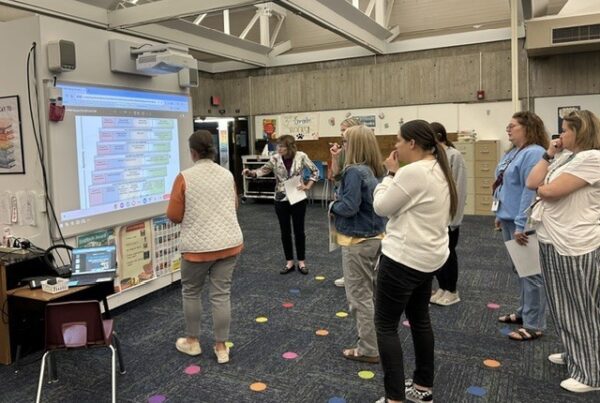
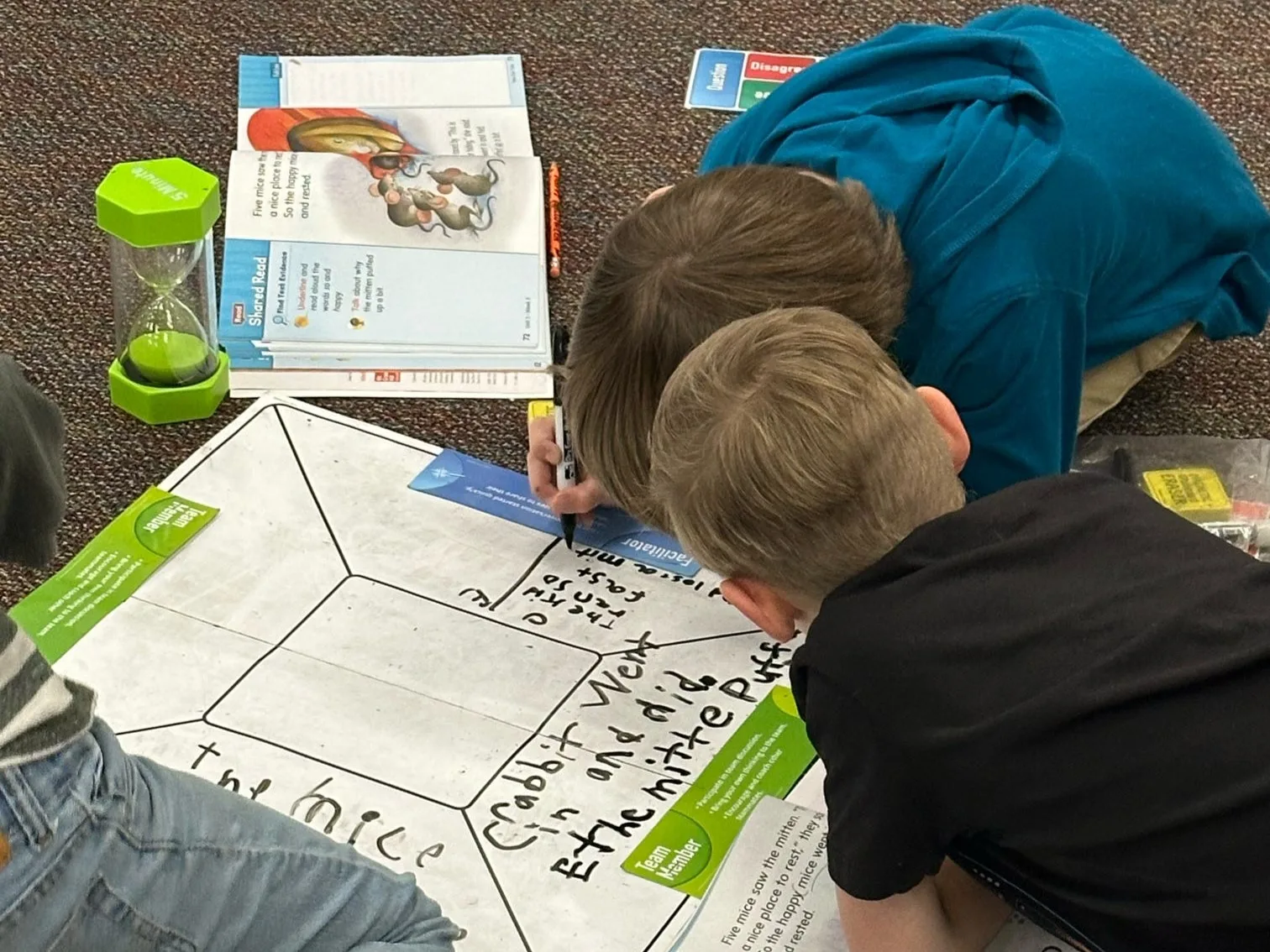
Students at partner school Freemont Elementary in Colorado Springs School District 11 work in teams to simultaneously develop cognitive, interpersonal, and intrapersonal skills as part of the Model of Instruction for Deeper Learning.
Why Academic Achievement Depends on More Than Just Cognitive Skills
Academic achievement is—and should be—a core goal in every classroom. But to get students to deeper levels of understanding, we need to look beyond content delivery and test preparation.
The truth is, you can’t reach rigorous academic outcomes without also developing all the skills that power learning. That means going beyond the typical academic skills that classrooms prioritize—cognitive skills (like memory, comprehension, and reasoning).
For true academic growth, students also need interpersonal skills (like collaboration, communication, and perspective-taking) and intrapersonal skills (like perseverance, self-regulation, and metacognition). These often-overlooked skills aren’t distractions from academic work. They are what makes complex thinking possible and can improve academic performance for all students.
When students have the self-management to persist through challenges, the teamwork to solve problems with peers, and the curiosity to push one another’s thinking, they’re able to go far beyond surface-level mastery. This is when students experience deeper learning and ultimately higher academic achievement.
In this article, we’ll explore:
- The difference between academic achievement and academic success
- What it takes to build overlooked academic skills
- A practical table to identify students’ starting place for skill development
- How principals can support teachers to create deeper learning classrooms
- A real example of how one district made this shift
The secret to higher academic achievement isn’t about choosing between rigor and readiness for life. It’s about teaching for deeper learning so you can develop students with well-rounded skills who are prepared for a lifetime of success.
What Is Academic Achievement and Student Growth?
Academic achievement is often measured and communicated using a statewide end-of-course (EOC) test that measures student mastery of course content and state standards. Along the way to the EOC test, student achievement is prepped for and measured using online educational programs that provide a diagnostic assessment and personalized learning.
Both the EOC test and the online diagnostic assessment measure mastery of course content and state standards, but nothing else. Therefore, student “achievement” by this standard is only a measure of mastery of state standards. By that definition, academic achievement reflects how well a student performs on a test at a single point in time. What it doesn’t capture is how much a student has grown.
Student growth can be defined as the change in achievement between two points in time. An example of student growth is if a student enters fourth grade reading at a first-grade level and ends the year reading at a third-grade level. Even if they haven’t yet reached grade level proficiency, they’ve made meaningful academic progress.
While academic achievement and student growth are both essential, we all know that there is more to success in life than mastery of standards. Those should only be part of the conversation, not the entire conversation. So how do we enhance the conversation about student success to include more than achievement? First, we need to define student success.
As Michael Toth discusses in How to Increase Student Achievement and Close Achievement Gaps by Addressing 5 Invisible Root Causes, the traditional strategies to address learning gaps, and ultimately student achievement, are tutoring programs, interventions, and behavioral supports—and these approaches do not address the root causes of low achievement. While these strategies might move the needle on student achievement at first, they are missing a key understanding that the goal is larger than student achievement as measured by a statewide end-of-course exam. The purpose and goal of school is to create academic success, not simply academic achievement.
Which Overlooked Skills Are Key to Academic Success?
Academic success is much more than achievement. We often think of academic success as achieving educational goals, completing courses and programs, and earning good grades. But academic success also encompasses gaining knowledge and skills, developing critical thinking, and cultivating a passion for learning. Successful students not only master standards but can also solve problems collaboratively and self-manage, skills they will need to thrive outside of school.
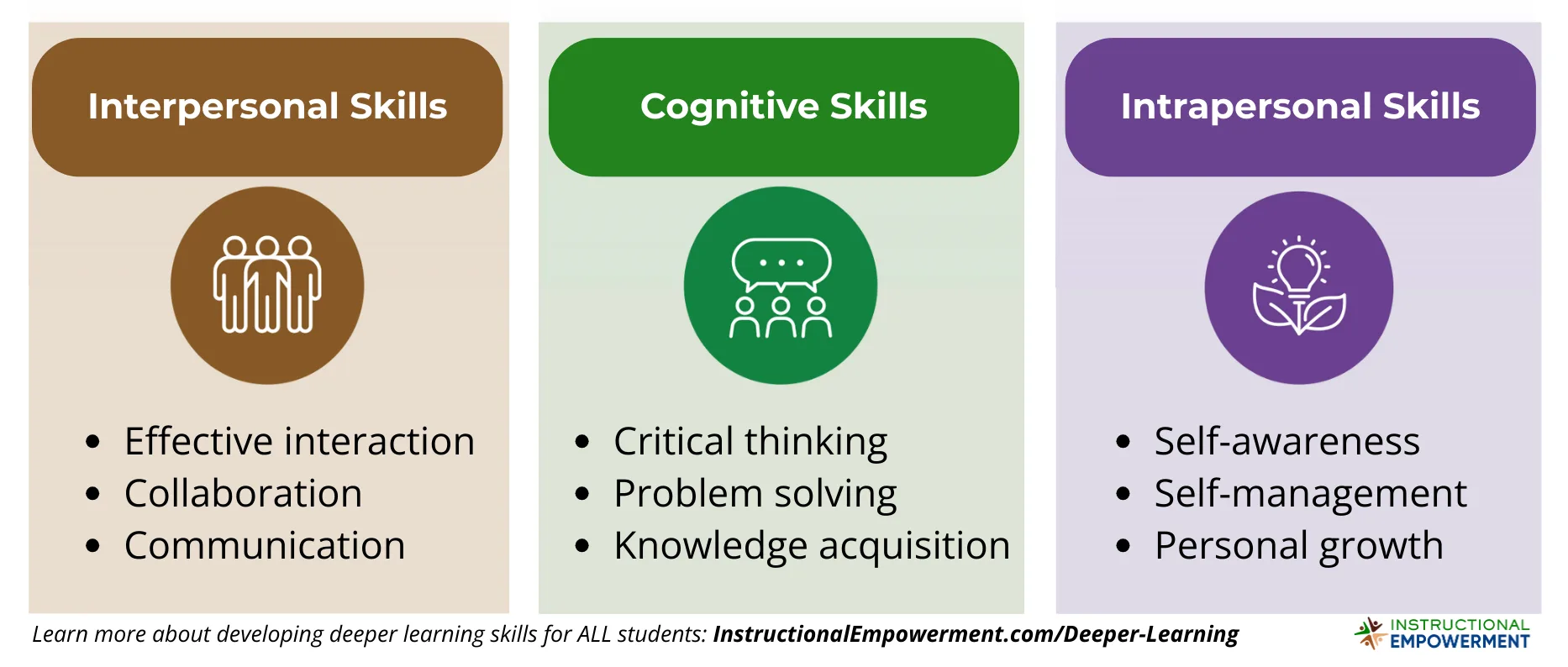
At Instructional Empowerment, we created a framework for deeper learning that identifies three interlocking skill sets for student success:
- Interpersonal: Skills that enable effective interaction, collaboration, and communication.
- Cognitive: Skills that support critical thinking, problem-solving, and knowledge acquisition.
- Intrapersonal: Skills related to self-awareness, self-management, personal growth, and mindsets.
For students to develop higher level cognitive skills, they must process and think about the content. Opportunities to hear, discuss, and debate academic content with peers allow the brain to create and refine mental models. This greatly aids the development of cognitive skills and enhances storage of knowledge in long-term memory.
Therefore, in order to develop more advanced cognitive skills, students must cultivate the interpersonal skills to engage in academic discourse and collaborative critical thinking. Students also need the intrapersonal skills to self- and co-regulate so they can flourish with an adaptive growth mindset and a strong sense of efficacy.
As students develop the capacity to complete rigorous learning tasks (cognitive) with the encouragement of their teammates (interpersonal), they see themselves as more capable academically (intrapersonal), creating a virtuous cycle of increased self-efficacy.
How to Develop Academic Skills for Higher Achievement and Growth
Most students don’t come to school, even high school, with the academic skills described above. To have true academic success that equips students to be successful in life, not just on tests, teachers need to teach and support overlooked cognitive, interpersonal, and intrapersonal skills rather than just expecting students to come into class with them.
The Model of Instruction for Deeper Learning gives teachers a clear starting point. The model guides teachers through establishing consistent structures and routines that help students gradually take ownership of their learning. Four core structures support this shift:
- Student role cards: Clearly define responsibilities so every student knows their purpose on the team.
- Agree/disagree cards with discussion stems: Give each student the language and tools to listen, express their thinking, and engage in academic dialogue.
- Team norms: Ensure every student participates equally in discussions.
- Student protocols: Guide teams to self-manage their learning without constant teacher direction.
These four structures allow students a gradual on-ramp to autonomy and true student-centered learning. They give students the tools and support they need to develop cognitive, interpersonal, and intrapersonal skills as part of their learning every day.
To implement the four structures effectively, especially at the beginning, it’s important to plan and think out how you can do the following:
- Start with a lot of structure and release students to their teams for only short periods.
- Establish call back routines to regain students’ attention.
- Set a specific timeframe and questions for conversations.
- Hold teams accountable for their behavior and learning.
- Gradually release ownership to students as they learn how to use the structures, allowing them to spend more and more time doing team tasks.
When used consistently, these four core structures shift the classroom from teacher-led to student-driven—where deeper learning, authentic skill development, and higher academic achievement become possible for all students.
Subscribe for curated education insights delivered every two weeks.
The First Step to Increasing Student Success: Recognizing Common Patterns
The first step to increasing student success is to identify your starting place and to focus on building student skills from there.
You can use the table below to determine if your classroom or school is experiencing these challenges with developing students’ cognitive, interpersonal, and intrapersonal skills. You are likely to see similar patterns across elementary, middle, and high school classrooms.
| What You Might See | What it Might Mean | Skills to Build |
|---|---|---|
| Students ask, “Is this right?” or “What do you want me to say?” | Students are more focused on compliance than learning and haven’t developed confidence in their own thinking. | Intrapersonal skills will help students self-manage and become more self-aware, so they are not relying heavily on the teacher. |
| Students appear bored, restless, or distracted during instruction. | The work may lack rigor, relevance, or opportunities for them to lead their learning. | Tasks that support critical thinking, problem-solving, and knowledge acquisition are the key to creating rigor and relevance. Students are more likely to engage in the lesson and develop higher cognitive skills when the task is designed for deeper learning. |
| Teachers are working harder than students. | Students may be passive recipients of instruction rather than active participants in learning. | A student-centered model of instruction allows learners to develop the interpersonal skills that enable effective interaction, collaboration, and communication. These skills help students become true partners in learning and give teachers the confidence to release more responsibility to them. |
Principals: How Can You Support the Shift and Raise Academic Achievement?
If we want higher academic achievement for all students through deeper learning, principals must do more than manage—they must lead the shift toward this student-centered model.
Teachers may vary in their readiness to take on instructional shifts. According to Rogers’ Diffusion of Innovations theory (2003), early adopters and innovators are the first to try new approaches, even before they fully understand how to make the shift. These educators aren’t the majority, but they’re crucial to leading the way to widespread adoption across the school. See Figure 1.
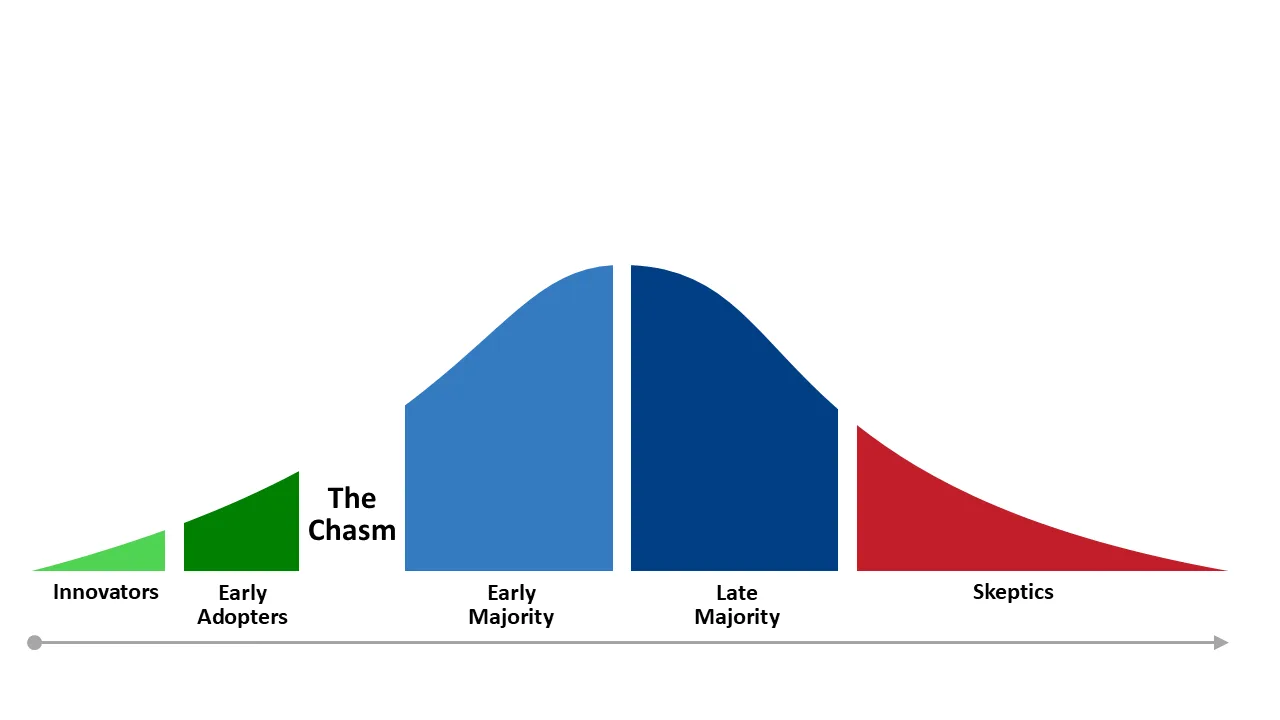
Figure 1. The Rogers Adoption Curve (also called the Diffusion Process) describes how new innovations and ideas are accepted and adopted by groups and cultures. Adapted from Rogers (2003).
You’ll see the same dynamic in your school as teachers shift to a model that intentionally builds students’ cognitive, interpersonal, and intrapersonal skills. The early adopter teachers will dive in with excitement at the thought of preparing students for both higher academic achievement and lifelong success, even before they fully understand how to structure team-based tasks or build student autonomy.
Your job, as a principal, is to be there close by, offering teachers support and structures to make their lessons more productive as they re-organize their long-term classroom systems.
Your early adopter teachers may actually know and understand more about how to foster deeper learning than you do. That is okay. Learn from them and engage them in conversations. You can still provide valuable feedback and support. One thing you can do is facilitate collaboration between teachers who are shifting their classrooms, even if those teachers are in different grade levels or subjects. Early adopters can see the commonalities in how they structure student teams, build ownership, and support complex thinking, learning from each other despite any differences in what they teach.
By creating time, space, and encouragement for your early adopter teachers, you help build momentum and lay the groundwork for schoolwide student growth, academic achievement, and skill development that will truly change students’ lives.
Example: A District’s Success in Both Academic Achievement and Student Skill Development
The Woonsocket Education Department (WED), a school district serving over 5,000 students in Woonsocket, Rhode Island, faced a persistent challenge. Despite efforts to incorporate instructional strategies such as blended and personalized learning, the district struggled to foster meaningful academic discourse that went beyond traditional “turn and talk.”
Woonsocket partnered with Instructional Empowerment to implement the Model of Instruction for Deeper Learning, starting with early adopter teachers. Per data the district collected from these early adopters, classrooms that partnered with Innovation Specialists to implement the Model of Instruction for Deeper Learning saw higher proficiency rates, with up to 11 percentage points higher in ELA and 27 percentage points higher in math on the Rhode Island Comprehensive Assessment System (RICAS), compared to classrooms that did not work with Innovation Specialists to implement the model.
Beyond academics, Woonsocket’s students experienced increased confidence, life skills, and personal growth. For example, high school teacher Morgan Zinni saw a big difference in her students’ cognitive, interpersonal, and intrapersonal skills less than a year after she began implementing the model:
“I saw students that had never even interacted with each other, interacting. I saw students that had previously been quiet voice their opinions. It led to some really phenomenal higher-level thinking and additional questioning about the text and how the text related to their lives…I think that the ultimate goal is to teach them how to apply what they learn in the classroom to their everyday life skills. That’s a skill they’re going to need for the rest of their lives: to articulate, communicate, and argue effectively.”
—Morgan Zinni, Teacher, Woonsocket High School
Read the case study to learn more: Woonsocket Education Department Boosts Student Engagement and Achievement Through Model of Instruction for Deeper Learning
Higher academic achievement is the natural result when you focus on developing students’ skills for deeper learning. When teachers and principals work together to create student-centered classrooms, all students can grow and thrive.
Share Your Stories and Questions
No matter where you are on your journey of increasing academic achievement and developing students’ skills for success, consistency is key, and having a community of likeminded educators will accelerate your growth.
I would love to hear your questions and success stories!
About the Model of Instruction for Deeper Learning
There has always been deeper learning for some students—but not for all students in every classroom, every day. Now it is possible with the research-based Model of Instruction for Deeper Learning™, which provides every teacher and all students with the professional learning, support, and resources to achieve deeper, more rigorous learning of the curriculum.
The Model of Instruction for Deeper Learning places students at the center of their learning, shifting from traditional teacher-directed methods to student-led team learning. In this approach, students collaborate in structured, interdependent teams, guided by clear roles and responsibilities. Unlike traditional grouping, this approach ensures equal participation and accountability—fostering deeper understanding, critical thinking, and collaboration.
We guide you through the process of starting with a well-designed pilot involving volunteer principals and teachers, then scaling success to meet your goals, timeline, and resources.
About the Author
Deana Senn, MSSE
Deana Senn, MSSE, is an Education Consultant and author of Fostering Deeper Learning: A Handbook for the Model of Instruction for Deeper Learning. She is a school instructional model expert educator and led the creation and development of IE’s Model of Instruction for Deeper Learning content and coaching tools. Deana supports internal faculty and partner districts to shift the culture of classrooms by increasing rigor and student agency through the intentional implementation of the Model of Instruction for Deeper Learning.
Deana calls upon her 20+ years of experience in education to support leaders and teachers in increasing engagement, ensuring equal learning for all students, and closing achievement gaps through student conversations and rigorous learning. She is an award-winning author and international speaker who conducts research and development for Instructional Empowerment. Having experience that spans the United States and Canada in rural and urban districts, she is passionate about creating innovative solutions for all students, teachers, and leaders.
Subscribe for curated education insights delivered every two weeks.
About Instructional Empowerment
Our mission is to end generational poverty and eliminate achievement gaps through redesigned rigorous Tier 1 Instruction that ensures deeper learning for ALL students.