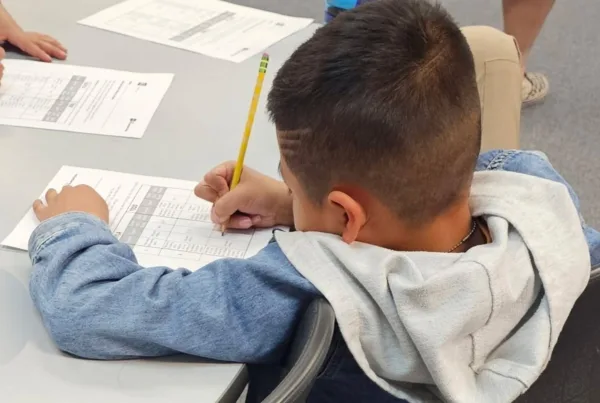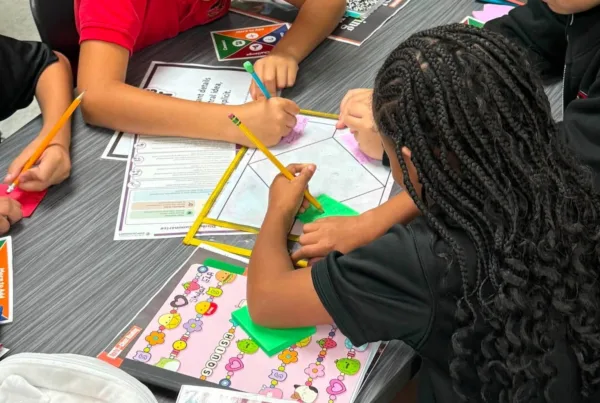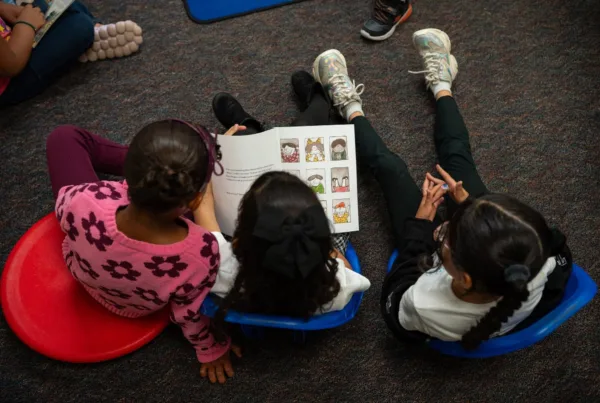
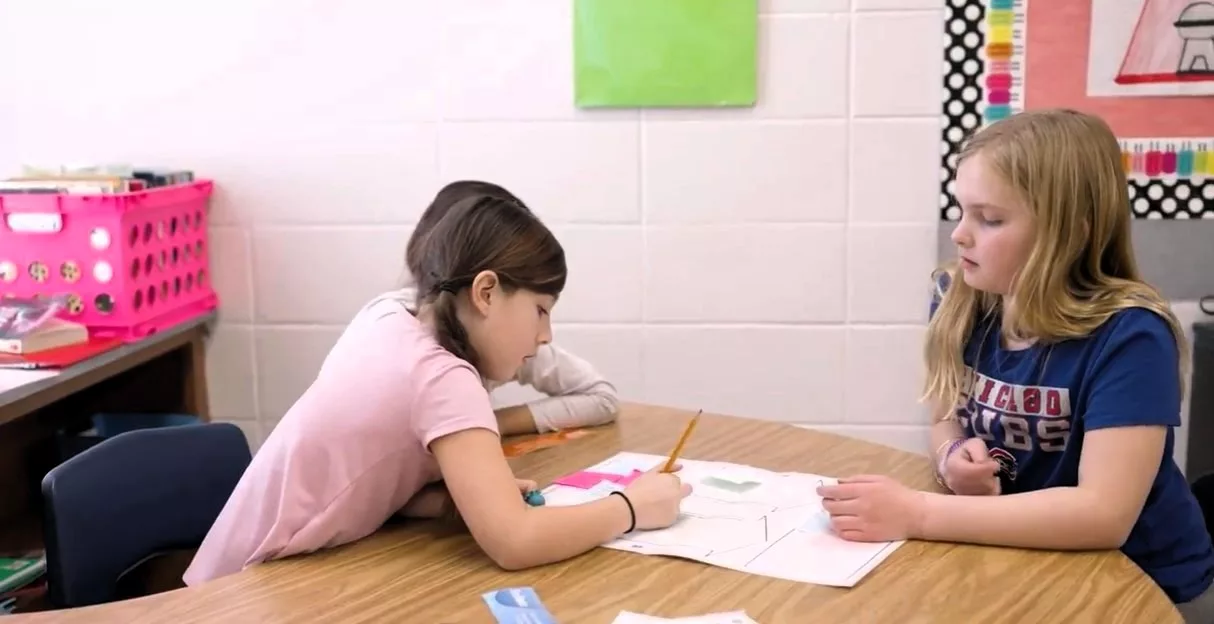
Students at Willard Elementary form social bonds with their teams as they engage in academic challenges together as part of the school’s implementation of the Model of Instruction for Deeper Learning.
Executive Summary
This case study examines the implementation of Instructional Empowerment’s Model of Instruction for Deeper Learning at Willard Elementary School in School District U-46, the second largest school district in Illinois.
| 2024 Willard Elementary School Demographics | |
| Grades: K-6 Number of Students: 240 Number of Classroom Teachers: 21 Student Mobility: 14.6% Percent Low Income: 45.4% Percent Students with Disabilities: 32.5% Percent English Learners: 17.1% |
Percent White: 42.9% Percent Hispanic: 42.9% Percent Black or African American: 7.5% Percent Two or More Races: 5.4% Percent Asian: 0.77% Percent American Indian or Alaskan Native: 0.26% |
The Challenge
- Willard faced persistent challenges with student achievement and behavior.
- The school’s Principal, Dustin Covarrubias, reflected that he had been spending more time managing operations than being able to focus on instruction.
Vision, Mission, & Goal
- In 2021-22, after more than a year of online learning, School District U-46 made a commitment to “continuously improve all their systems to ensure they work for all students,” an effort they coined U-46 Rising (School District U-46, n.d. a).
- The vision of U-46 Rising is to ensure all students are engaged in rigorous learning, receive quality core instruction, and can develop the skills they need for better life chances and opportunities (School District U-46, n.d. b).
The Partnership
- School District U-46 partnered with Instructional Empowerment to introduce the Model of Instruction for Deeper Learning districtwide through professional development, coaching, and tools and resources for both students and teachers.
- The partnership launched with a 5-year implementation plan. Willard was one of five schools that volunteered to pilot the model in the first year as part of U-46 Rising, with more schools joining in subsequent years.
Achievement, Behavior, and Absenteeism Results
- Over three years, English Language Arts proficiency grew by 24.1 percentage points, while math proficiency increased by 9.1 points.
- On the Illinois Assessment of Readiness (IAR), the percentage of students meeting or exceeding expectations increased by 30.6 percentage points in English Language Arts and 17.1 points in math.
- Among K-6 elementary schools, Willard posted the second-highest ELA gains and ranked ninth in math growth in the state.
- Office-managed behavior referrals decreased from 288 to 36.
- Chronic absenteeism decreased from 32% to 25.5%, outpacing the national average reduction.
Other Highlights
- Willard’s school culture became team-based, with students taking ownership of their own learning and behavior and welcoming new students into their classrooms.
- Due to the successes the Willard students, staff, and leadership experienced, the building has become a “lab school”—with educators from within and outside the district coming to observe instructional practices.
- Willard Elementary has become a “school of choice” in the community—even attracting a family that relocated specifically to enroll their child.
- Through leadership coaching, Principal Dustin Covarrubias shifted from being operations-focused to becoming an instructional leader—in his words, “for the first time.”
Rising to the Challenge
In spring of 2021, School District U-46 launched a districtwide partnership with Instructional Empowerment to implement the Model of Instruction for Deeper Learning. The district was eager to equip educators with a research-proven model that increases student engagement, rigor, and agency. As part of this effort, known across the district as U-46 Rising, elementary schools were invited to apply to pilot the Model of Instruction for Deeper Learning.
Overcoming Low Achievement, Behavior Issues, and Turnover
At Willard Elementary, Principal Dustin Covarrubias saw U-46 Rising as an opportunity to gain the guidance necessary to shift his leadership approach. “I was not an instructional leader,” Covarrubias recalled. “I was an operational manager. I was managing behaviors.” While the school functioned efficiently, he recognized, “Our student achievement outcomes and instructional practices were not where they needed to be.”
Sara Henry, who became Willard’s dedicated instructional coach as part of the pilot, had been with the school for over 20 years. She reflected on the school’s past struggles, sharing, “We had times when we were like a revolving door for admins and teachers.”
“The Right Thing at the Right Time That We Never Knew We Needed”
With Principal Covarrubias’s encouragement, the Willard staff voted to become one of five schools to pilot the Model of Instruction for Deeper Learning. Henry said, “We were 100% in from the start. When I look back, it was the right thing at the right time that we never knew we needed.” The decision to become a pilot school marked the beginning of Willard’s shared commitment to deeper learning.
By fall 2021, Willard began its journey with student-led team learning, supported by targeted coaching, collaborative planning time, and tools and resources for students and teachers. Together, educators and students started reimagining what learning could look like when students engaged in rigorous discourse and developed into leaders of their own learning. As Covarrubias put it, “This was a huge opportunity for us. We wanted to have a fresh start.”
What Is the Model of Instruction for Deeper Learning?
Instructional Empowerment’s Model of Instruction for Deeper Learning places students at the center of their learning, shifting from traditional teacher-directed methods to student-led team learning. In this approach, students collaborate in structured, interdependent teams, guided by clear roles and responsibilities.
Unlike traditional grouping, the Model of Instruction for Deeper Learning ensures equal participation and accountability and shifts classrooms away from dependent, compliant learning and toward independent, critical thinking.
Grounded in research from The Power of Student Teams: Achieving Social, Emotional, and Cognitive Learning in Every Classroom Through Academic Teaming (Toth & Sousa, 2019), the model is adaptable across all subjects and grade levels K–12—making deeper learning possible for ALL students, in every classroom.
The Partnership: A Clear Vision for Transforming Instruction and the Support to Get There
Willard embarked on their journey toward student-led deeper learning with the personalized support of Instructional Empowerment coaches. “Our Instructional Empowerment coach just put a fire under us to change all of our systems and do it in a way that we understood why we were doing it,” Principal Covarrubias shared. “She continually told us that these would be changes, it would take time, and we had to trust the process.”
Teacher Lesson Planning with Increased Rigor
Instructional Empowerment coaches worked closely with Principal Covarrubias and Coach Sara Henry to deepen their capacity to lead the work themselves, particularly in standards-based planning. “We worked together to establish what planning purposefully looked like and what the standards truly were,” Covarrubias said. “We had to learn how to plan and how to do it appropriately for Willard.”
Henry said, “It’s the coolest thing to listen to teacher planning before and after. Now it’s all standards, teachers are talking about the standards. They’ll say things like, ‘That taxonomy level is comprehension, let’s get it to analysis. How are we going to do that?’ Before it was, ‘Let’s pull out a worksheet.’ Now there is an intentionality behind the tasks. The level of work that kids are doing as a result is powerful.”
Students Track Their Own Progress and Use Learning Targets
Instructional Empowerment coaches also supported Willard to begin using a tool for real-time student learning analytics called Learner Growth. The tool is part of the 4DL Teacher Suite for the Model of Instruction for Deeper Learning and helped educators at Willard answer the question, “How do we know students are learning?”
Students at Willard used the tool to track their progress toward mastering learning targets, self-reflect on both their individual progress and their team’s progress, and then upload evidence of their learning.
According to a first-grade teacher, student engagement and accountability increased as students began using the tool:
“I love that it gives students ownership of their learning. They reflect and decide if they should ‘check the box’ based on how they feel they did. They all upload their evidence so I can see it, but they determine if they are ready to check the box. They love being able to document their work and they feel empowered. When they know we are uploading, they make sure they have done their very best and check it to make sure they have all components completed. I love that I have their work at my fingertips and it’s easy for me to go back and review it. It’s an easy way for me to ensure that I have covered all areas of a standard as well as see what areas they need more practice in. I have easily been able to keep track of formative assessments without the piles of paper, which has been huge for me! The tracker is easy to use and it’s been a great addition to my classroom.”
– First-Grade Teacher, Willard Elementary School
Video: Classroom Footage of Students Using Learner Growth
Watch this classroom footage of first grade students talking through their learning targets and submitting their evidence with the Learner Growth tool. Video shared by Principal Covarrubias and Coach Henry.
The Learner Growth tool has been significant in helping teachers and leaders at Willard track student learning in real time. Principal Covarrubias shared an example of the data he reviews (see Figure 1). Teachers verify students’ evidence and share feedback directly in the tool and can use the data to close learning gaps before they grow into achievement gaps.
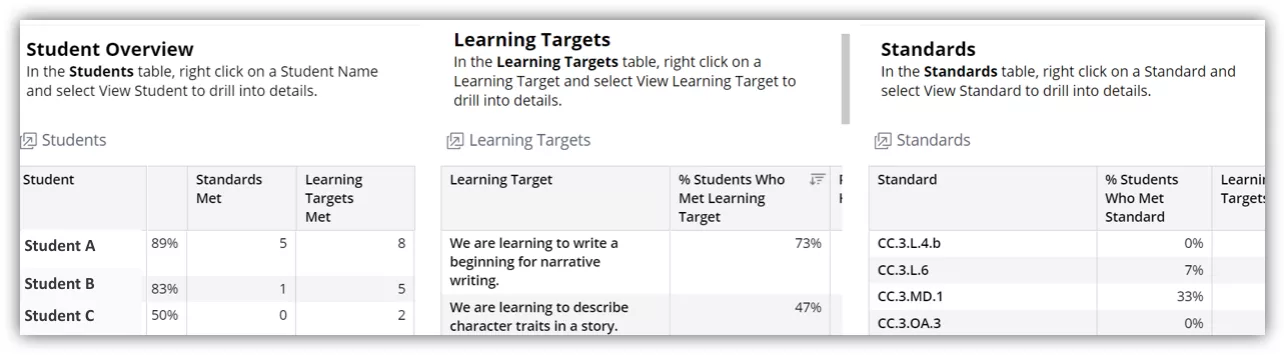
Figure 1. Teachers and leaders at Willard used Learner Growth to track progress toward learning targets and standards and see which students may need extra support and in which areas. Example provided by Principal Covarrubias and Coach Henry.
The Results: Improvements in Achievement, Behavior, Attendance, and School Culture
Willard’s transformation toward deeper learning has reshaped the student experience and reignited teacher enthusiasm as students demonstrate what they’re truly capable of. Achievement scores rose, discipline referrals dropped, and attendance improved. The school developed a strong, team-based school culture, where even new students could quickly adapt and thrive. Student learning reached new levels of rigor—in the words of a third-grade teacher, “The discourse they’re having can get really rich…they’re having to think, defend, and consider other points of view.”
Improving Academic Achievement
In just three years as a pilot school, Willard has experienced a profound shift in instruction and student achievement. The Model of Instruction for Deeper Learning is designed to build students’ and teachers’ capacity for higher academic rigor, which translates to deeper learning of the curriculum and higher performance on state tests. “Our rigor and instruction have increased so much,” shared Principal Covarrubias. Willard’s data reflects that progress.
Proficiency Increased by 24.1 Points in ELA, 9.1 in Math
In English Language Arts (ELA), student proficiency rose from 10.9% in 2022 to 35% in 2024. Math proficiency climbed from 15.6% in 2022 to 24.7% in 2024 (Illinois State Board of Education, 2024b). See Figures 2 and 3.
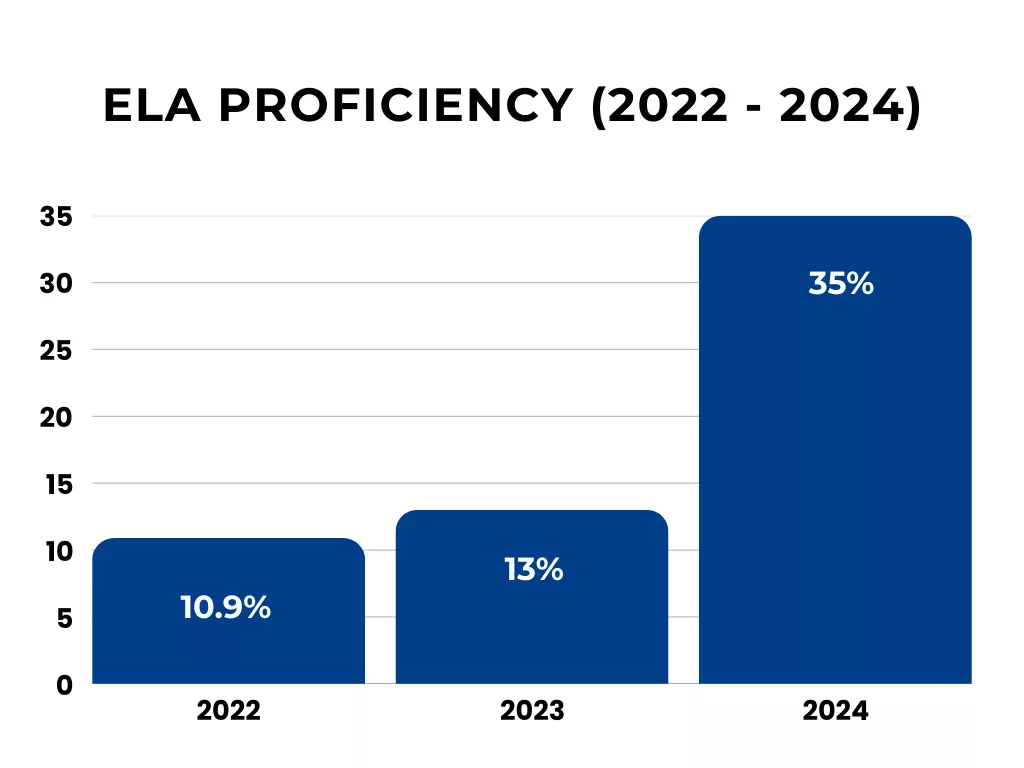
Figure 2. Willard’s ELA proficiency increased by 24.1 points in two years.
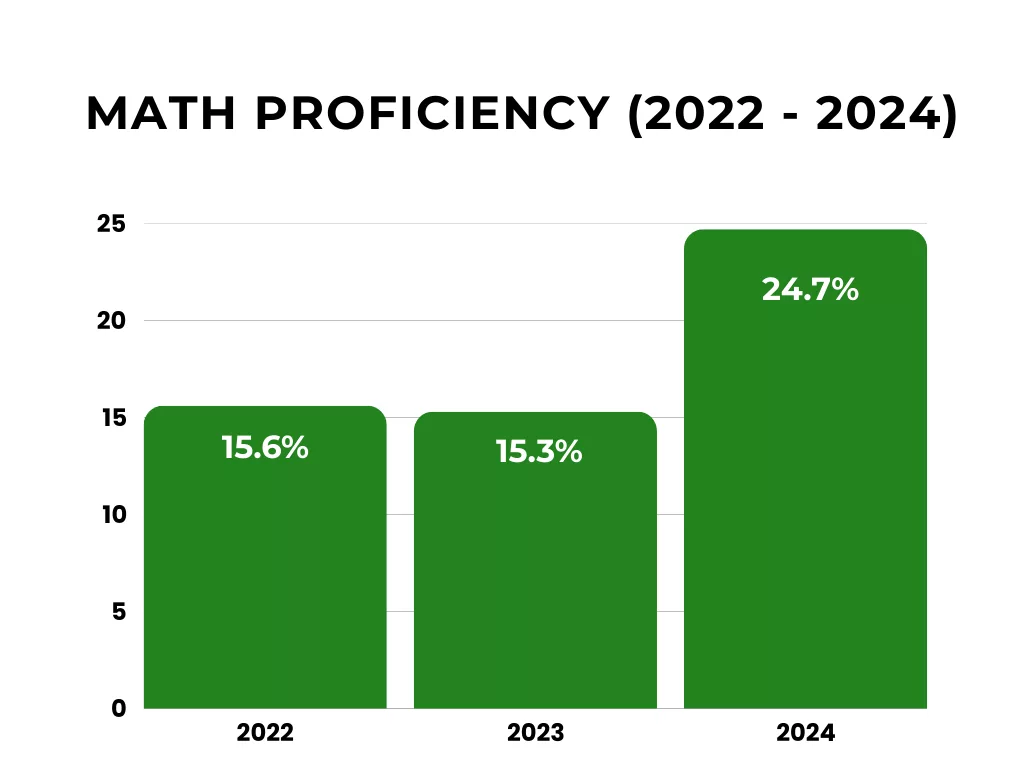
Figure 3. Willard’s math proficiency increased by 9.1 points in two years.
#2 in ELA Growth and #9 in Math Among Illinois K–6 Schools
In addition to increased proficiency, Willard students also demonstrated stronger growth—outpacing the district in both ELA and math. In 2021, Willard’s overall student growth percentile was 39.2 in ELA and 43.1 in math (Illinois State Board of Education, 2024c). By 2024, these numbers rose significantly to 57.3 in ELA and 51.4 in math. This exceeded the districtwide growth percentiles of 48.3 in ELA and 46.0 in math. See Figures 4 and 5.
Among 107 K-6 elementary schools* that participated in the 2024 Illinois state assessment, Willard Elementary School posted the second-highest ELA gains and ranked ninth in math growth (Instructional Empowerment Applied Research Center, 2025).
*Note: This analysis includes only schools serving grades K–6 and excludes other elementary configurations such as K–5.
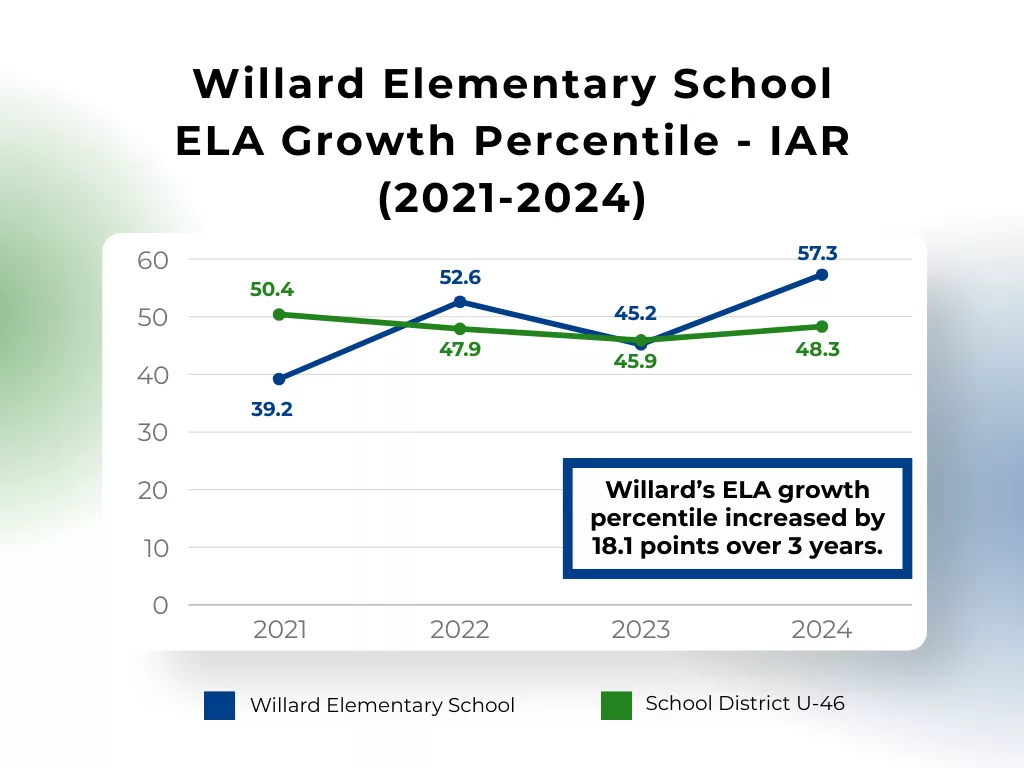
Figure 4. Willard’s growth percentile increased by 18.1 points in ELA after three years, surpassing the district and ranking #2 in the state among K-6 schools in 2024.
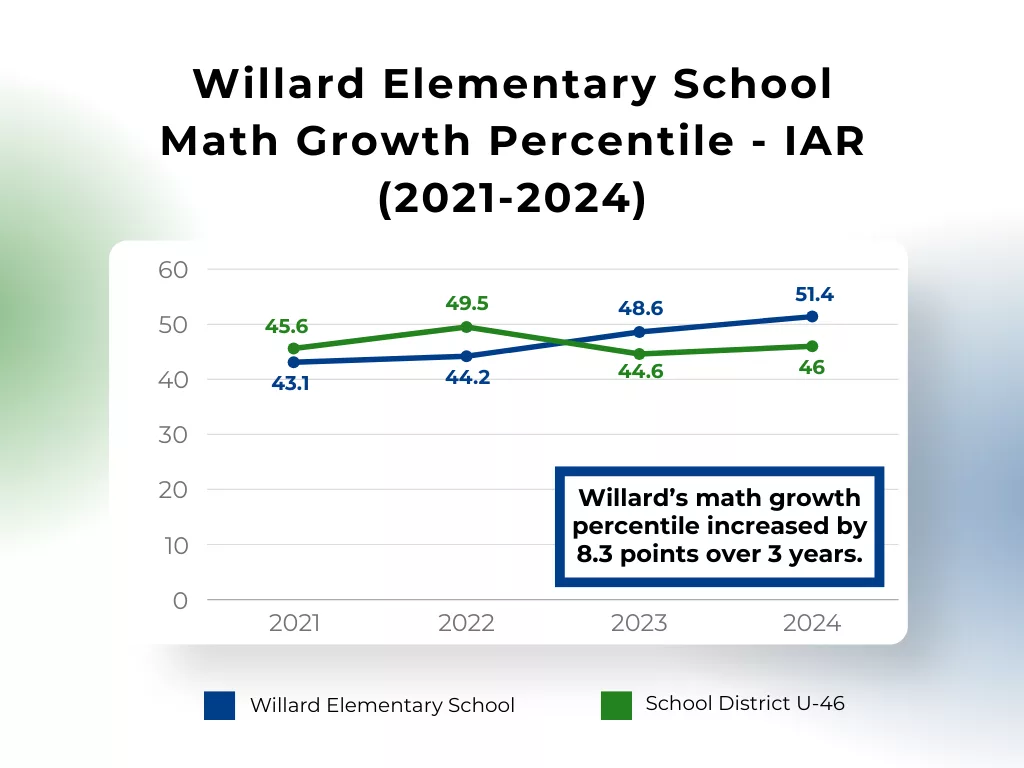
Figure 5. Willard’s growth percentile increased by 8.3 points in math after three years, surpassing the district and ranking #9 in the state among K-6 schools in 2024.
Surpassed the District in Number of Students Meeting and Exceeding Expected Performance
The Illinois Assessment of Readiness (IAR) tells an even deeper story. In 2021, just 4.7% of students met the performance level expectations on the Illinois Assessment of Readiness (IAR) in ELA (Illinois State Board of Education, 2024a). By 2024, that number jumped to 32.5%, with an additional 2.8% exceeding expectations. Willard students not only improved—they surpassed district performance (26.3%) in ELA. See Figure 6.
Math outcomes followed the same upward trend. In 2021, only 7.8% of students met the performance level expectations. By 2024, that number nearly tripled to 23.5%, with 1.4% exceeding. Once again, Willard outperformed the district average, which stood at 19.1%. See Figure 7.
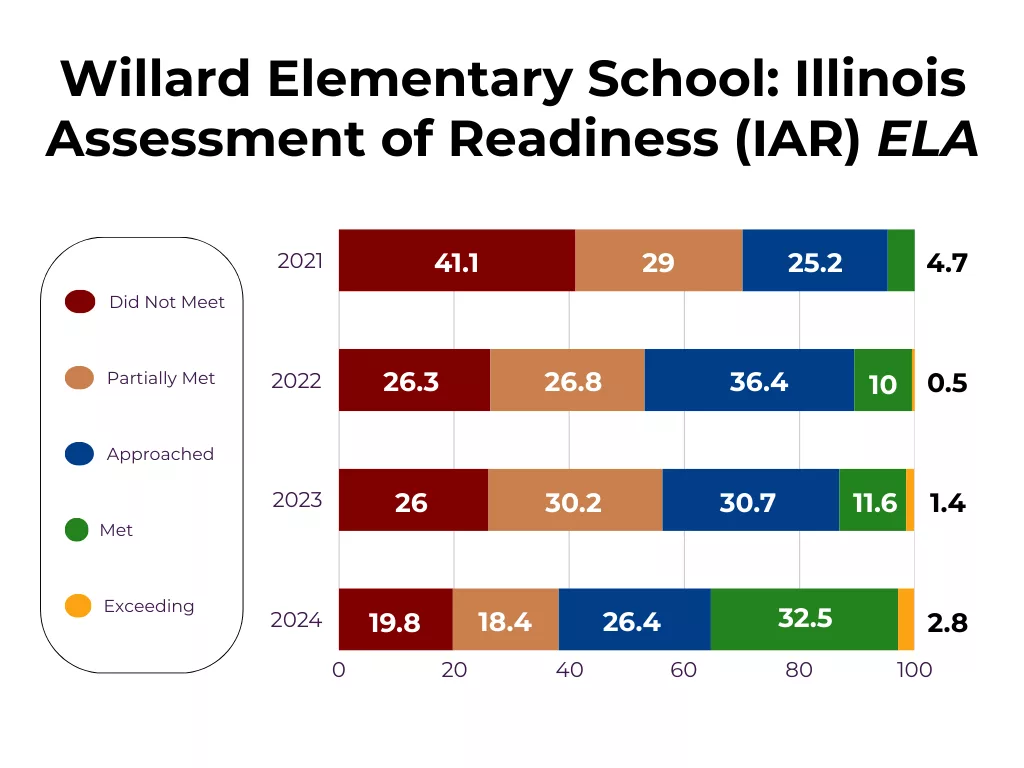
Figure 6. The number of Willard students meeting and exceeding expectations in ELA increased by 30.6 points after three years.
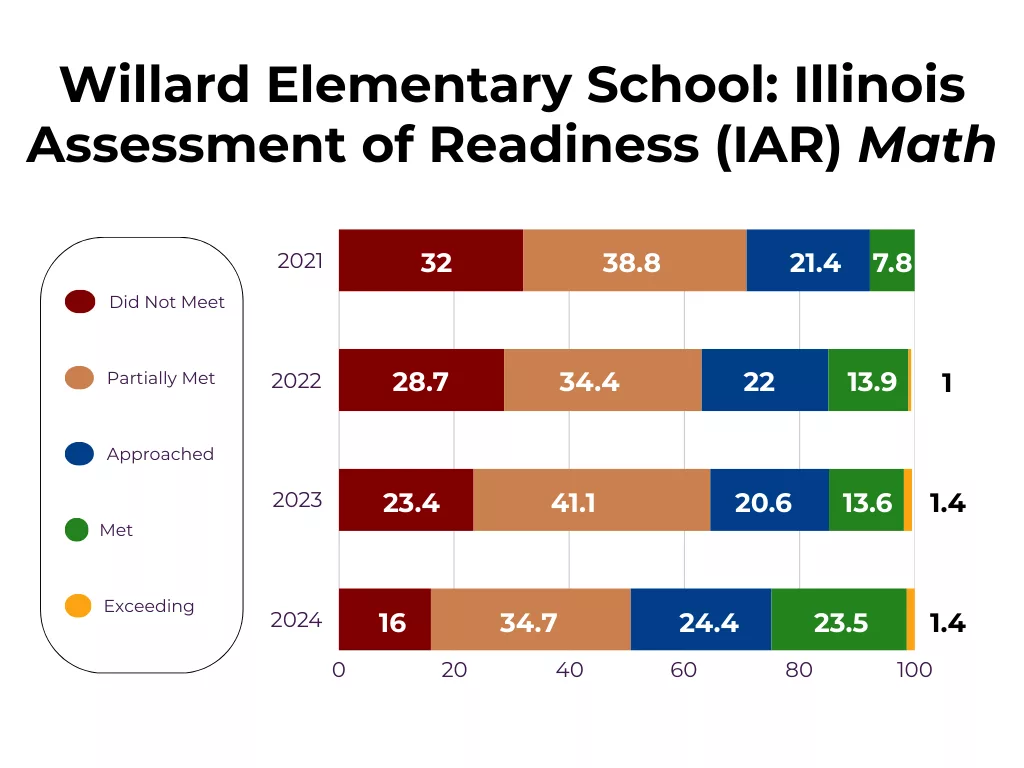
Figure 7. The number of Willard students meeting and exceeding expectations in math increased by 17.1 points after three years.
Subscribe for curated education insights delivered every two weeks.
Improving Student Behavior Through Academic Engagement
In addition to academic achievement improvements, Willard is also seeing changes in behavior—with discipline referrals reaching an all-time low. “In 2021, when we first started, we were looking at 288 office managed referrals,” said Principal Covarrubias. “This year, we have 82 referrals and 46 were managed by teachers. Almost all of our referrals are happening in the hallway, lunch, or recess.”
In previous years, challenging student behaviors were often exhibited during instructional time. With the Model of Instruction for Deeper Learning, all students are actively engaged in more rigorous, deeper learning—a shift that has significantly impacted school culture. “We don’t really have behavioral issues here anymore,” shared Covarrubias. “I tell people all of the time that our students’ brains are tired from learning, so they don’t misbehave.” Educators implementing student-led team learning often find that when every student has a voice and role, challenging behaviors significantly decrease or even disappear altogether. “We haven’t had any discipline referrals during instructional time this year,” said Covarrubias. “Students want to be in the classroom to actually learn.”
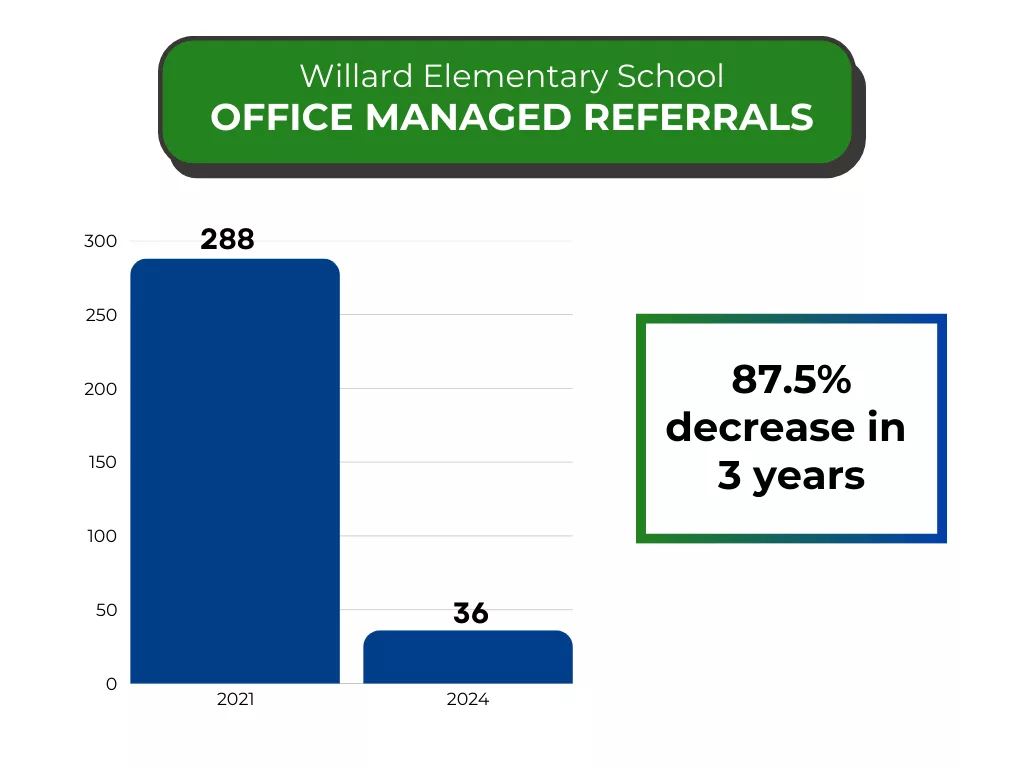
Figure 8. Office managed referrals at Willard decreased by 252 in three years.
Reducing Chronic Absenteeism
Students’ eagerness to participate in their learning with the new team-based model is also reflected in attendance data. Like most schools, Willard experienced elevated rates of chronic absenteeism after the pandemic. For two years, their chronic absence rate remained at 32%. By 2024, chronic absenteeism decreased by 6.6 percentage points to 25.5%. Speaking to the school’s progress, Principal Covarrubias noted, “We’re increasing attendance. We’re increasing educational opportunities. It’s pretty exciting work.”
This improvement aligns with findings from the Applied Research Center, which found that 79% of schools implementing the Model of Instruction for Deeper Learning schoolwide reported a reduced rate of chronic absenteeism (Instructional Empowerment, 2025). Willard’s reduction also outpaced the national average decrease of a 2% reduction in chronic absenteeism (FutureEd, 2025).
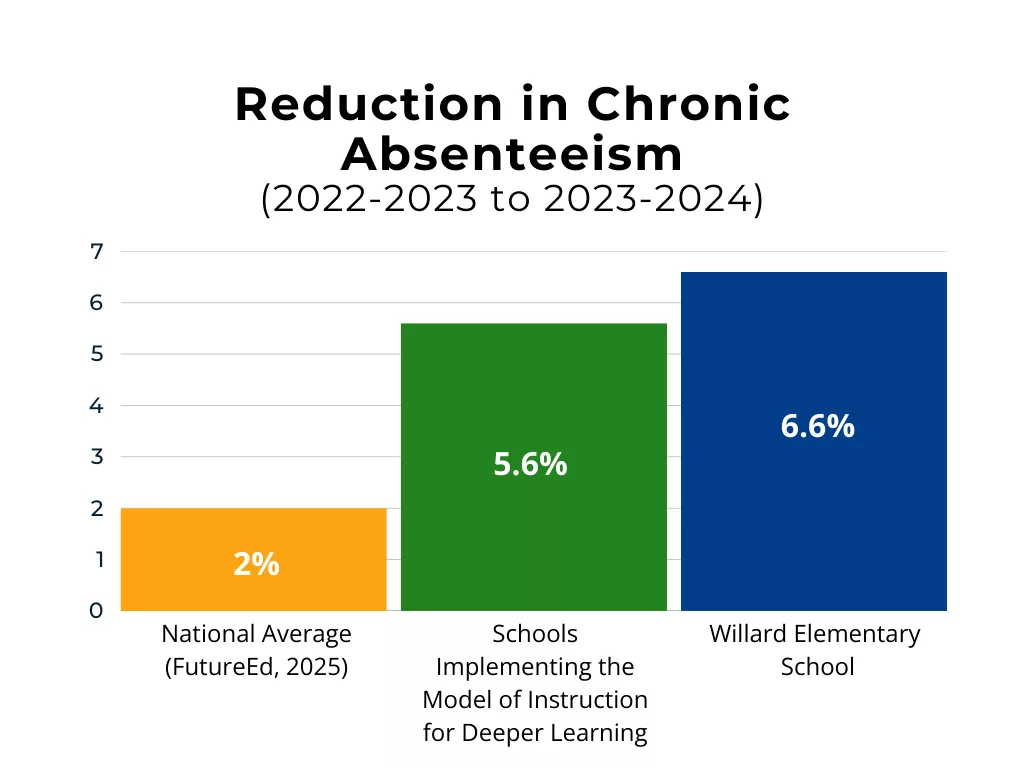
Figure 9. Willard reduced chronic absenteeism by 6.6%, outpacing the national average. Learn more about the Applied Research Center’s analysis of chronic absenteeism rates in schools implementing the Model of Instruction for Deeper Learning.
Overcoming Student Mobility Challenges Through a Positive School Culture
Willard’s student mobility rate was 14.6% in 2024, well above the district average of 9.7% and state average of 7.9%. Coach Henry shared that in 2025, Willard had more students move in than she can recall them ever having before, with over 60 new students joining the small school of 247 students. The new students came from within the district, out of the state, and even out of the country.
But higher student mobility didn’t slow down Willard’s efforts. They had built strong systems and a student-owned culture, which made all the difference. Coach Henry said, “New students were able to come into our building, into our culture and climate, and our kids taught them the way of Willard. Now they’re just as strong of team members as the kids who have been teaming for the last four years.”
Coach Henry shared a story about one particular 6th grader who was reluctant to participate in her team at first but quickly began to take ownership of her learning and change her behavior. “One girl who came in, in her first couple of days, her behavior was her means of communication. The school she had gone to before was completely different from Willard. She was kind of like, ‘Why are you guys talking to me? This is ridiculous.’ But she learned to trust her team and the people around her, and that it’s OK to take a risk, and nobody on her team would judge her if she got it wrong. Once she felt that, she realized, ‘Oh, OK, I can do this.’ Then her communication changed to: ‘Let’s get the job done. Let’s do some learning. Let’s do our work.’ That shift was awesome.”
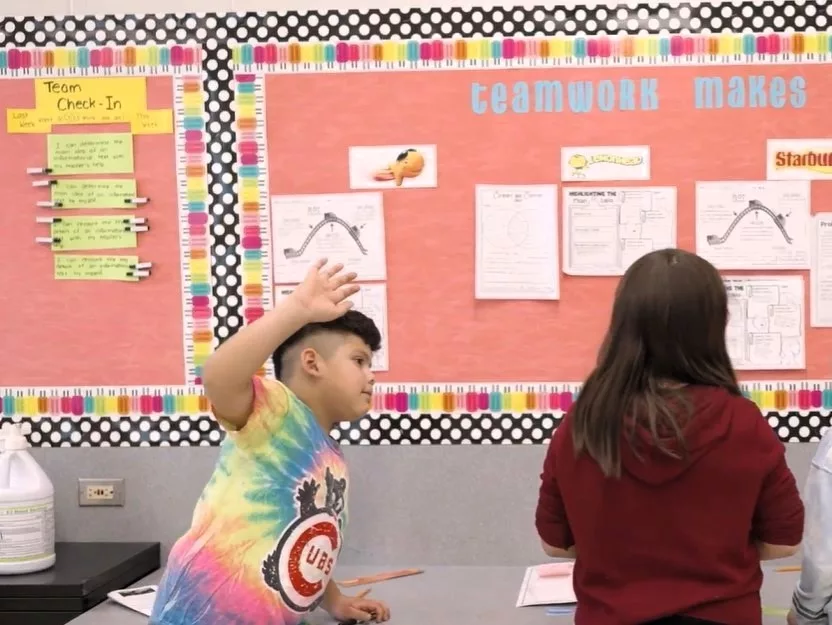
Students at Willard use team protocols, which helps build a culture of trust and equal participation where everyone has an important role in their learning.
Video: Willard Students and Teachers Talk About the Impact
Hear from Willard’s students and teachers themselves about the impact of the Model of Instruction for Deeper Learning. Video Credit: School District U-46, IL.
From Operations Manager to Instructional Leader
In the seven years since first becoming a principal, Covarrubias can now shed the title of operations manager. “I’m an instructional leader for the first time since I’ve been an administrator,” said Covarrubias. “I don’t worry so much about the operational side of things anymore.” When asked about the impact of Instructional Empowerment’s leadership coaching, Covarrubias shared that it “fundamentally changed his trajectory and approach to leadership.”
Now, Covarrubias and his school leadership team are empowered to make data-driven decisions that improve student outcomes. Covarrubias also reflected on how Willard’s Professional Learning Communities (PLCs) have been positively affected, stating that, “Our PLCs are thriving, with teachers deeply engaged in purposeful planning centered on standards.” Through piloting the Model of Instruction for Deeper Learning, Covarrubias believes it has allowed Willard to “create sustainable systems that ensure continuous improvement.”
A Learning Lab and School of Choice
The success at Willard Elementary has not gone unnoticed. The school is now a “lab school” for the district, regularly hosting more than 300 educators each year from within and outside School District U-46 to observe student-led team learning in action. “We’ve actually become a learning lab for U-46,” Covarrubias said. “And it’s not just one teacher. It’s the whole building.” As more schools learn about the successes of Willard’s students, educators, and leadership, the waitlist to observe instruction continues to grow.
Willard isn’t just influencing educators—it’s becoming the school of choice for families seeking a more student-centered approach. Families from outside the school’s area are noticing the positive changes that have taken place. “We had a family move into our boundaries. They said they bought their house because they wanted their child to go to Willard,” Covarrubias shared. “They talked to community members and researched things online. They looked at social media and heard the things we were doing and the care we have for our students. This was the right fit for their family.” Covarrubias reflected on this moment, calling it an “immensely high compliment.”
Covarrubias shared that while it’s been “rewarding to see the work we’re doing,” it’s also “not just about us. It’s about the entire school district.” As the Model of Instruction for Deeper Learning continues to expand throughout U-46, Covarrubias shared that the district “wants to make sure that every student, no matter what school you’re at, is getting the same level of education.”
“This Is the Greatest Work We’ve Ever Done”
Overall, while the journey hasn’t been easy, the results speak volumes. “We had to put blind trust into something we didn’t know,” said Covarrubias. “Now we see the results, and people here are just striving for more.”
He offers this advice to other school leaders considering the Model of Instruction for Deeper Learning: “Don’t worry about the students. Students will adapt. They crave learning. Sometimes we just don’t know that.”
Willard’s story proves what’s possible when leadership, staff, and students commit to doing what’s best for students. “This is what’s best for kids,” Covarrubias shared, “Everything we’re doing is what’s best for the kids.”
Reflecting on his early motivation to reimagine learning, Covarrubias explained, “We can implement standards, success criteria, and learning targets—but if students don’t understand agency or believe in what they’re doing, we’ll never see true success.”
Coach Henry agrees that implementing the Model of Instruction for Deeper Learning has been transformative for Willard. She said, “We are not the same building that we were four years ago. I think literally this is the greatest work we’ve ever done.” Today, students take an active role in their learning—and that shift has made all the difference.
About Instructional Empowerment
Instructional Empowerment’s mission is to end generational poverty and eliminate achievement gaps through redesigned rigorous Tier 1 instruction that ensures deeper learning for ALL students.
We partner with school and district leaders to build schools’ capacity and instructional systems. Our goal is for schools to achieve rapid, measurable outcomes for their students by focusing on rigorous classroom instruction and deeper learning.
Learn more about us: https://instructionalempowerment.com/about/
References
FutureEd. (2025, February 7). Tracking state trends in absenteeism. https://www.future-ed.org/tracking-state-trends-in-chronic-absenteeism/
Illinois State Board of Education. (2024a). Illinois Report Card: IAR performance levels for Willard Elementary School (SD U-46). Illinois Report Card.
Illinois State Board of Education. (2024b). Illinois Report Card: Proficiency for Willard Elementary School (SD U-46). Illinois Report Card.
Illinois State Board of Education. (2024c). Illinois Report Card: Growth Percentile – IAR for Willard Elementary School (SD U-46). Illinois Report Card.
Instructional Empowerment. (2025). Applied Research Center brief: Analyzing chronic absenteeism rates in schools implementing the Model of Instruction for Deeper Learning. https://instructionalempowerment.com/library/chronic-absenteeism-model-of-instruction-for-deeper-learning/
Instructional Empowerment Applied Research Center (2025). Analysis of Academic Growth in Illinois K-6 Schools. [Unpublished.]
School District U-46 (n.d. a) U-46 Rising. https://www.u-46.org/Page/19155
School District U-46 (n.d. b) The Vision and our Why for U-46 Rising. https://www.u-46.org/Page/18554
The Institute of Education Sciences. (2024). National Center for Education Statistics: Willard Elementary School (SD U-46). National Center for Education Statistics.
Willard Elementary School Profile (n.d.). Accessed May 2025. https://districtintelligence.com/event/public.profile/schid/19542/school/Willard%20Elementary/
Subscribe for curated education insights delivered every two weeks.
About Instructional Empowerment
Our mission is to end generational poverty and eliminate achievement gaps through redesigned rigorous Tier 1 Instruction that ensures deeper learning for ALL students.