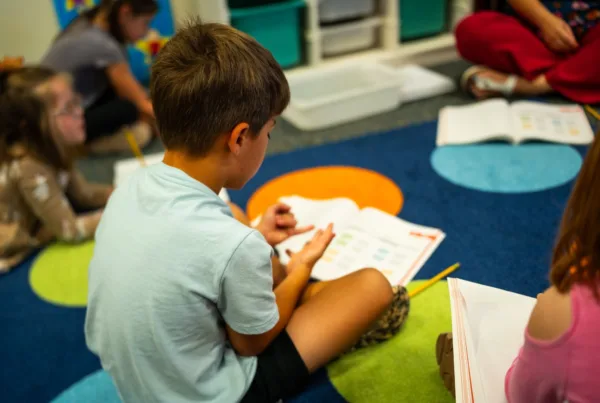
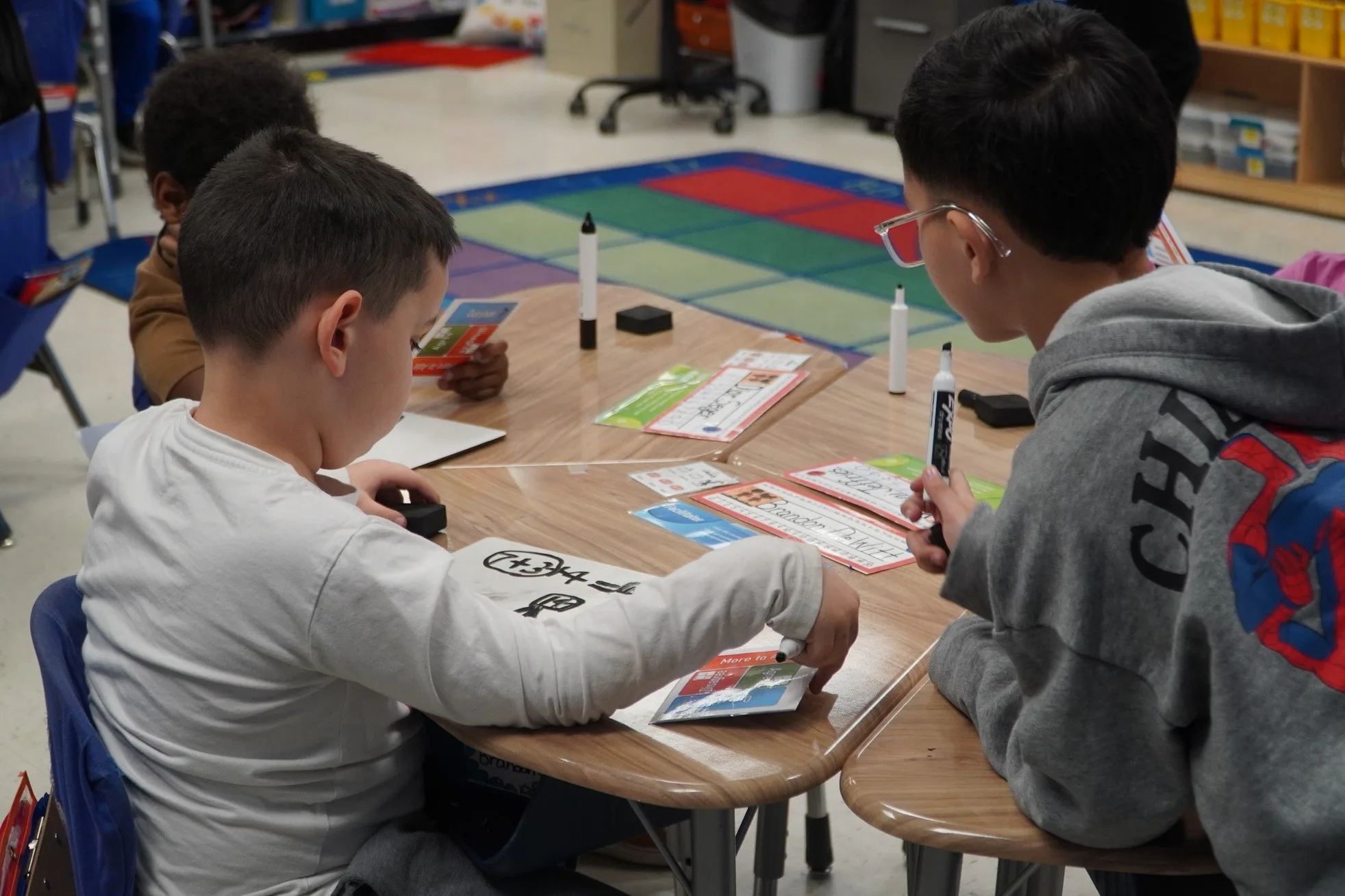
Students at Marquardt School District 15 in Illinois engage in the Model of Instruction for Deeper Learning, which provides a highly personalized, student-led learning experience that parents value.
Families are increasingly rethinking their school options. Sixty percent of parents searched for a new school for at least one child last year—with even higher rates among younger parents—signaling a shift away from default enrollment in assigned neighborhood public schools (Campanella, 2025).
Microschools—smaller, more personalized learning environments—are gaining traction, now serving an estimated two million students, with one in three parents either having a child enrolled or actively interested (Ohls et al., 2025; Aldis, 2024).
What Attracts Families to Microschools?
Instructional Empowerment’s extensive review of parent surveys and other research reveals several motivations behind why parents choose microschools (Toth & Grego, 2025).
Reasons Families Choose Microschools
- More personalized experience for their children (less “institutional”)
- Less standardized testing
- More focus on developing the whole child
- More flexible to meet students’ academic and behavioral needs
- Less bullying and fewer safety issues
- Smaller setting with stronger bonds and a sense of community
- More individualization and personalized attention
- More responsive to parents’ concerns with less bureaucracy to get support
Creating the Microschool Experience Inside Public Schools
Many families who turn to microschools are not seeking multi-grade, one-room schoolhouses with non–standards-based curricula. Instead, what they value most about microschools is the boutique experience: highly personalized attention, flexibility, and a tight-knit learning community.
Districts can offer this small boutique “private” school experience by turning unused classrooms inside existing school buildings into district-operated microschools.
These public microschools add a new option to the district’s portfolio to recruit families who might otherwise choose private schools, homeschooling, charter schools, or other alternatives. 100% of per-pupil funding remains with the district.
A Licensed Microschool Model Designed for Public Schools
Instructional Empowerment’s research team developed Certified Microschools for Deeper Learning using our research-validated Model of Instruction for Deeper Learning. The model creates personalized, student-led learning environments that develop rigorous academics with higher order thinking and human skills parents highly desire.
The licensed microschool model delivers a small boutique “private” school experience while operating as a program within an existing public school. The model leverages district staff, facilities, and systems, with Instructional Empowerment providing expert services for rapid implementation, including:
- Extensive training, support, and credentialing for teachers, including a dedicated expert coach provided by Instructional Empowerment
- A team of Instructional Empowerment expert specialists to run marketing and family recruitment
- Onsite customer experience specialist provided by Instructional Empowerment to ensure boutique level customer experience for parents/guardians and prospective families
- National certifications to ensure quality, consistency, and accountability
The model is designed to operate cost-neutral to revenue positive in the first year.
“In our experience of doing this, when parents come in for the open house or for private tours, they’re highly attracted when they see these classrooms where students are leading their own learning, organizing themselves, and sharing leadership roles. They are powerfully attracted to this. They can’t get this in their homeschooling environment. They are typically not getting this in a private or charter school either.”
— Michael D. Toth, Award-winning education author and CEO of Instructional Empowerment
From the recorded national webinar: How District-Operated Microschools Can Win Back Families
As more families actively seek alternatives to traditional schooling, district-operated microschools offer a practical, evidence-based way to keep families in public schools. Learn more about how district-operated microschools work.
References
Aldis, A. (2024, May 15). Poll suggests 10% of school parents are microschooling their kids. https://www.edchoice.org/poll-suggests-10-of-school-parents-are-microschooling-their-kids/
Campanella, A. (2025, January 14). 60% of U.S. parents searched for new schools for their kids last year, survey finds. National School Choice Awareness Foundation. https://schoolchoiceawareness.org/january-2025-survey/
Ohls, S., Covelli, L., & Schweig, J. (2025). Microschools as an emerging education model: Implications for research and evaluation. RAND. https://www.rand.org/pubs/research_reports/RRA3698-1.html
Toth, M.D., & Grego, M.A. (2025). How public schools can build better microschools and win back families. Instructional Empowerment. https://go.instructionalempowerment.com/microschools
Subscribe to the District-Operated Microschools Executive Briefing Series
About Instructional Empowerment
Our mission is to end generational poverty and eliminate achievement gaps through redesigned rigorous Tier 1 Instruction that ensures deeper learning for ALL students.